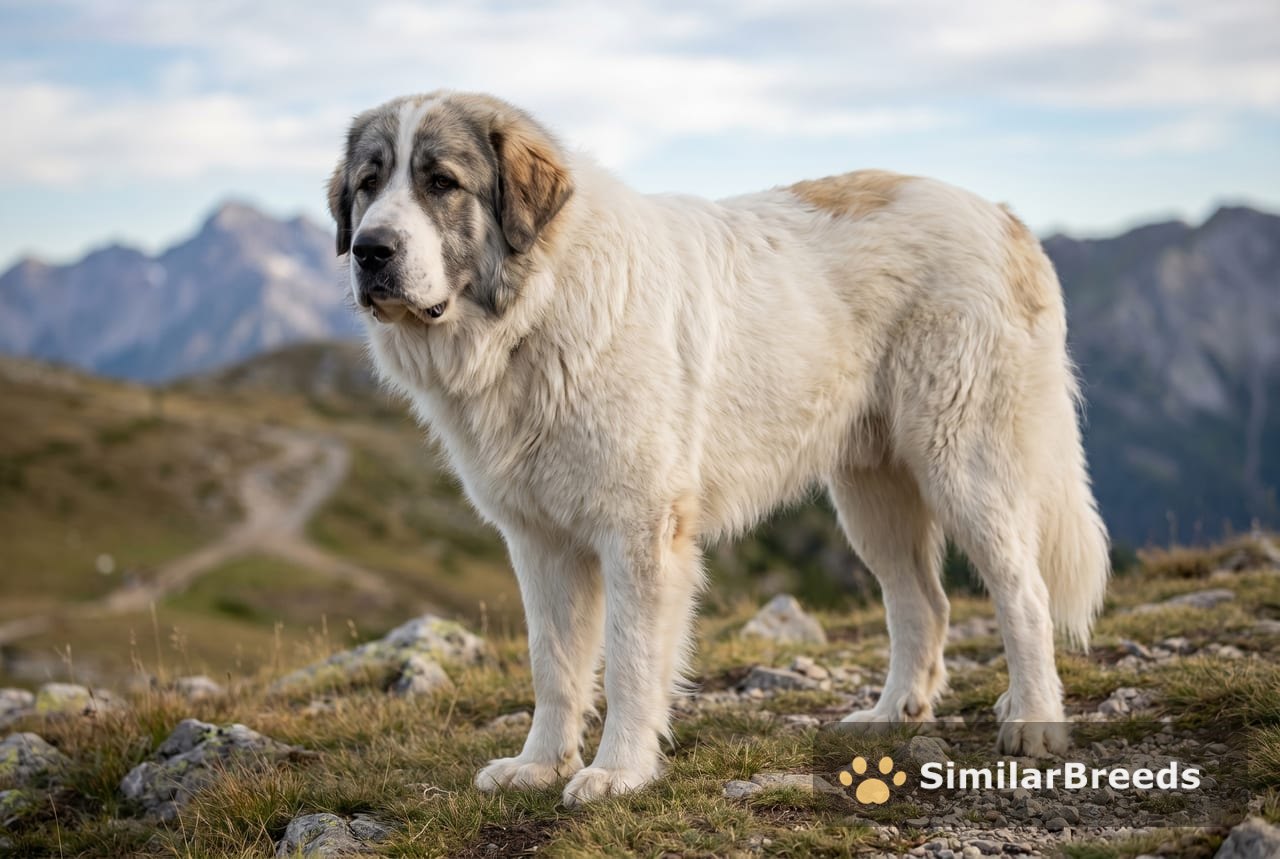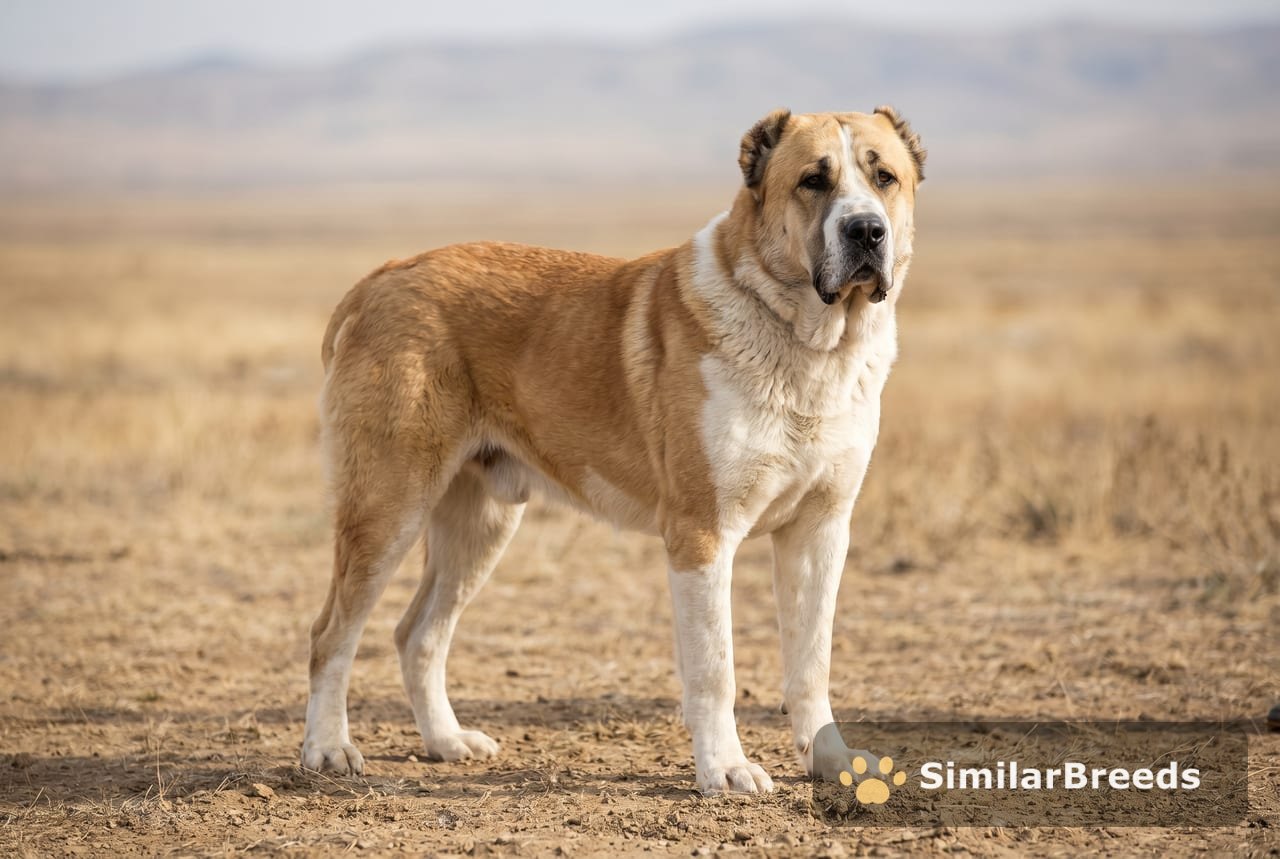
Purpose & Origin
The Central Asian Shepherd Dog, also called the Alabai or Alabay, is among the oldest livestock guardian breeds in existence, with a working history stretching back some 5,000 years across the steppes, deserts, and mountain ranges between the Ural Mountains, the Caspian Sea, and the borders of China. Its range historically covered what is now Turkmenistan, Uzbekistan, Kazakhstan, Tajikistan, and Afghanistan. Some authorities argue it may predate, and even be an ancestor of, the Tibetan Mastiff rather than a descendant, which would place it at the root of the large guardian-dog lineage.
Its job was straightforward and unforgiving: protect livestock and nomadic families from wolves, bears, and human intruders in extreme conditions of heat, cold, and rough terrain. Ears and tail were traditionally cropped at birth to reduce vulnerability during fights with predators. The purest populations today are found in the remote regions of Tajikistan and Uzbekistan. In Kyrgyzstan, where it was once common, the breed has effectively gone extinct as a working type.
Temperament & Behaviour
This is a self-contained, deeply territorial dog. At rest it conserves energy with an almost deliberate lethargy, but any perceived intrusion into its territory triggers an immediate, fearless response. That switch, from calm to explosive, is the defining feature of the breed's character and is exactly what centuries of predator-guarding demanded.
With its own family the Central Asian is loyal and affectionate. With strangers it is wary by default, not aggressive for its own sake, but unmistakably on guard. It is not a people-pleasing breed. Independence is hardwired; this dog makes decisions about threats on its own terms and does not wait for direction from its owner. That quality made it invaluable on the steppe and makes it a serious responsibility in a suburban setting.
Activity & Training
The Central Asian Shepherd is not a high-octane working dog in the retriever or herding sense. It does not need sustained aerobic exercise so much as space, territory, and a sense of purpose. A large secure property suits it far better than a city apartment. Daily moderate exercise is adequate; enforced inactivity or confinement in a small space is not.
Training requires patience and genuine experience with independent breeds. This dog responds poorly to harsh, repetitive methods and has no interest in performing for the sake of pleasing a handler. Early socialisation is not optional, it is the single most important investment an owner can make. A Central Asian that has not met a wide range of people, animals, and situations as a puppy will default to treating everything unfamiliar as a threat.
Grooming
The coat comes in two lengths, short and longer, both with a dense double undercoat suited to temperature extremes. Grooming demands are moderate for most of the year: a brush once or twice a week keeps things manageable. Twice a year, in spring and autumn, the dog sheds its undercoat heavily, and during those periods daily brushing is necessary to prevent matting and reduce the volume of loose fur around the home. Bathing as needed; no trimming required.
Health
The Central Asian Shepherd is a naturally developed breed with fewer inherited disorders than many purpose-bred Western breeds, and it lives 10 to 15 years. The main concerns are hip and elbow dysplasia, which breeders should screen for, and bloat (gastric dilatation-volvulus), a risk for any deep-chested large dog. Arthritic changes in older dogs are common given the body mass involved. Overall constitution is robust, but size means any joint or skeletal problem carries real consequences.
Why these breeds are similar
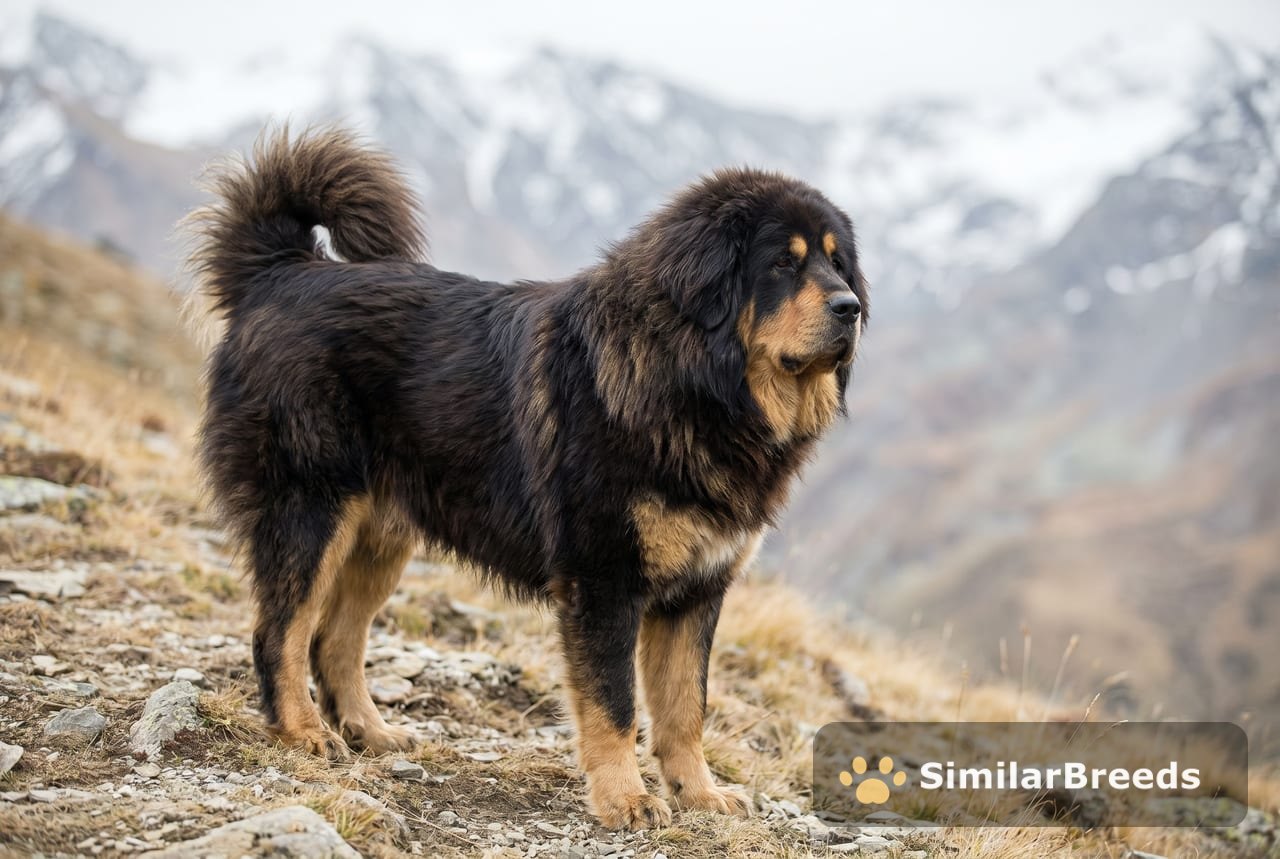
**Tibetan Mastiff:** The most historically intertwined comparison. Both are ancient livestock guardians from high-altitude Central and East Asian regions, similarly massive, similarly territorial, and similarly aloof with strangers. The question of which influenced the other is genuinely unresolved.
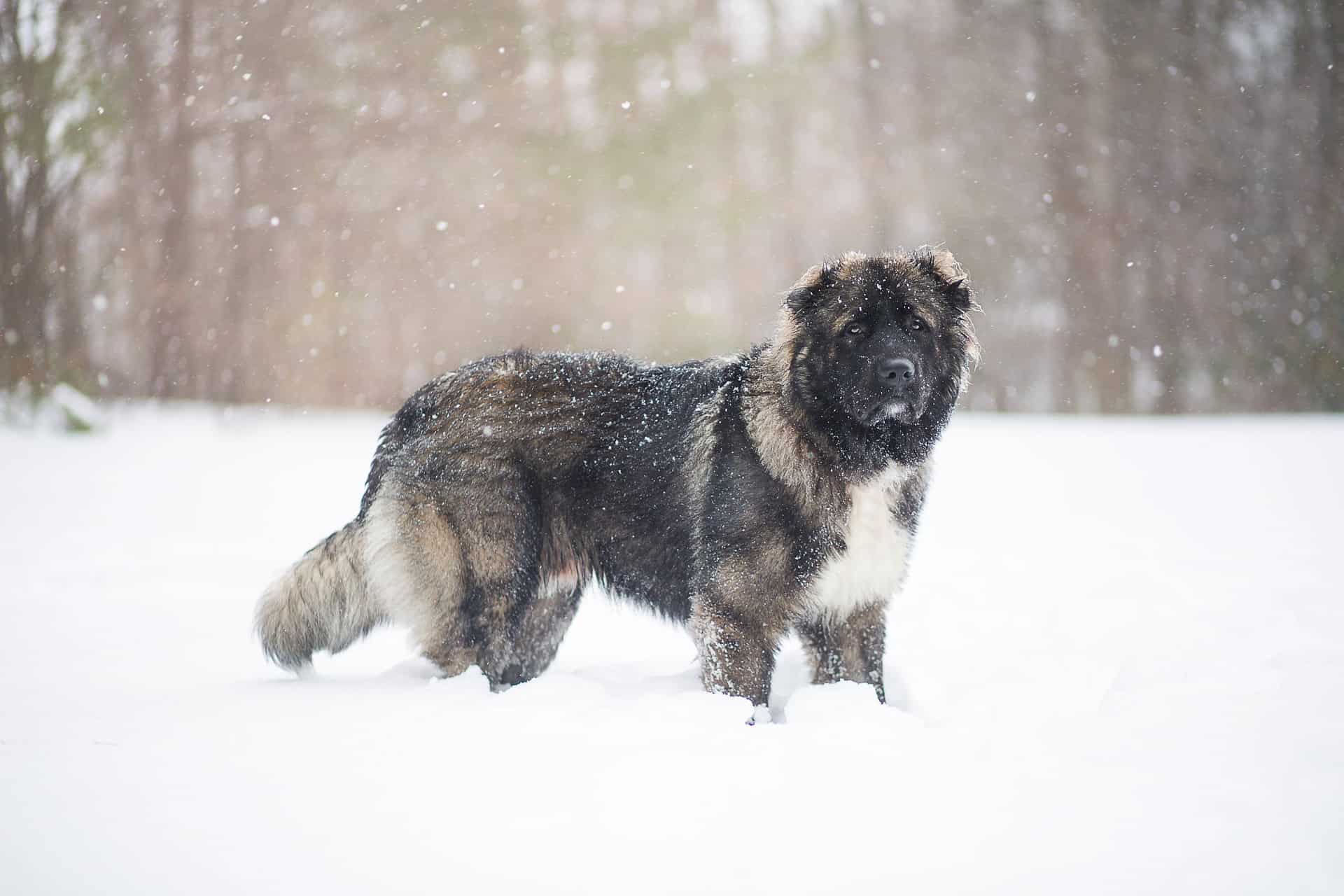
**Caucasian Shepherd Dog:** A close geographic neighbour, also developed across the Caucasus Mountains as a flock and property guardian. Same functional type, same reactive temperament, comparable size and coat density, and an equally serious bite if provoked.
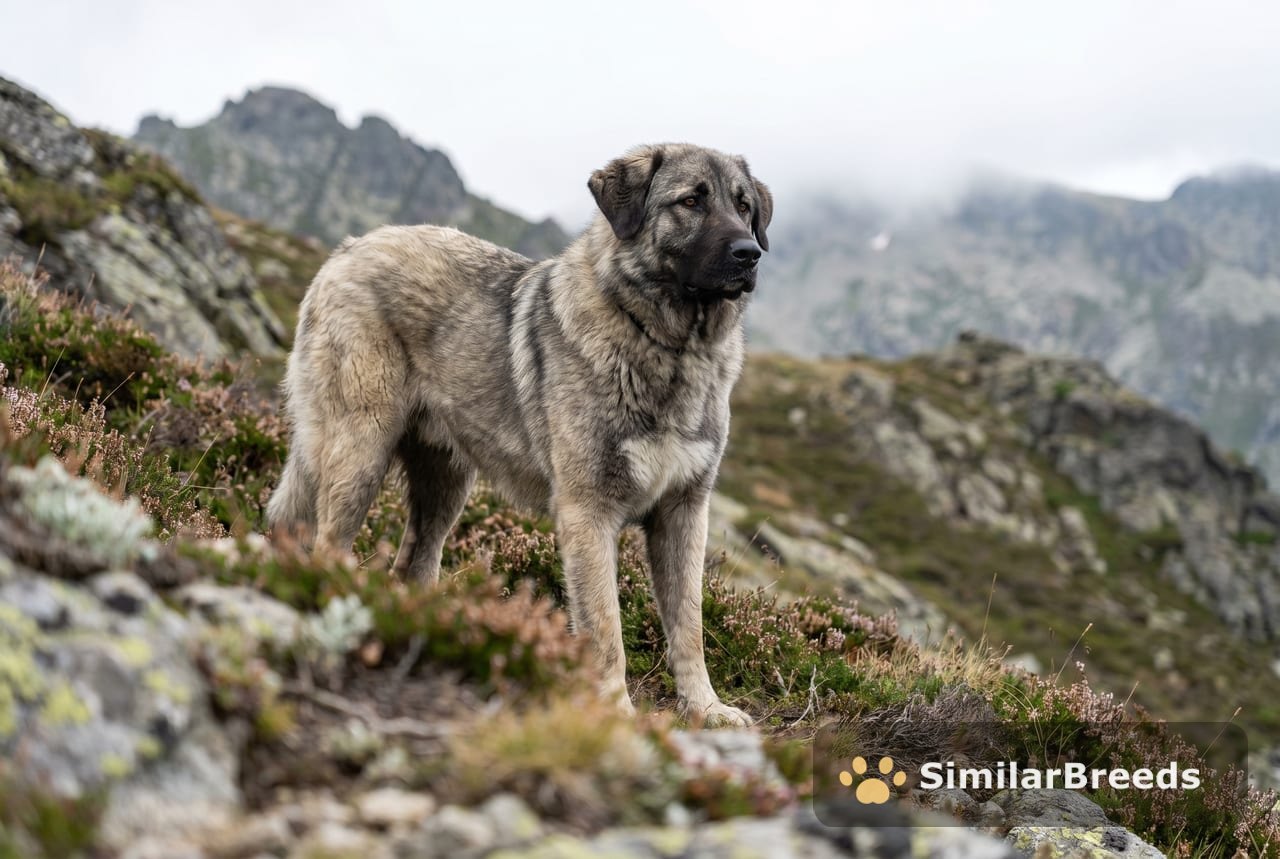
**Estrela Mountain Dog:** A Portuguese mountain livestock guardian sharing the same ancient working role. Slightly smaller and more approachable in temperament, but the structural type and independent character are recognisably parallel.
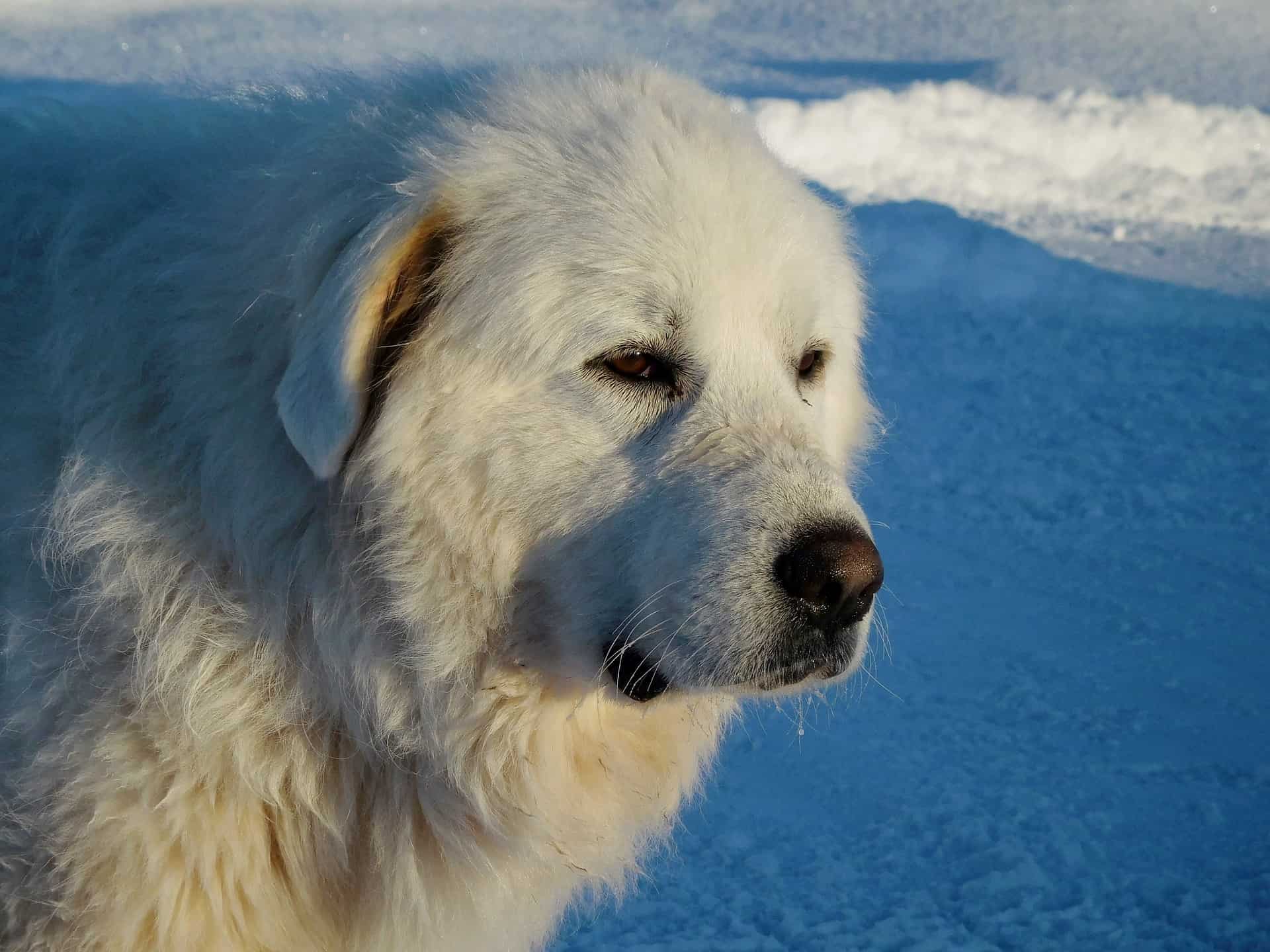
**Great Pyrenees:** Another large white flock guardian with deep roots in mountain pastoralism. Gentler in disposition than the Central Asian and more frequently kept as a family dog, but the core instinct to patrol territory and confront threats is the same.
**Pyrenean Mastiff:** The Spanish cousin of the Great Pyrenees, heavier-boned and sharing the same Iberian mountain-guardian tradition. Like the Central Asian it is calm at rest and fast to respond to perceived danger, and carries the same dense double coat designed for harsh winters.