Purpose & Origin
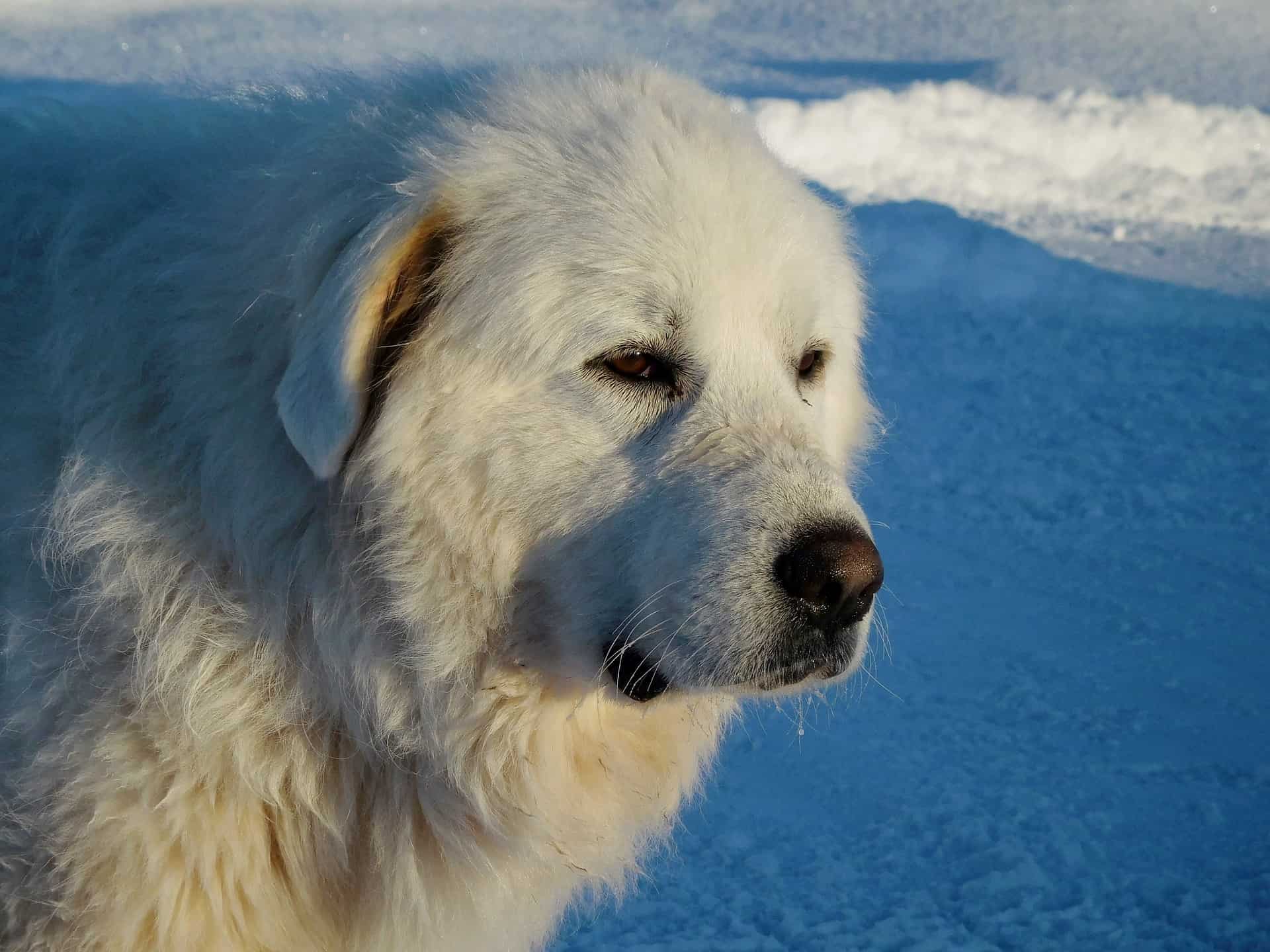
The Great Pyrenees is one of the oldest livestock guardian breeds, with roots that stretch back to large white flock-guarding dogs in Asia Minor around 10,000 B.C. When nomadic shepherds moved their flocks into the Pyrenean Mountains around 3000 B.C., these dogs came with them and spent the next several millennia doing the same job: standing between the sheep and whatever wanted to eat them.
By medieval France the breed had crossed over from the pasture into the chateau, serving as a fortress guard for the nobility, and in 1675 Louis XIV formally named it the Royal Dog of France. That courtly period was short-lived, and by the 1900s the court dogs had vanished; what survived were the working mountain dogs, the ones nobody had bothered to fashion into a showpiece. Serious imports reached America in the 1930s, and AKC recognition followed in 1933.
Temperament & Behaviour
This is a dog built for independent, overnight decision-making on a mountain, and that heritage defines how it behaves in a home. The Great Pyrenees is calm and gentle with family, patient with children, and quietly affectionate, but it is not deferential. It is naturally wary of strangers, both human and canine, and will make its own assessments about threats rather than waiting for a cue from its owner.
The independence that makes it excellent at guarding livestock makes it a difficult dog to control: it will test a hesitant owner, it does not respond reliably off leash, and it barks, especially at night. These are not flaws so much as design features that do not suit every household.
Activity & Training
Exercise requirements are moderate. A good daily walk keeps it in shape, and it genuinely enjoys hiking, particularly in cold weather. The flip side is its near-zero tolerance for heat, so summer exercise must be timed carefully and kept short. Training requires patience and confidence. The breed scores at the low end for ease of training, and while it is intelligent, it applies that intelligence to deciding whether a given instruction is worth following rather than to compliance. Positive, consistent handling works better than repetition-heavy drills. It is not a dog for first-time owners.
Grooming
The coat is a thick double layer adapted to mountain winters, and it sheds. Weekly brushing, increased to daily during shedding season, keeps the coat from matting and controls the volume of hair around the house. The breed also drools on occasion and is a messy drinker, which is worth knowing before the first glass of water is knocked across the kitchen floor.
Health
The Great Pyrenees has a lifespan of roughly 10 to 12 years. The primary structural concerns are hip dysplasia and patellar luxation, making hip and knee screening important for any breeding animal. Minor issues include eye problems such as entropion and cataracts, bone conditions including OCD and panosteitis, skin problems, and a rare form of dwarfism called chondrodysplasia. Gastric torsion and osteosarcoma appear occasionally. Prospective owners should ask breeders for documented hip and knee test results.
Why these breeds are similar
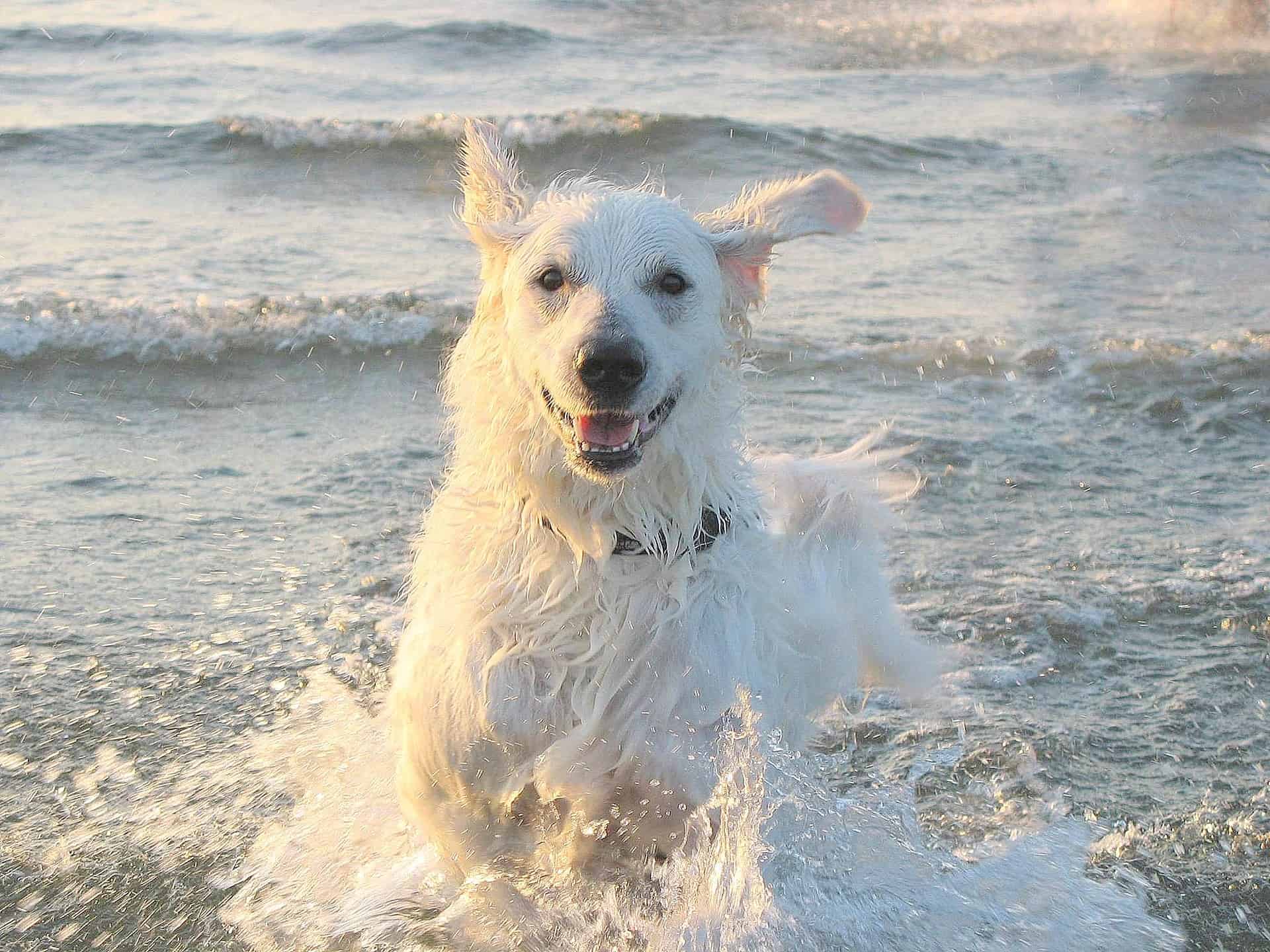
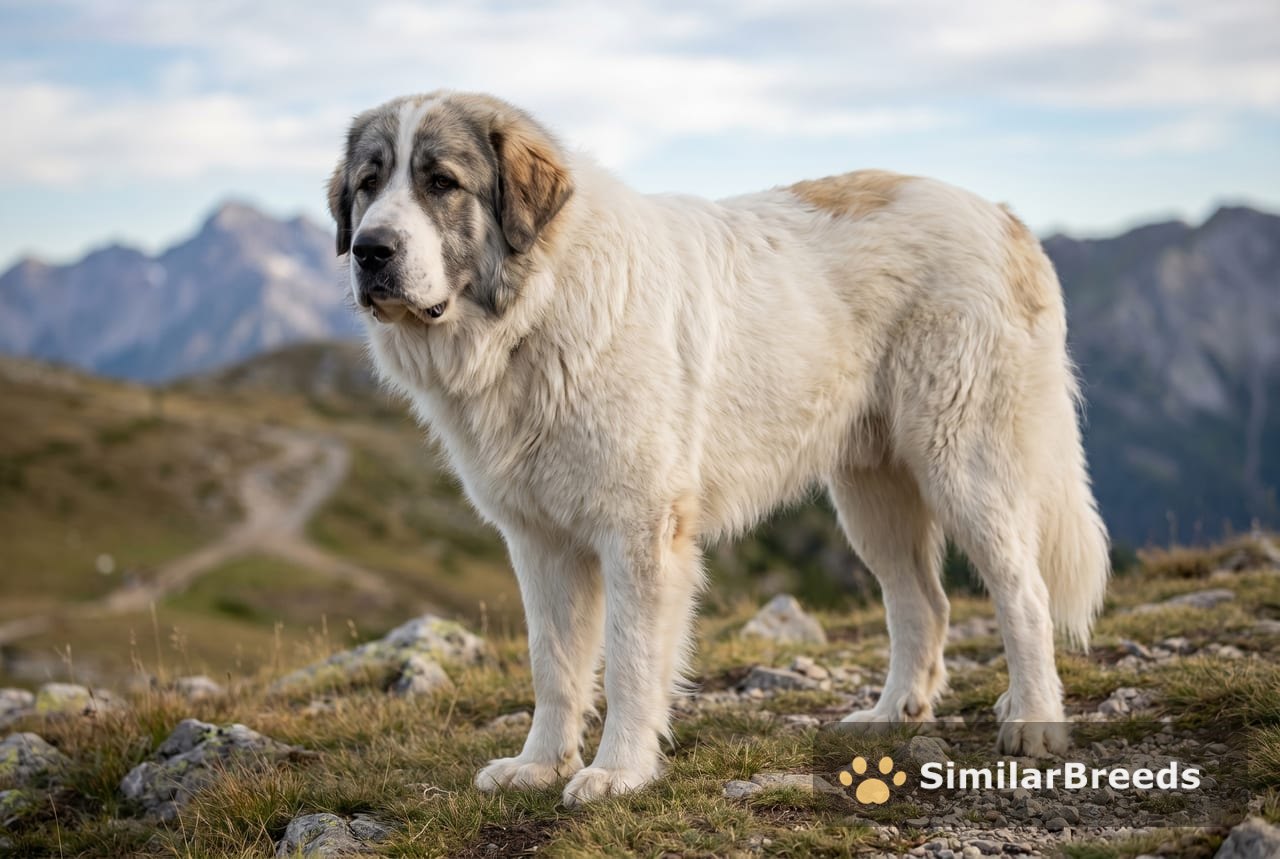
The Kuvasz is the Great Pyrenees' Hungarian counterpart: another large, white, double-coated flock guardian that developed independently but converged on nearly the same solution, sharing the independence, wariness of strangers, and imposing size. The Pyrenean Mastiff is a direct relative from the same mountain range, heavier-boned and even larger, bred for the same sheep-guarding work in the Spanish Pyrenees.
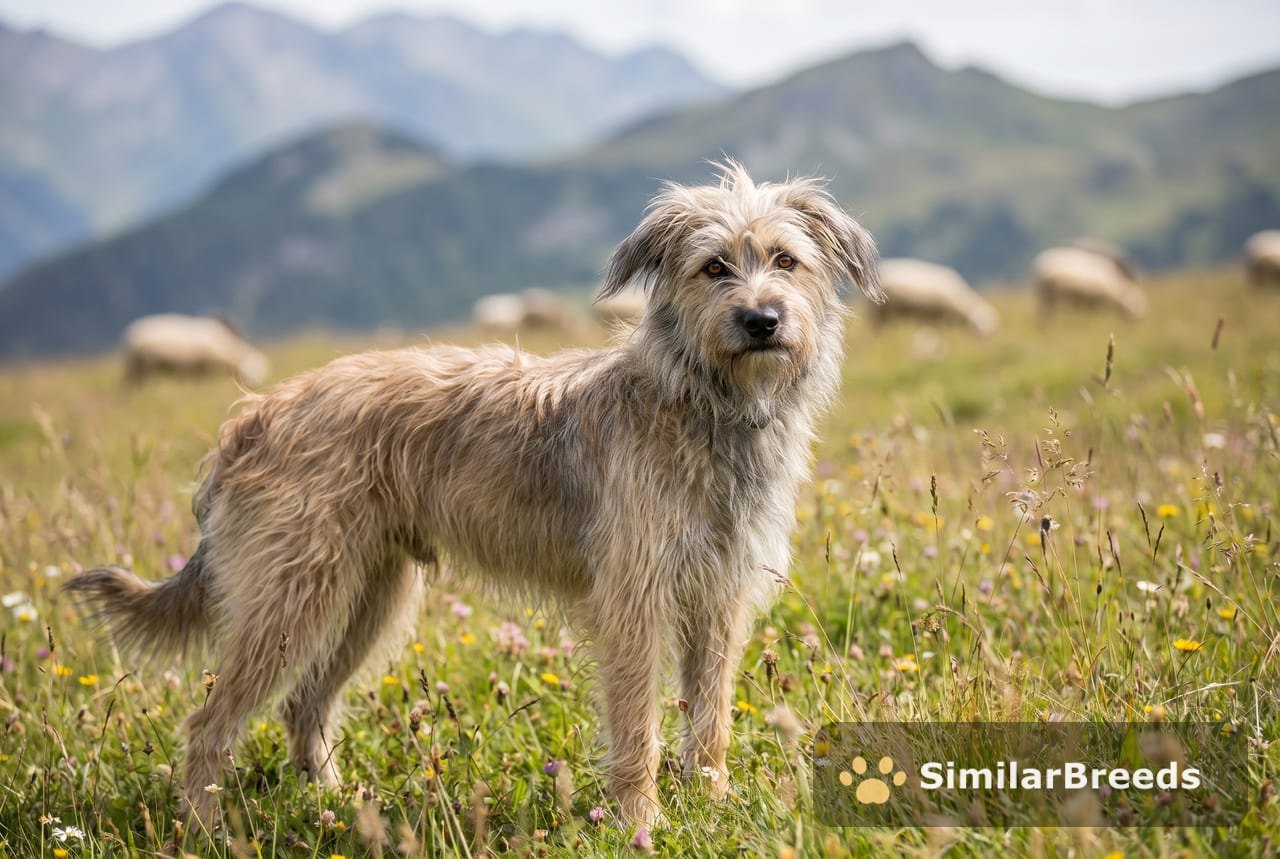
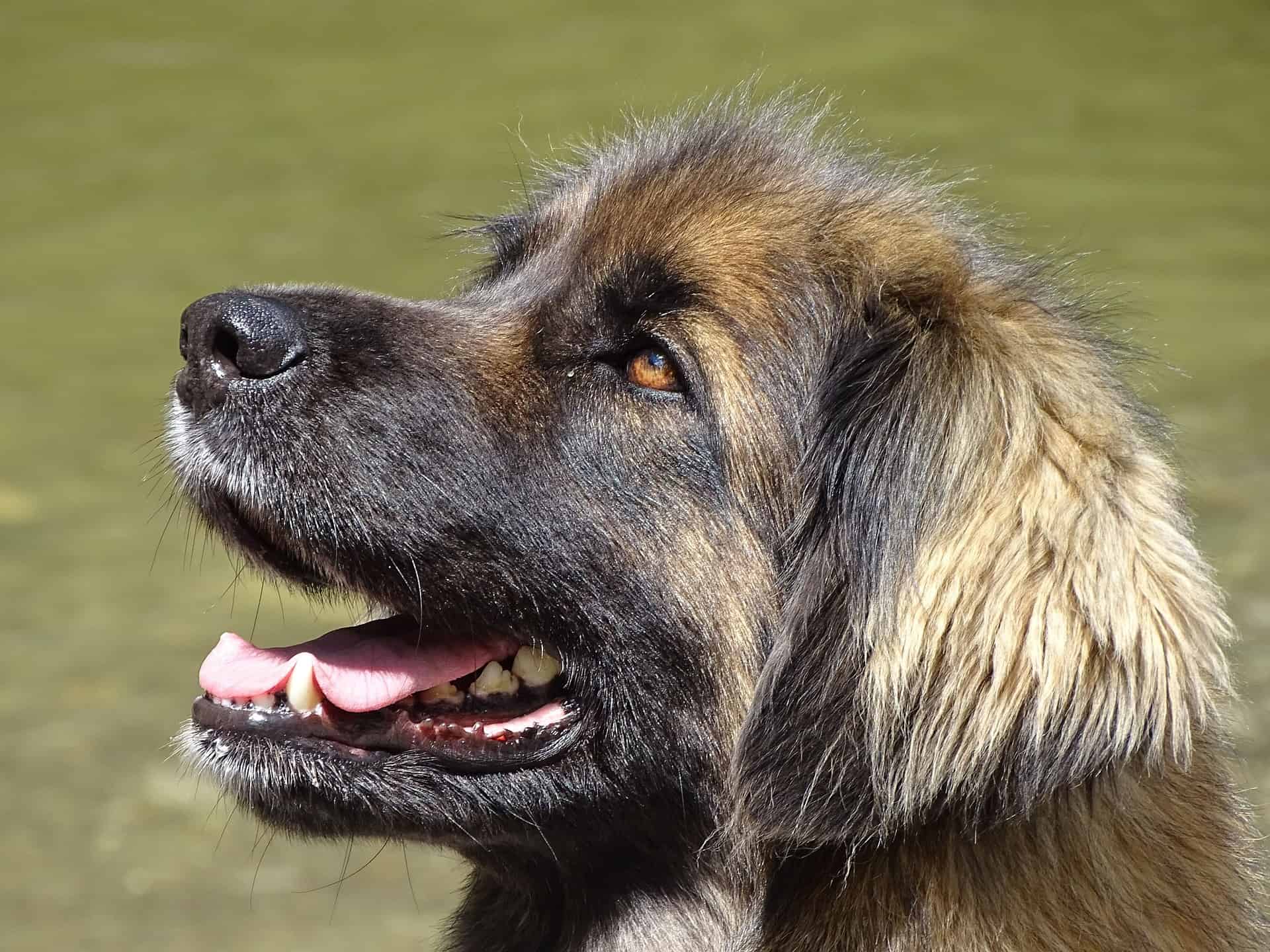
The Pyrenean Shepherd is a smaller herding dog from the same region that historically worked alongside the Great Pyrenees, one moving the flock while the other guarded it. The Leonberger shares the Great Pyrenees in its ancestry and inherited the large frame, thick coat, and calm temperament, though it was bred toward a companion role rather than a working one.
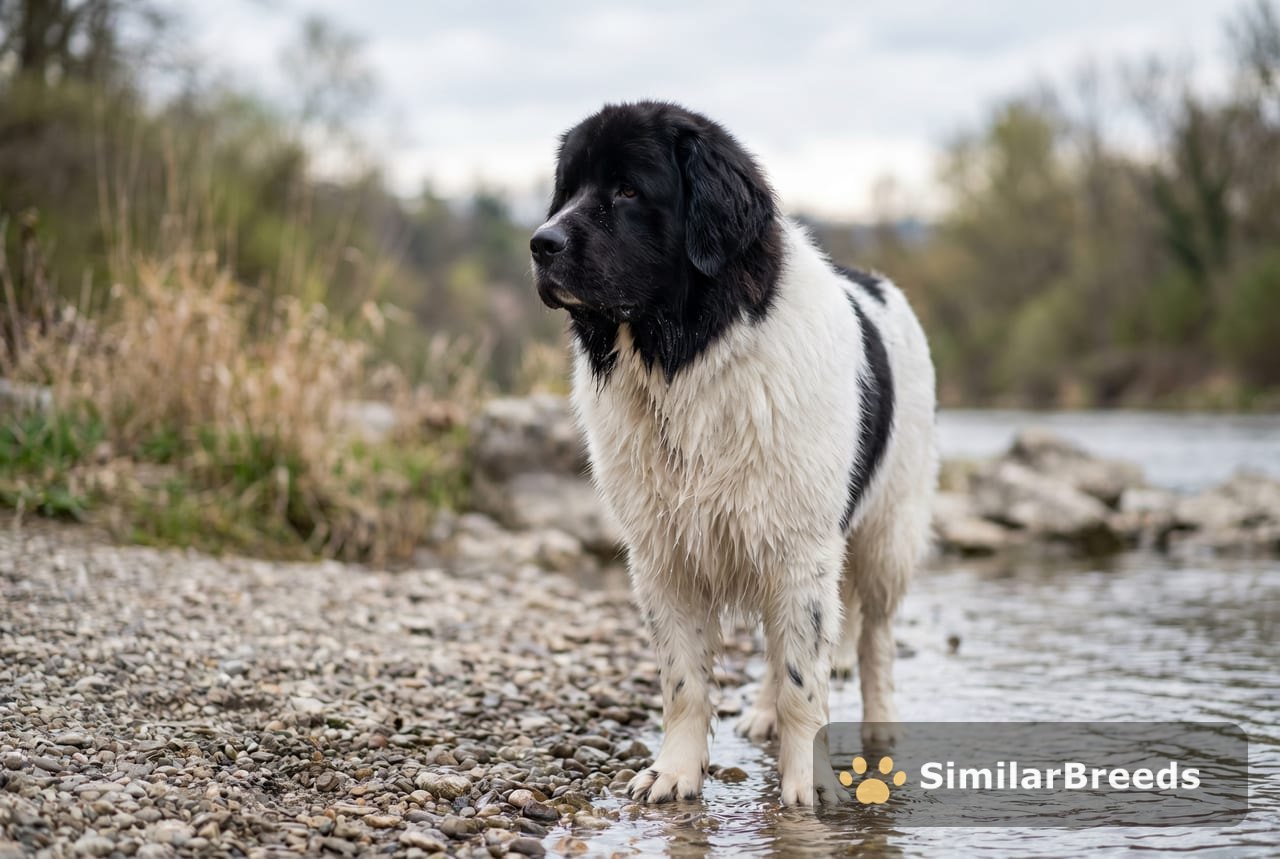
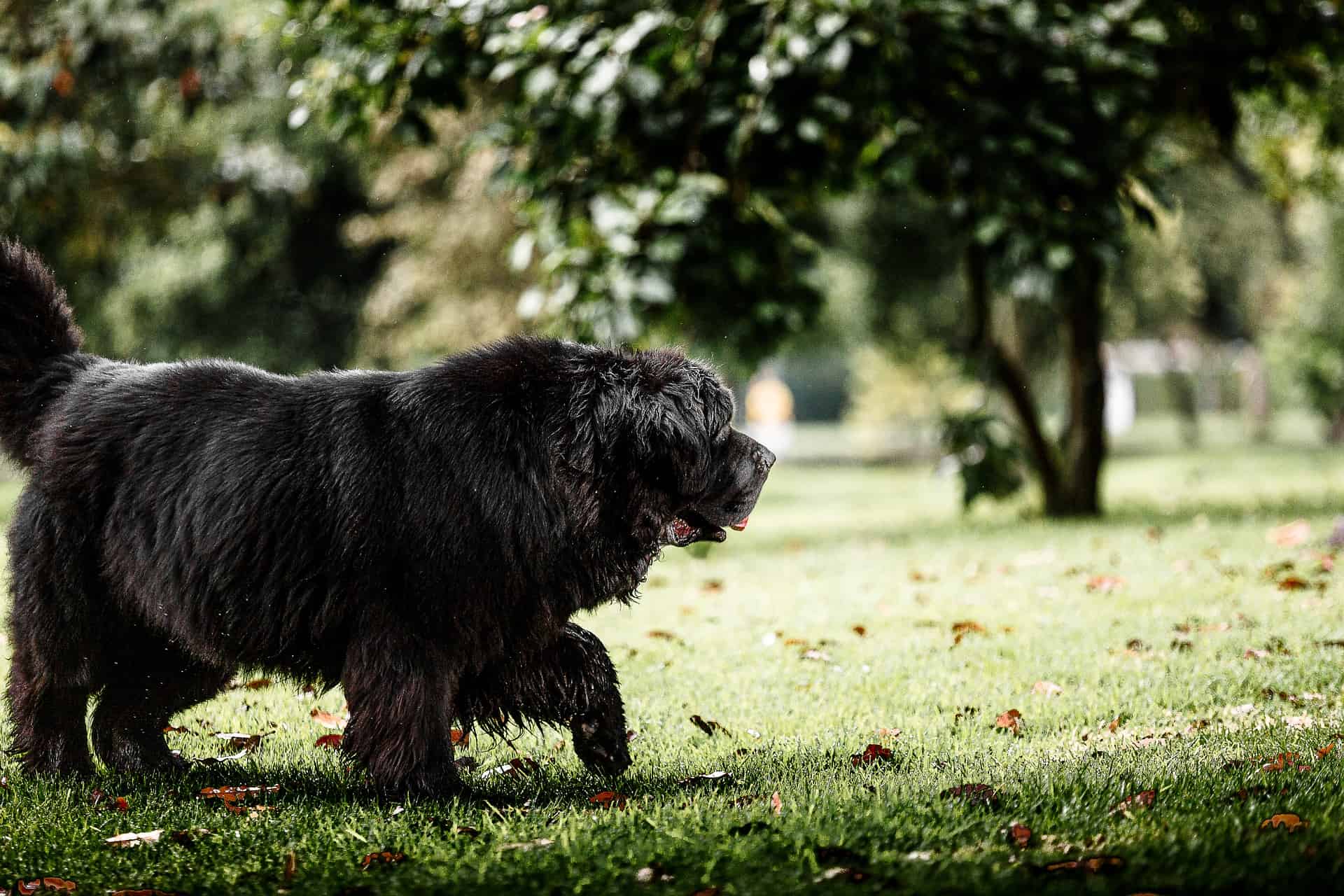
The Landseer, a black-and-white variant of the Newfoundland type, connects through the historical link between the two breeds: Great Pyrenees dogs brought to Newfoundland in the 1600s are thought to have contributed to the development of the Newfoundland, and by extension the Landseer, producing the same gentle giant character with a water-dog orientation. The Newfoundland itself fits here on all three counts: size, coat, and the same steady, protective temperament, with the additional working heritage of draft and water rescue.
Trait ratings
- Energy level
- 1/5
- Exercise requirements
- 3/5
- Playfulness
- 2/5
- Affection level
- 3/5
- Friendliness toward dogs
- 2/5
- Friendliness toward other pets
- 3/5
- Friendliness toward strangers
- 2/5
- Ease of training
- 1/5
- Watchdog ability
- 5/5
- Protection ability
- 4/5
- Grooming requirements
- 3/5
- Cold tolerance
- 5/5
- Heat tolerance
- 1/5