Blue Gascony Basset
From France
Purpose & Origin
The Blue Gascony Basset, known in France as the Basset Bleu de Gascogne, is a short-legged scenthound from south-western France, descended from the ancient Grand Bleu de Gascogne. That larger ancestor was already established in the Middle Ages, with records suggesting Gaston III of Foix-Béarn kept a pack for hunting wild boar and wolves. The basset form, bred deliberately short-legged to be followed on foot, served hunters tracking hare and small game through dense cover near the Pyrenees.
By the early nineteenth century the breed had nearly vanished. A survey around 1911 found it effectively extinct in its homeland. It survived only because a French sportsman named Alain Bourbon undertook a deliberate reconstruction, crossing short-legged males from other basset breeds with the smallest available Grand Bleu de Gascogne bitches. Results were variable at first, but Bourbon eventually stabilised a true-breeding short-legged type. The breed remains rare to this day outside France and is virtually unknown as a show dog in English-speaking countries.
Temperament & Behaviour
Morris describes this type as wise, affectionate, musical, slow and reserved, and that summary still holds. The Blue Gascony Basset is a scent-driven animal first and a companion second. It is good-natured with family, patient with children, and sociable with other dogs, having historically worked in packs. Strangers are met with reserve rather than aggression. The "musical" quality Morris notes is a real consideration: these are vocal hounds with a resonant bay, which they will use outdoors and sometimes indoors when bored or on a scent.
Independence is the main behavioural challenge. A nose-down Blue Gascony Basset is single-minded and slow to respond to recall. This is not stubbornness in the way a terrier might be stubborn; it is a hound following its core instinct. Off-lead exercise in unfenced areas is not reliable.
Activity & Training
Exercise needs are moderate. This is not a high-energy dog by hound standards, but it needs regular walks with real sniffing opportunities. A garden with secure fencing is important, both for safety and to give it somewhere to decompress between walks.
Training requires patience rather than force. The breed responds to food rewards and consistency, but obedience is functional rather than sharp. Expect a dog that will sit and come when it chooses to prioritise you over a scent, not one that performs with precision on command. Early socialisation helps reduce the stranger-wariness that can otherwise make the dog aloof.
Grooming
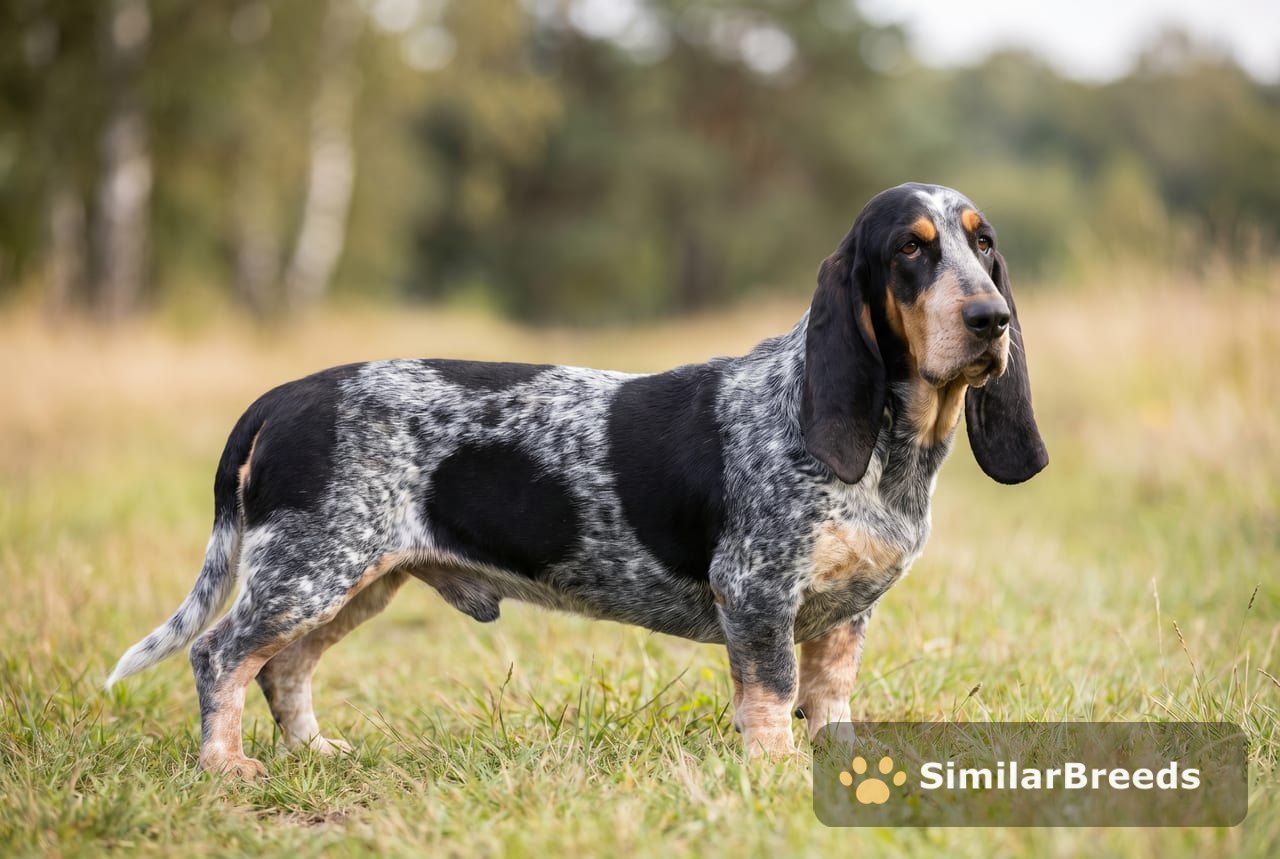
The coat is short and smooth, predominantly white with heavy black ticking that creates the characteristic blue-grey appearance, with tan markings above the eyes and on the cheeks. Grooming demands are low: a weekly brush is enough under normal conditions, with more frequent attention during the spring and autumn moults.
Ear care is more important than coat care. The long, pendulous ears restrict airflow and create the warm moist conditions that encourage wax build-up and infection. Weekly ear checks and cleaning when needed are essential routine maintenance.
Health
The Blue Gascony Basset is generally a healthy breed with a lifespan of 12 to 14 years. The long spine and shortened legs that define all basset-type dogs create a structural predisposition to spinal problems and abnormal joint development. Keeping the dog lean reduces the load on both back and joints. The deep chest brings a risk of bloat (gastric dilatation-volvulus): feeding multiple smaller meals rather than one large one and avoiding vigorous exercise immediately after eating are standard precautions. Skin fold infections and ear infections are the other conditions to watch, both manageable with routine hygiene.
Why these breeds are similar
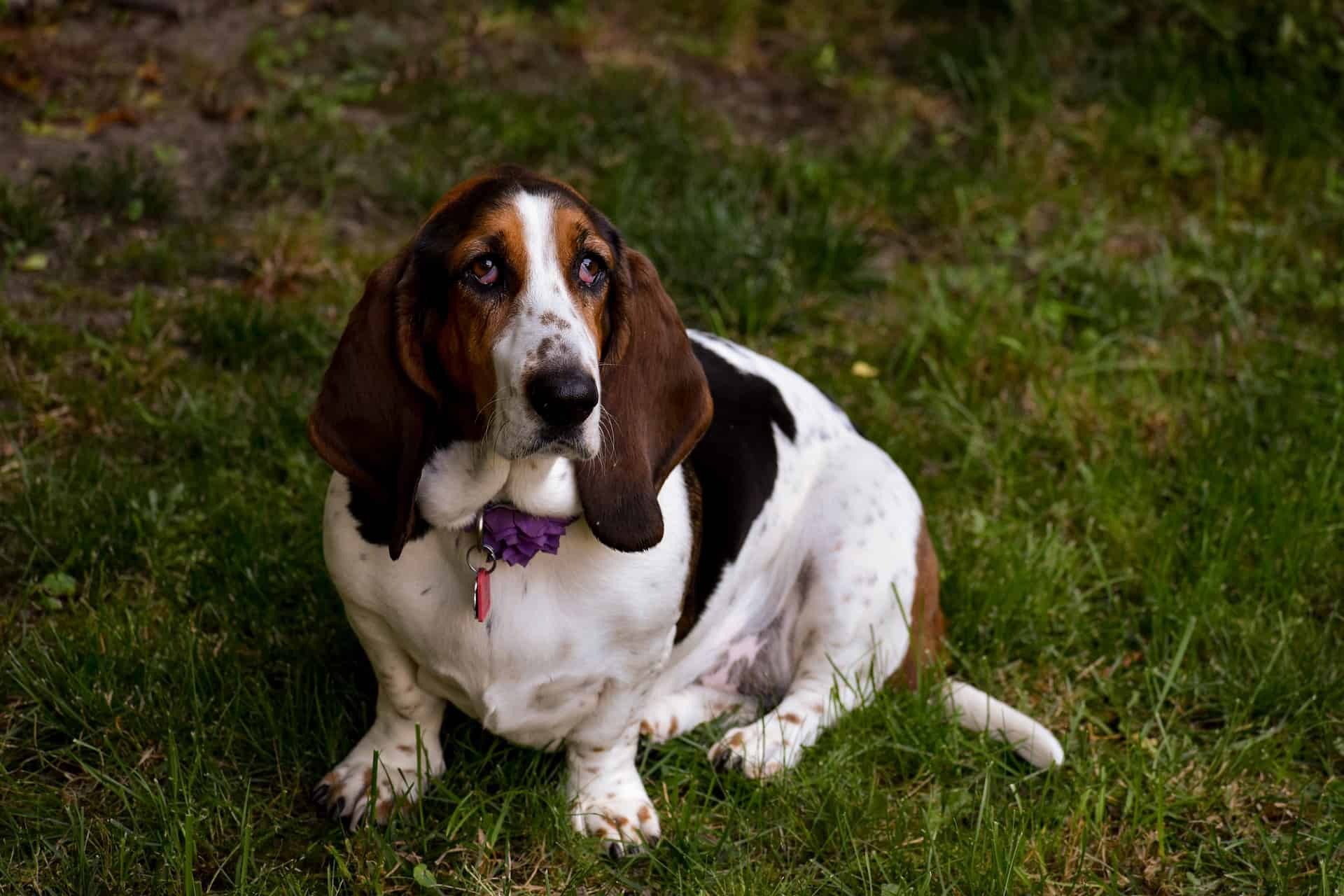
**Basset Hound** is the closest parallel: same basset body plan, same scent-driven temperament, same low-slung French scenthound ancestry. The Basset Hound is heavier, with more pronounced skin and bone, but the working character and pace are nearly identical.
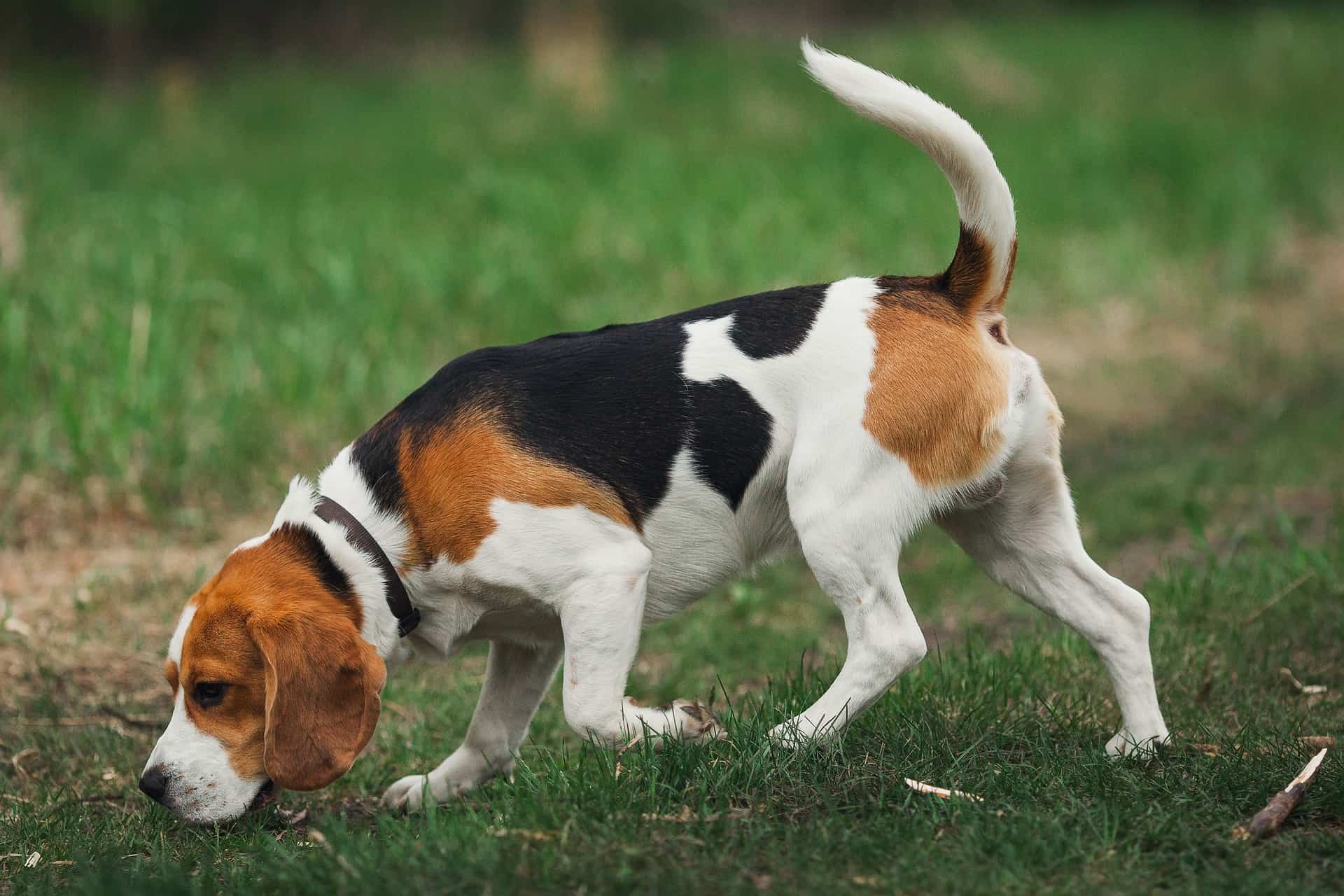
**Beagle** shares the pack-hound lineage and the friendly, nose-first personality. It is lighter and more energetic than the Blue Gascony Basset, but both are scent hounds bred to work at a pace a person on foot can follow.
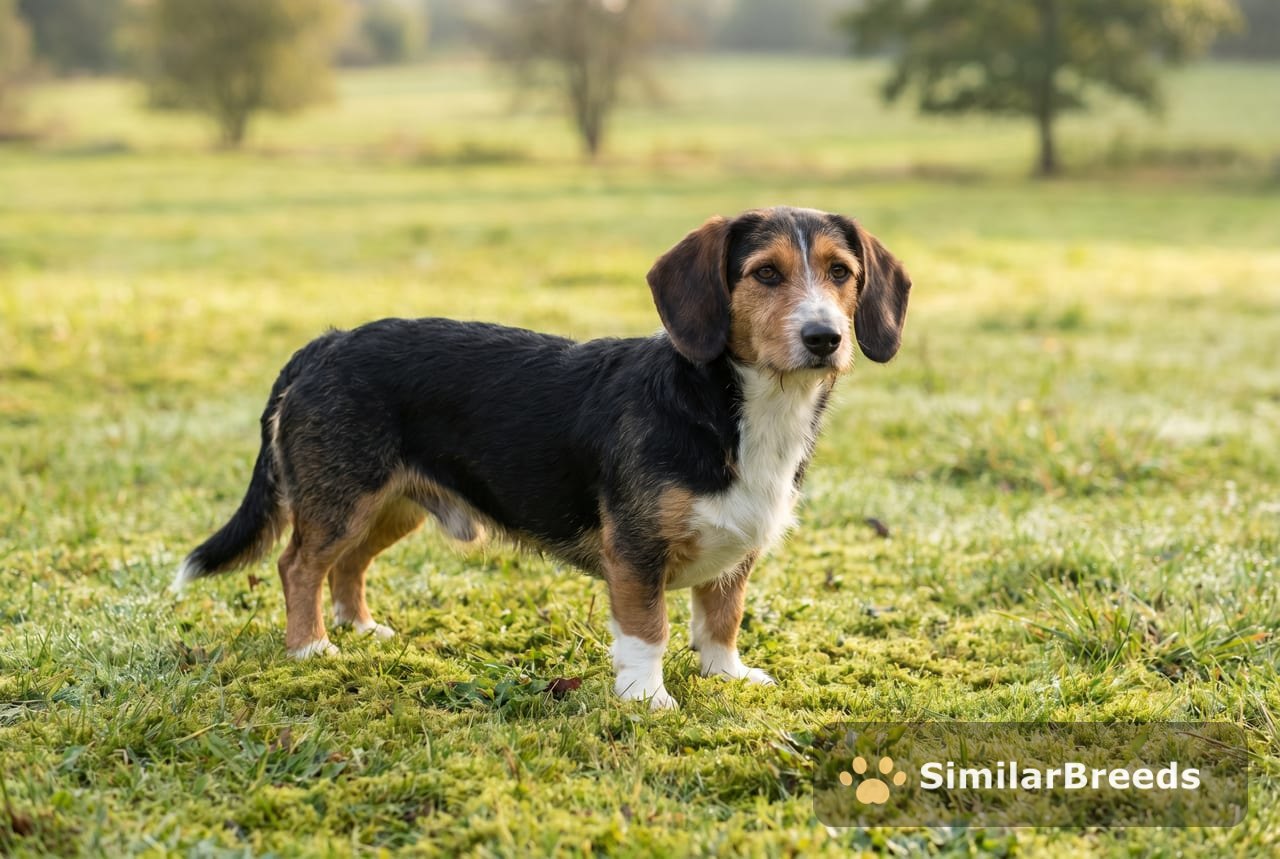
**Drever** is a Swedish short-legged scenthound developed partly from French basset stock. It fills the same role, trailing game slowly through dense woodland, and has comparable independence and vocal habits.
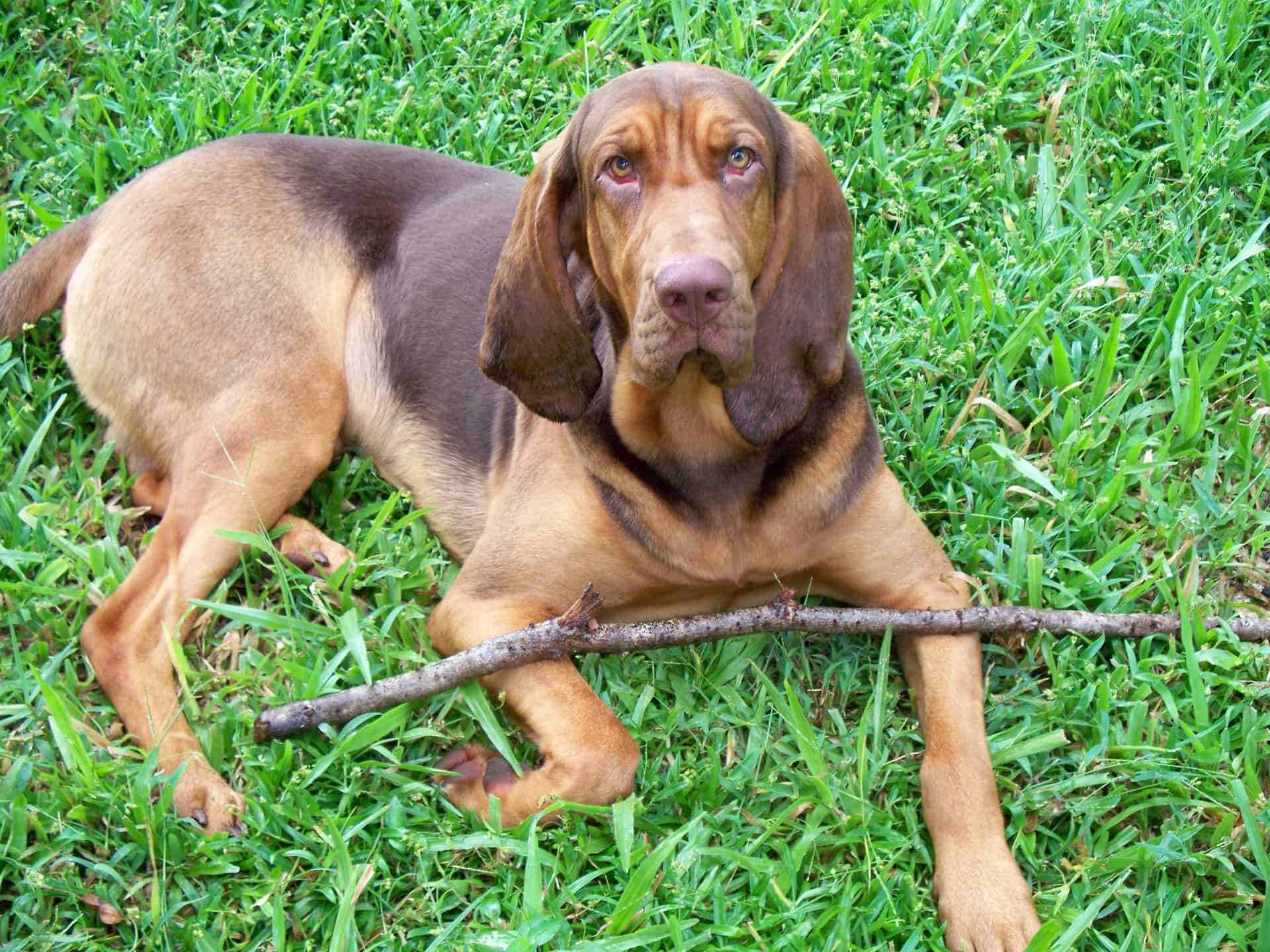
**Bloodhound** represents the tall cousin in the same genealogical tree. The Grand Bleu de Gascogne and the Bloodhound share medieval French scenthound roots. The Bloodhound's nose and methodical trailing instinct echo the Blue Gascony Basset's, scaled up considerably.
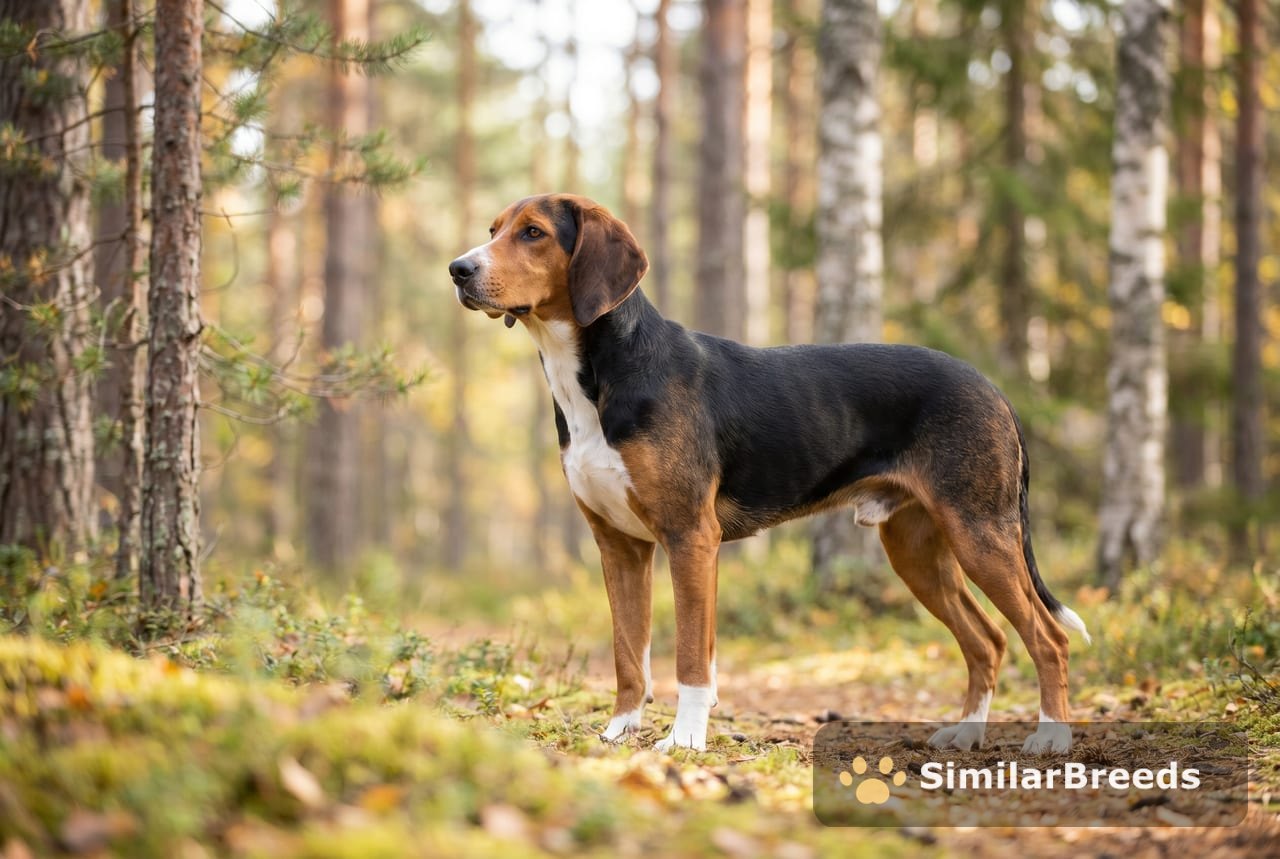
**Finnish Hound** is a medium-sized Nordic scenthound used for hare and fox. It shares the methodical, nose-led hunting style and the pack-oriented social temperament, though it is long-legged and considerably faster.