Stabyhoun
From Netherlands
Purpose & Origin
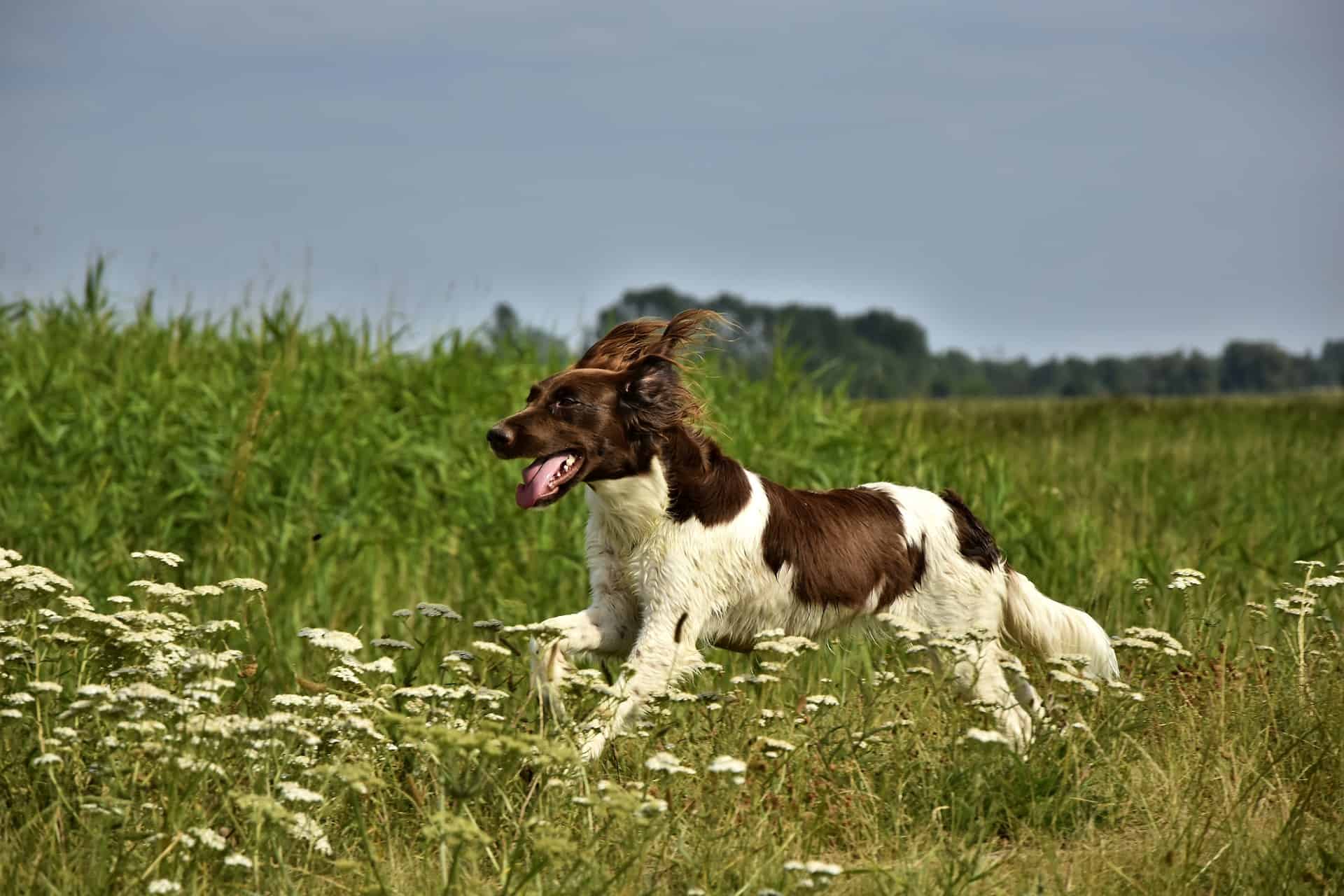
The Stabyhoun comes from Friesland, the northern province of the Netherlands, where it has worked on farms and alongside hunters since at least the early 1800s. Its ancestry likely traces to spaniels that arrived during the Spanish occupation of the Low Countries, crossed over generations with local farm dogs. The name translates roughly as "stand by me dog," which describes its role accurately: a loyal all-rounder expected to do almost everything.
On a Friesian farm the Stabyhoun pointed, flushed, and retrieved from both water and land during hunting season, then switched to pest control for the rest of the year, digging out moles, rats, and polecats. It also served as a watchdog and, on dairy farms, pulled light carts.
This breadth of function kept it in the hands of ordinary farmers rather than wealthy estates, which partly explains why the breed stayed obscure. It was not formally standardised until the 1960s, and Stabyhouns did not leave the Netherlands in any numbers until the 2000s. It remains one of the rarest breeds in the world today, with strict breeding programmes in place to protect genetic health.
Temperament & Behaviour
Morris describes the Stabyhoun as "the perfect domestic companion: affectionate, calm, good-natured, reliable, and excellent with children." That holds up. The breed is patient with children, devoted to its family, and genuinely gentle in the house. It also carries an independent streak inherited from centuries of working without close handler direction: the dog that had to decide for itself whether something under a barn floor was worth digging out. This means it can be self-willed without being difficult, but it is not the breed for someone who wants instant, frictionless compliance. With strangers it tends toward polite reserve rather than effusive friendliness.
Activity & Training
The Stabyhoun needs substantial daily exercise. It was bred to work a full day in the field, and a short walk around the block does not satisfy that drive. Long walks, off-lead runs, fetch, swimming, and nose work all suit it well. Without enough activity it finds its own entertainment, which is rarely what the owner had in mind.
Training goes smoothly when it is consistent and reward-based. The breed is intelligent and wants to cooperate, but the same independence that made it a capable farm dog means it will question pointless repetition. Keep sessions varied and end before the dog checks out. It responds poorly to harsh handling and tends to shut down rather than comply under pressure.
Grooming
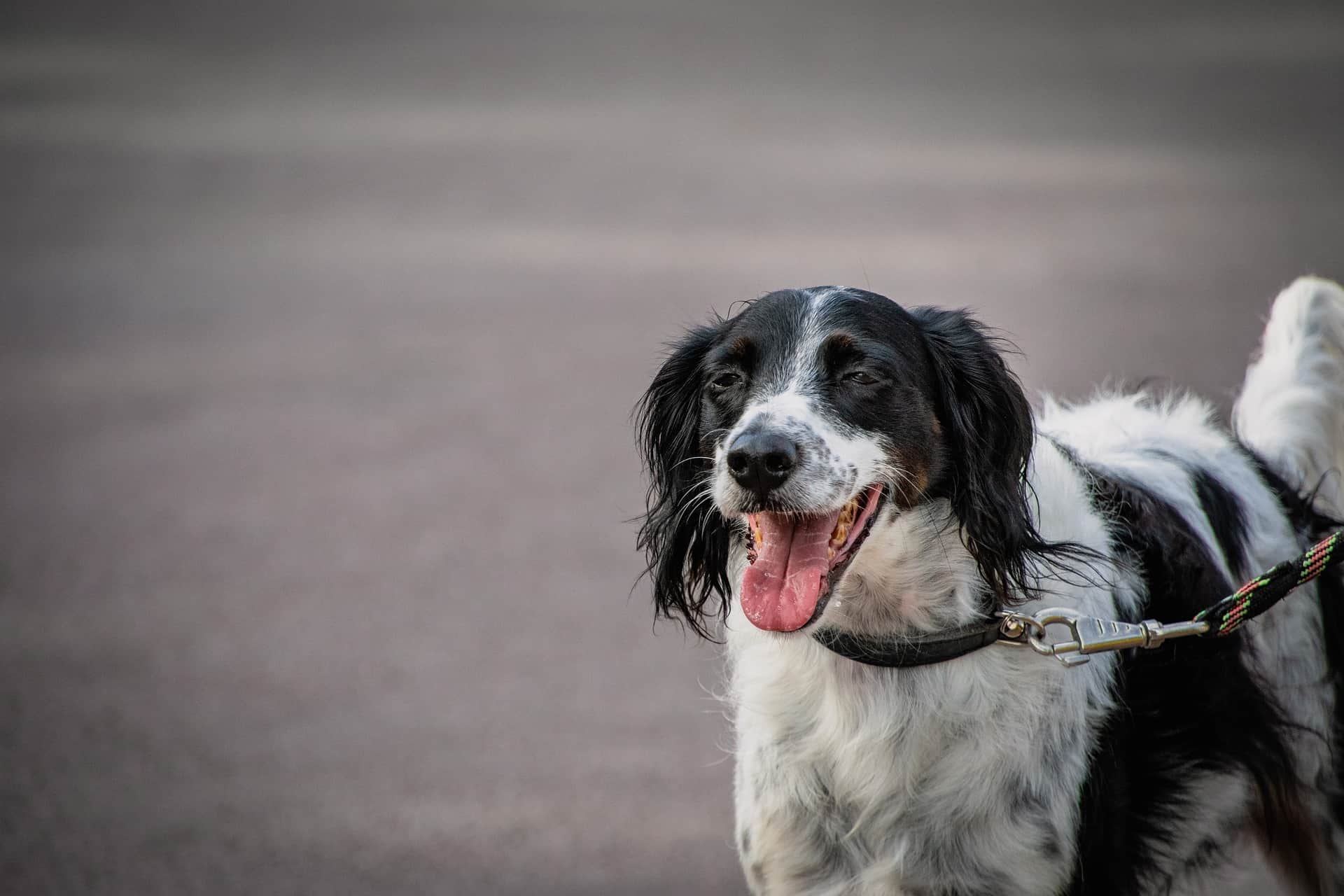
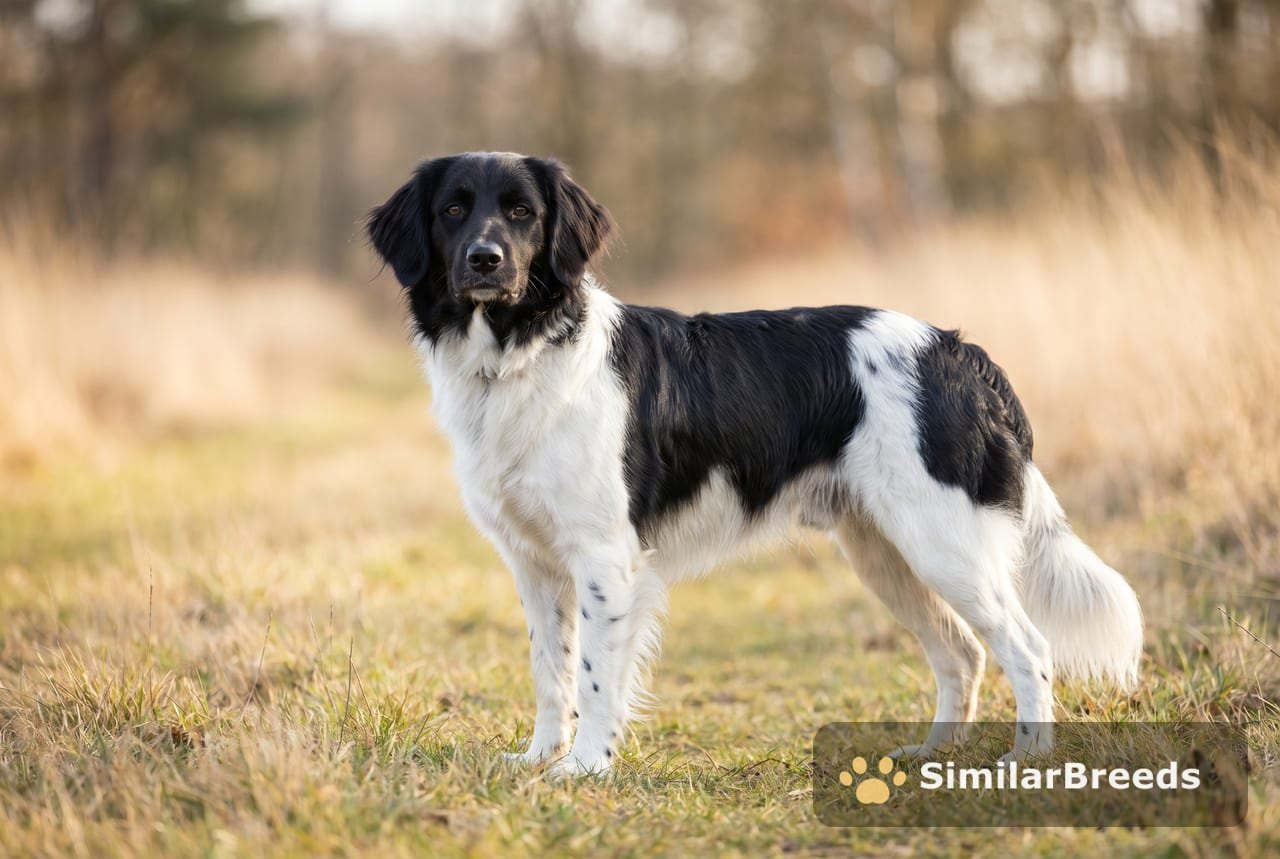
The coat is long, slightly wavy, and dense, white with large patches of black, brown, or orange. The ears, legs, and tail are well feathered. Despite the volume of coat, maintenance is moderate: weekly brushing is enough outside shedding season. Twice a year the Stabyhoun moults heavily, and daily brushing for a few weeks at those times prevents matting and speeds the shed. The breed is naturally clean and rarely needs bathing outside of genuine dirt. Check and clean the feathered ears regularly to avoid moisture build-up.
Health
The Stabyhoun is generally robust, with a lifespan of 12 to 15 years. The small global population means the gene pool is monitored carefully by Dutch breed clubs, which has kept hereditary disease rates relatively low. Known concerns include hip and elbow dysplasia, epilepsy, and heart conditions. Buying from health-tested parents and a club-registered breeder is especially important given how few individuals exist worldwide.
Why these breeds are similar
**Small Munsterlander** and **Large Munsterlander** are both German versatile gun dogs with long, feathered coats, used for pointing, flushing, and retrieving from water and land. The three breeds share working role, coat type, and a calm, affectionate temperament, though the Munsterlanders are more established internationally.
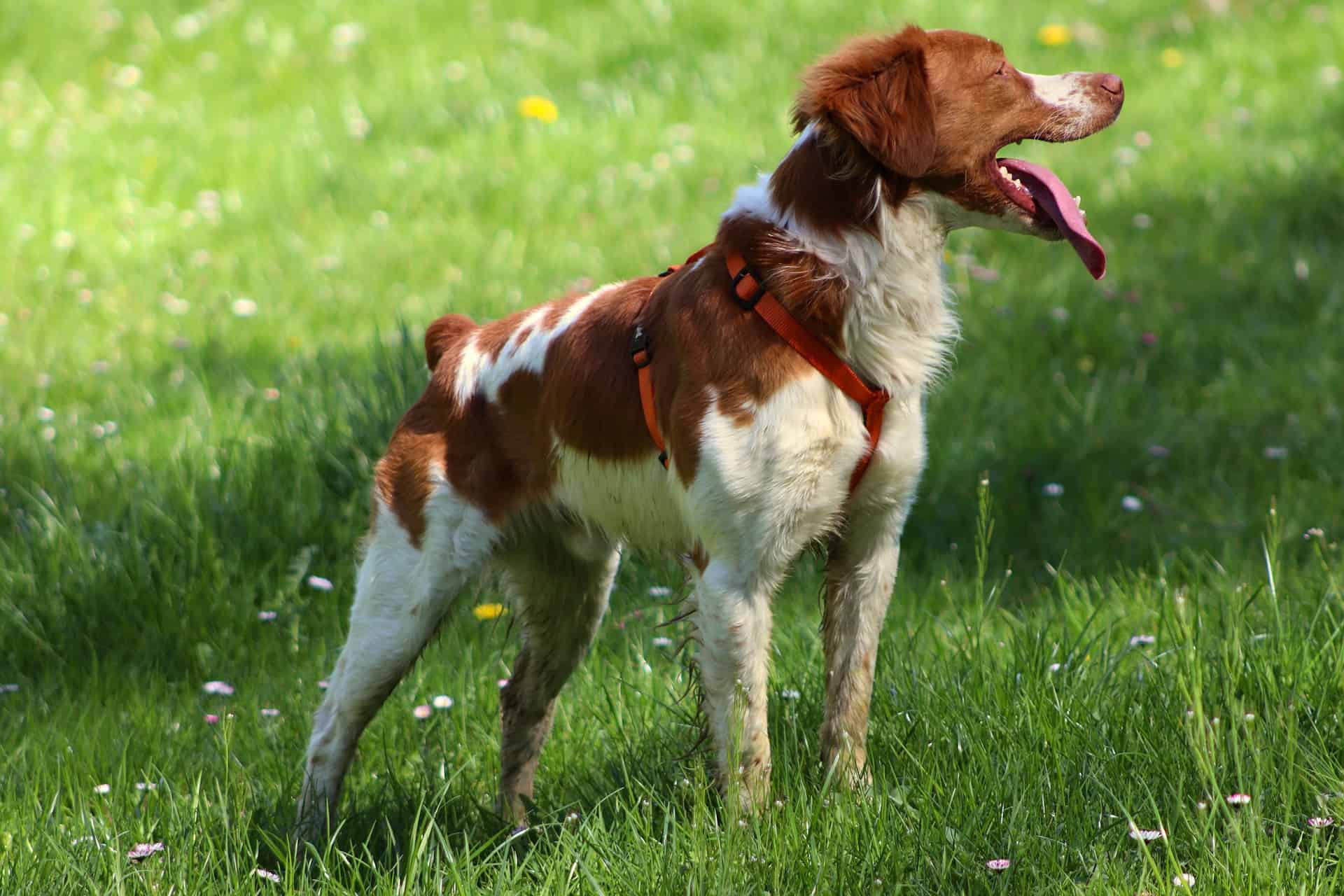
**Brittany** is a compact French spaniel-type gun dog bred for pointing and retrieving. Like the Stabyhoun it is an energetic, friendly, versatile field dog that works well as a family companion. The Brittany is far more numerous and is notably more trainable and biddable.
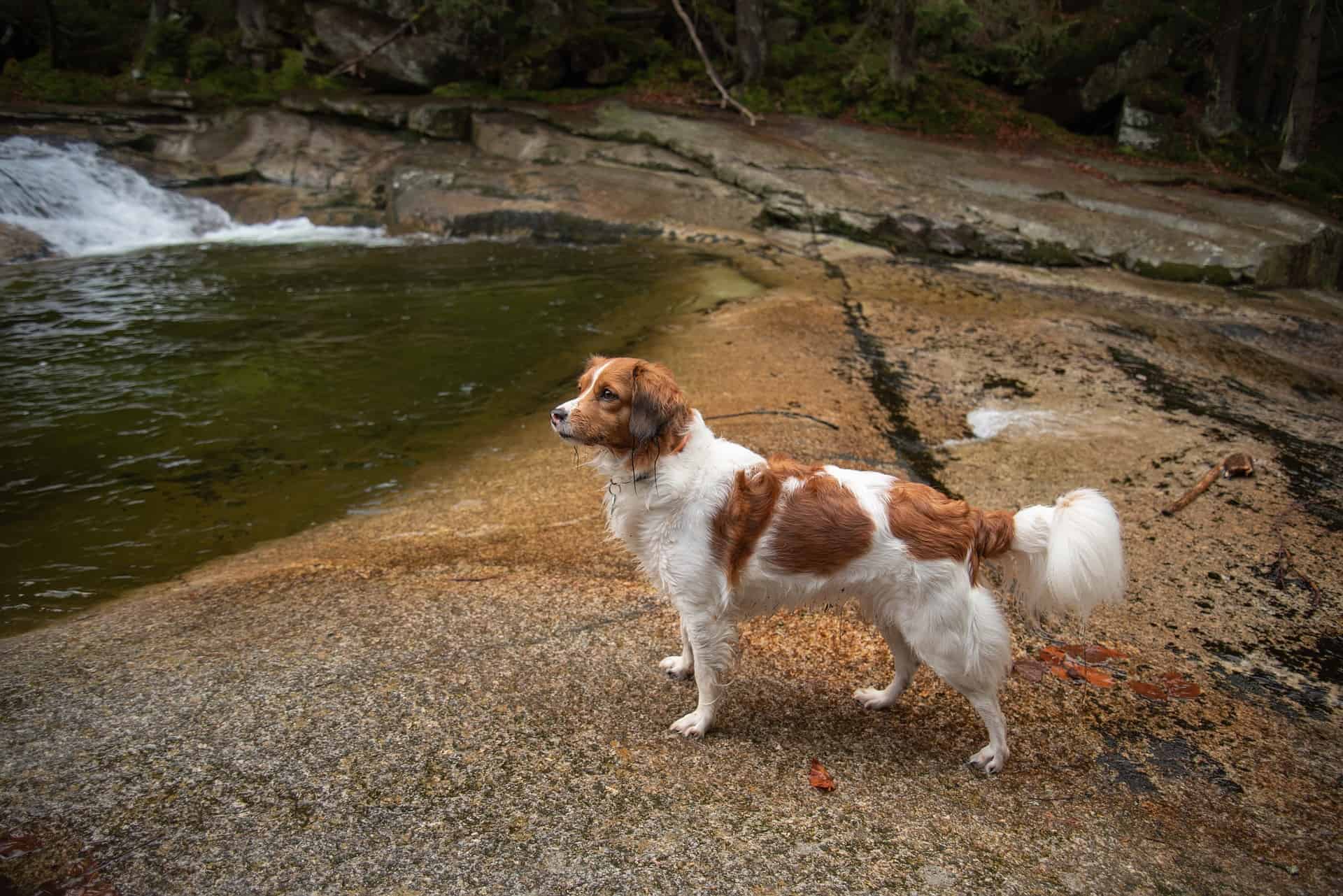
**Kooikerhondje** is the Stabyhoun's Dutch neighbour: another rare, Frisian-region spaniel-type breed with a white-and-orange patched coat. The two are closely related in geography and historical use, though the Kooiker is smaller and was originally used as a decoy dog rather than a gun dog.
**German Longhaired Pointer** is a large German versatile gun dog with a similar long, feathered coat and the same pointing-flushing-retrieving skill set. It shares the Stabyhoun's calm disposition and suitability as a household dog alongside its field work, but is considerably bigger and more widely distributed.