Bolognese
Also known as Bichon Bolognese, Bolognese Toy Dog, Bologneser, Bolo, Botoli, Bottolo
From Italy
Purpose & Origin
The Bolognese is a toy companion breed from northern Italy, taking its name from the city of Bologna. Its history as a lapdog stretches back to at least the 11th century, and during the Renaissance it became a fixture in the courts of European nobility. The Medicis kept and bred them, sending groups as diplomatic gifts to other ruling families. Philip II of Spain, Catherine the Great of Russia, and Madame Pompadour all kept Bolognese dogs. The Austrian empress Maria Theresa loved hers so deeply that she had it taxidermied after its death; the preserved dog is still on display in Vienna.
The breed belongs to the bichon family alongside the Maltese, Bichon Frise, and Havanese. Its precise ancestry is contested. The prevailing theory holds that the Maltese spread north through Italy and eventually gave rise to the Bolognese in the Bologna region. A competing account reverses this, suggesting the Bolognese came first and that exiled Bolognese dogs crossing with Maltese dogs produced today's Maltese. Morris notes the evidence is too thin to settle the question. What is clear is that this was never a working dog; it was bred from the start for human company.
Temperament & Behaviour
The Bolognese is serious and reserved with strangers, which can read as aloofness but is simply caution. Once attached to its people, it becomes devoted to the point of being shadow-like, rarely leaving its owner's side. Morris describes it as loyal, alert, and intelligent. The breed is non-aggressive, a product of centuries lived in pampered, low-conflict surroundings.
The intensity of that attachment has a downside: the Bolognese is prone to separation anxiety. This is not a dog that copes easily with long daily absences. It suits owners who work from home, retired households, or anyone who brings their dog along through the day. With familiar people it is playful and engaged; it is not a nervous wreck, but it does need company.
Activity & Training
Exercise needs are modest. Short daily walks and indoor play satisfy a Bolognese. It is not built for long runs or rough terrain. Mentally it is quick and willing to learn, responding well to reward-based training. Its sensitivity means it does not respond well to harsh correction. Early socialisation is important given its natural reserve with strangers.
Grooming
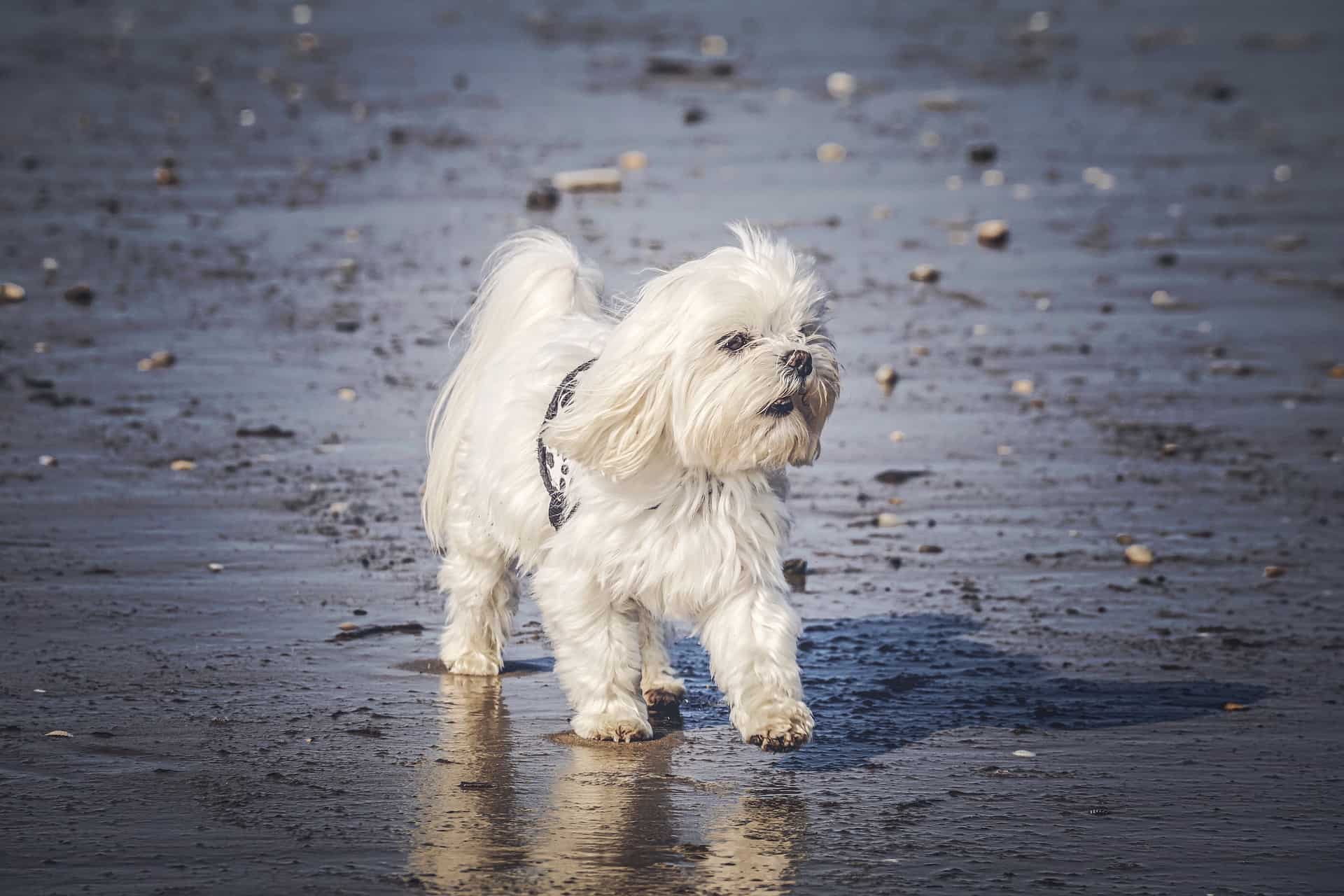
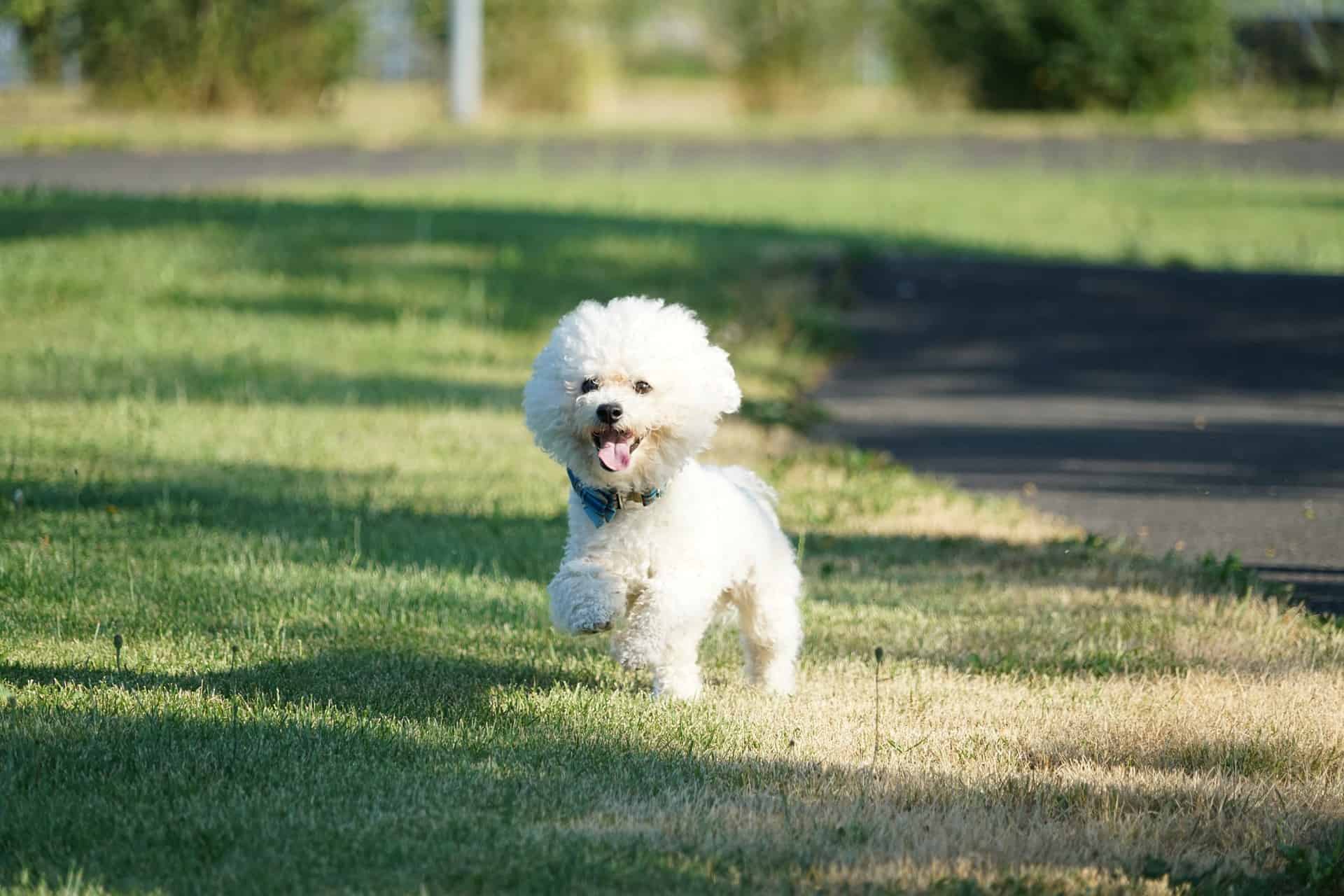
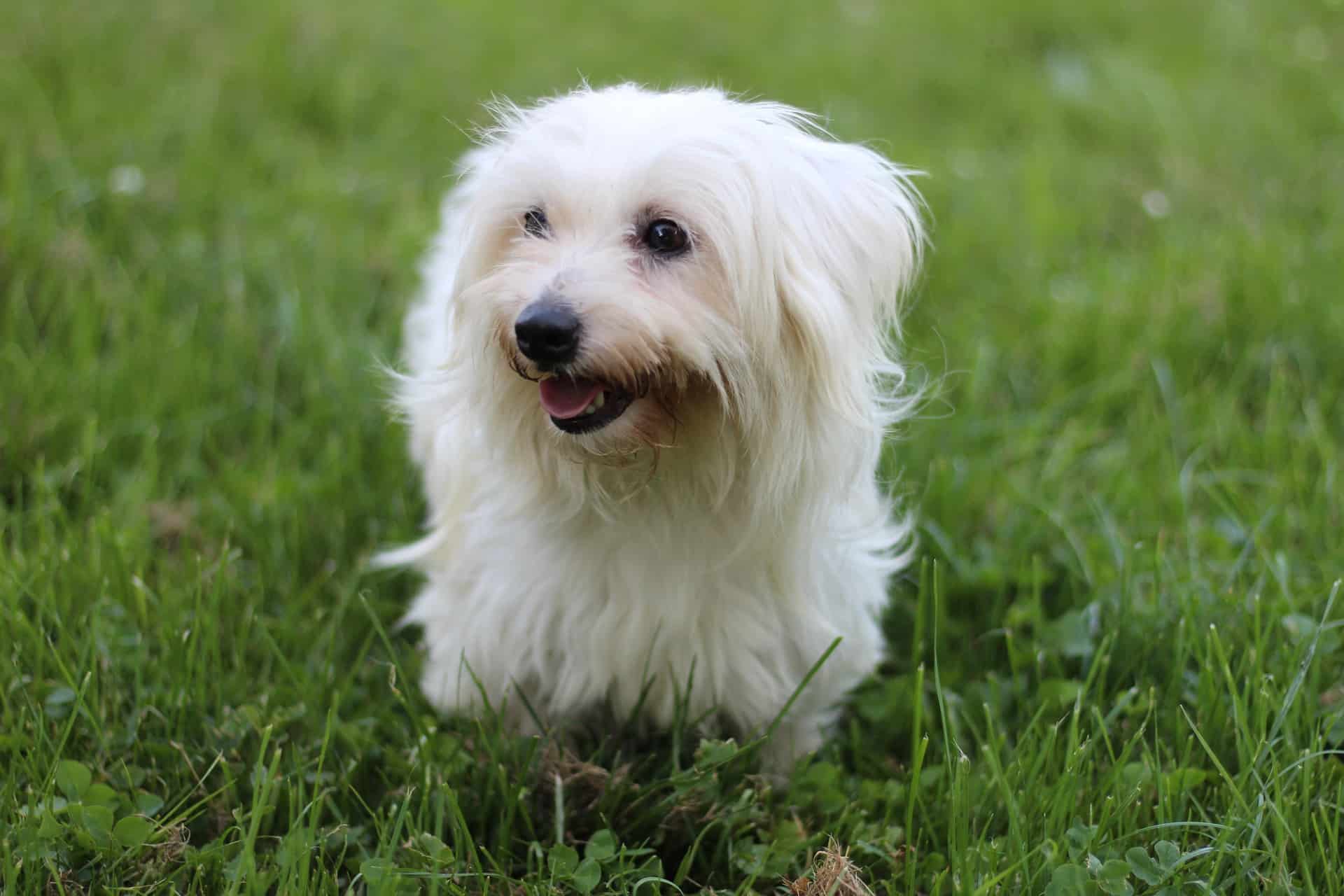
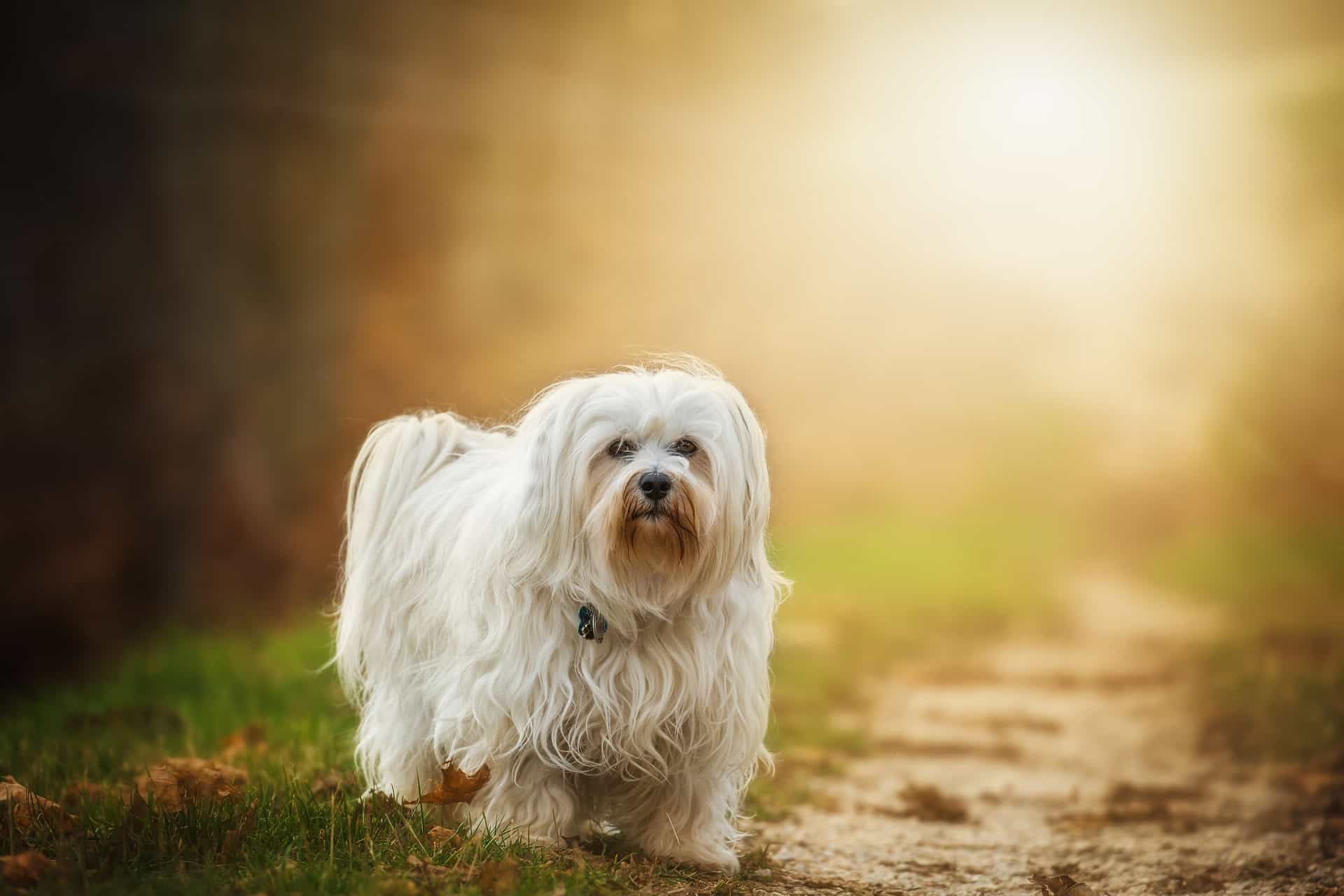
The coat is the defining feature and demands consistent attention. It is pure white, soft, and fluffy, with no undercoat, and the individual hairs stand away from the body in a characteristic flocked or open texture. This single-layer coat does not shed heavily but it tangles readily. Daily brushing is necessary to prevent mats. Professional grooming every four to six weeks keeps the coat in order. Tear staining around the eyes is common in white-coated breeds; daily wiping with a damp cloth helps manage it. Dental hygiene matters, as small breeds accumulate tartar quickly.
Health
The Bolognese is a healthy breed with a lifespan of roughly 12 to 14 years, though some individuals reach 15. The most common issues are patellar luxation and dental disease, both typical of small breeds. Responsible breeders screen for eye conditions and patella problems. The breed remains rare outside Europe, with imports only reaching the United States in the 1980s, which means the gene pool is relatively limited; sourcing from health-tested stock is especially important.
Why these breeds are similar
The **Maltese** is the closest relative, another ancient white Mediterranean lapdog with a long silky coat and a similar loyal, devoted temperament. **Bichon Frise** shares the bichon lineage directly, with a comparable fluffy white coat, gentle disposition, and low-shedding single-layer hair. The **Havanese** is also a bichon-family toy bred exclusively for companionship, with a similarly silky coat, low exercise needs, and strong attachment to its household.
The **Coton de Tulear** matches the Bolognese in coat texture, the cotton-soft single-layer white coat, small size, and gentle loyal character. The **Russian Tsvetnaya Bolonka** is a Russian toy companion also descended from bichon-type dogs brought to Russia by European nobility, sharing the soft coat, small frame, and affectionate temperament.