Wirehaired Pointing Griffon
From France
Purpose & Origin
The Wirehaired Pointing Griffon is a versatile gundog built for the walking hunter: a dog that points, retrieves, and works both upland and water with methodical precision. Its development in the 1800s was unusually deliberate. A Dutch sportsman named Edward Korthals started the program in 1874, crossing twenty dogs drawn from seven breeds, including griffons, spaniels, water spaniels, and German and French pointers.
He traveled widely through France, promoting his new breed at field events and shows, and France became its stronghold, which is why most people still regard it as a French breed despite its Dutch origins. The standard was fixed by 1887. The breed picked up the nickname "the supreme gundog" among its admirers, a label that reflects its ambitions as a do-it-all field companion rather than a specialist.
Its early American history is a footnote worth knowing: the first Griffon registered in the United States in 1887 was recorded as a Russian Setter, because any heavily furnished dog at the time was assumed to be Siberian. The breed gained ground steadily until the Second World War interrupted that momentum, and afterward the rise of competitive field trials, where faster breeds excelled, pulled many hunters away. The Griffon's loyal following kept it alive, built around hunters who want a careful, close-working dog rather than one racing beyond gun range.
Temperament & Behaviour
The Griffon is a dual-purpose dog in the most genuine sense. In the field it works with a deliberate style, holding within the hunter's range and mixing independent problem-solving with responsiveness to direction. At home it is devoted, good-natured, and frequently silly. The breed is generally open toward strangers, tolerant of other dogs, and easy around household pets. The watchdog score is notably high for a sporting dog, so expect alert barking, but protection instinct sits at moderate levels. It is not an aloof or difficult character; it is willing to please and bonds closely with its family.
Activity & Training
A Griffon needs real daily exercise, whether that is jogging, fieldwork, or a long game session. It has a particular fondness for swimming. With energy and exercise requirements both sitting at 4 out of 5, this is not a dog that manages on a short daily walk. Training is workable but not effortless; ease of training sits at a mid-range 3, which reflects the breed's blend of field independence and biddability. It takes to work better than it takes to rote obedience, and training built around activity and purpose will get better results than purely mechanical repetition.
Grooming
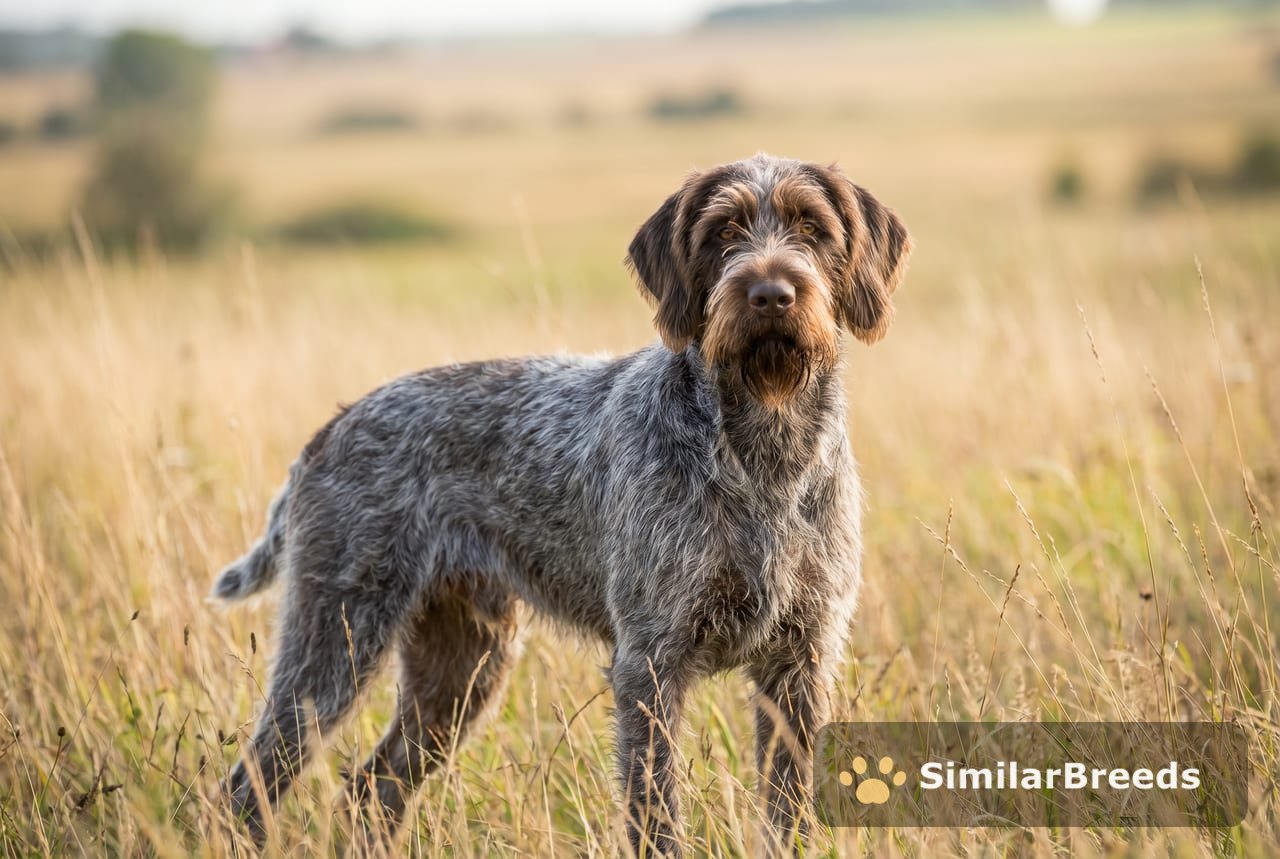
The harsh, wiry coat requires combing or brushing once or twice a week, and hand-stripping to pull out dead hair twice a year. The grooming requirement is moderate overall, but the ear care is non-negotiable: regular cleaning and removal of hair inside the ear canal are necessary to prevent chronic otitis externa, which the breed is prone to.
Health
The Griffon is a generally sound dog with a life span of 12 to 14 years. The main concerns to screen for are hip dysplasia, eye conditions including entropion and ectropion, and elbow dysplasia. Otitis externa is a minor but recurring issue that ear maintenance helps prevent. Hip, eye, and elbow testing is recommended for breeding stock.
Why these breeds are similar
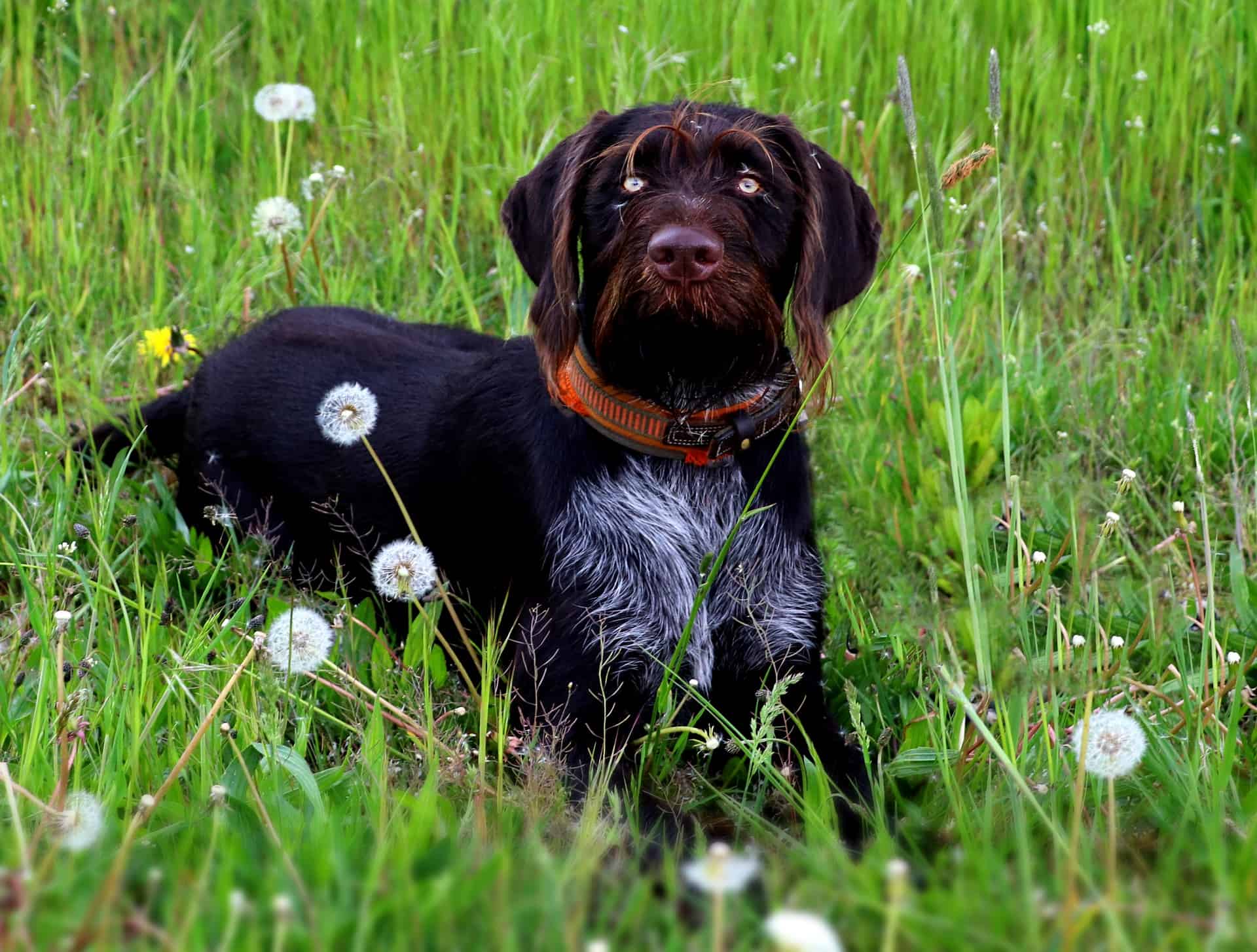
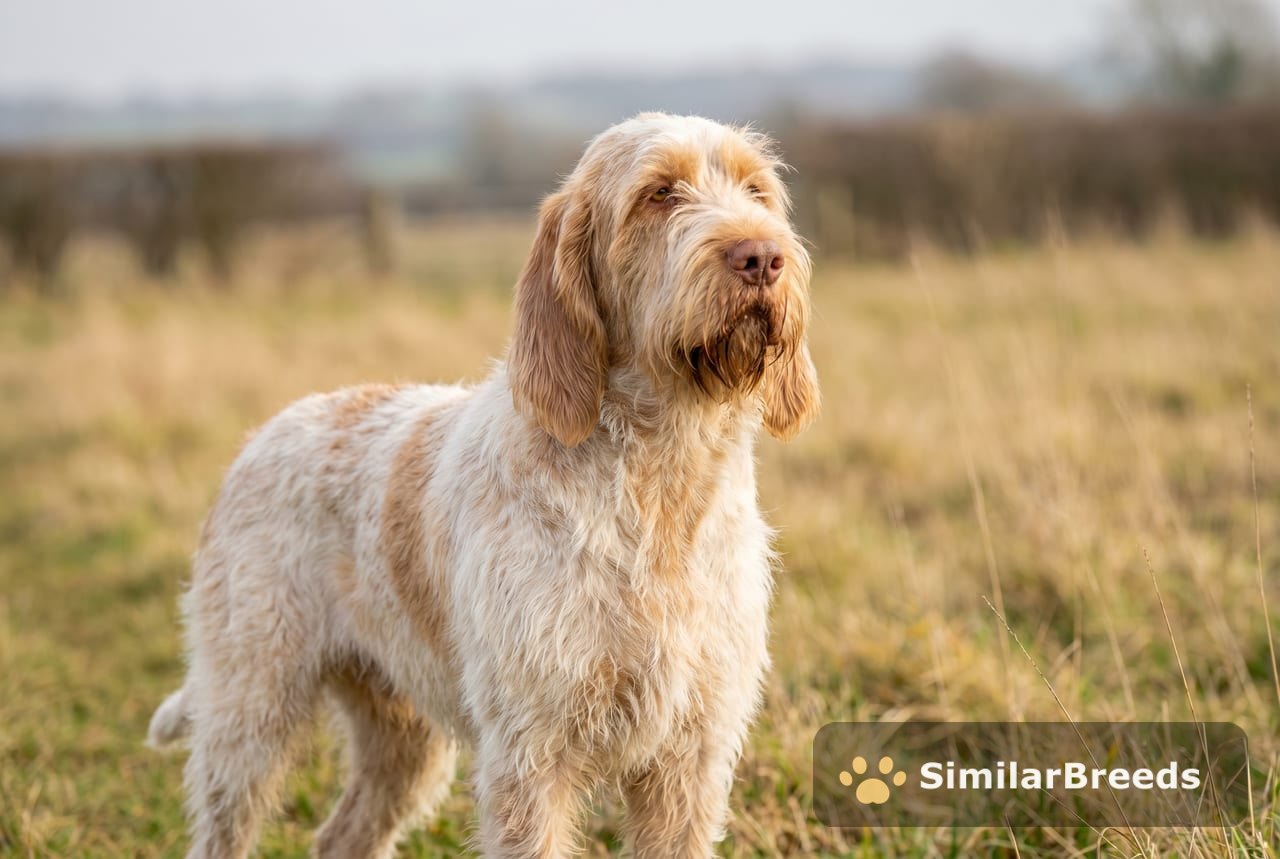
The German Wirehaired Pointer is the closest parallel: another versatile continental gundog with a wiry, weather-resistant coat, built to point and retrieve across varied terrain. The two breeds share working style, build, and coat type closely enough that casual observers sometimes confuse them. The Spinone Italiano is also a wire-coated Italian versatile hunting dog with the same deliberate, methodical pace in the field and an equally amiable temperament off it, making it a natural comparison despite the different nationality.
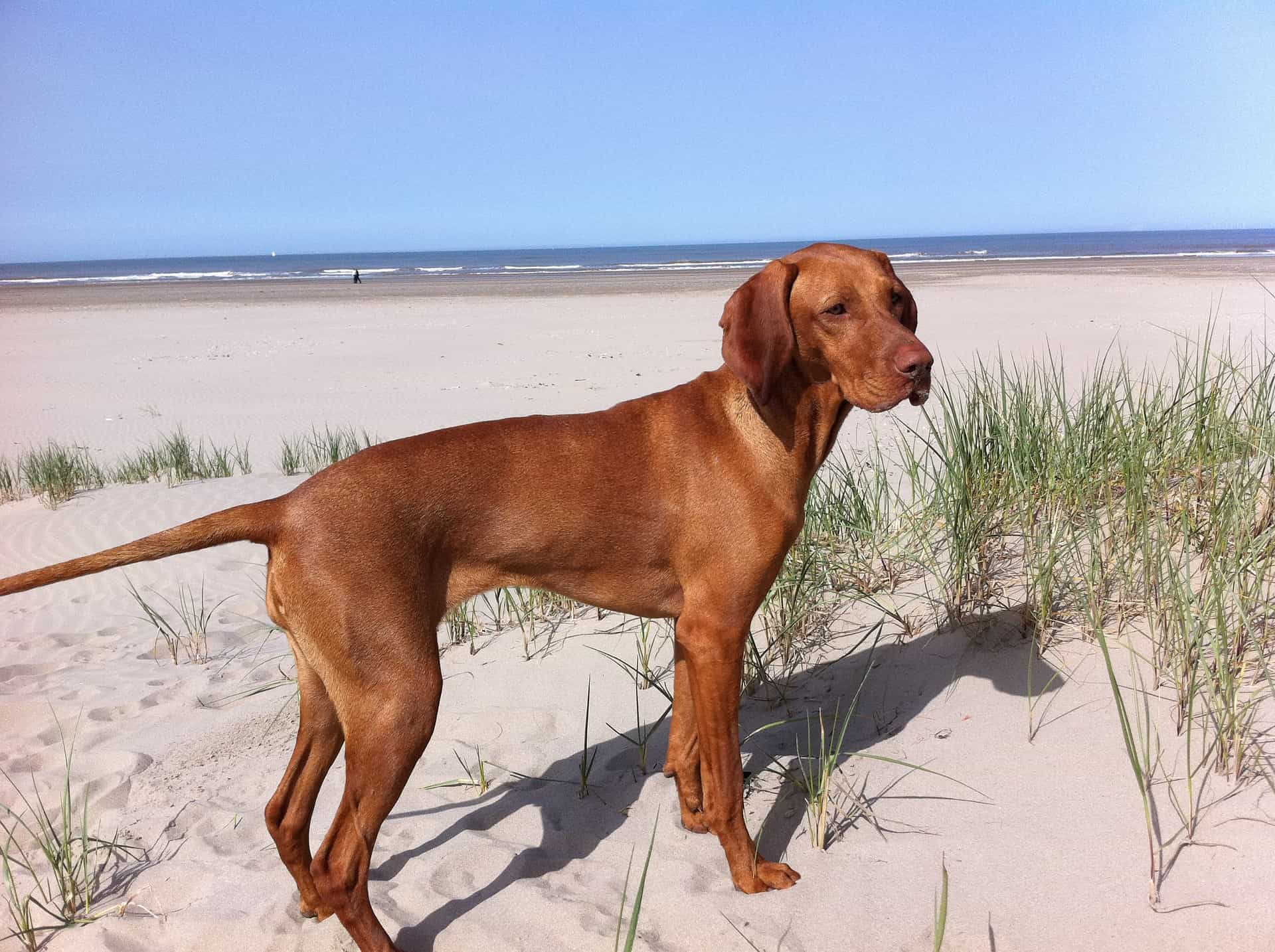
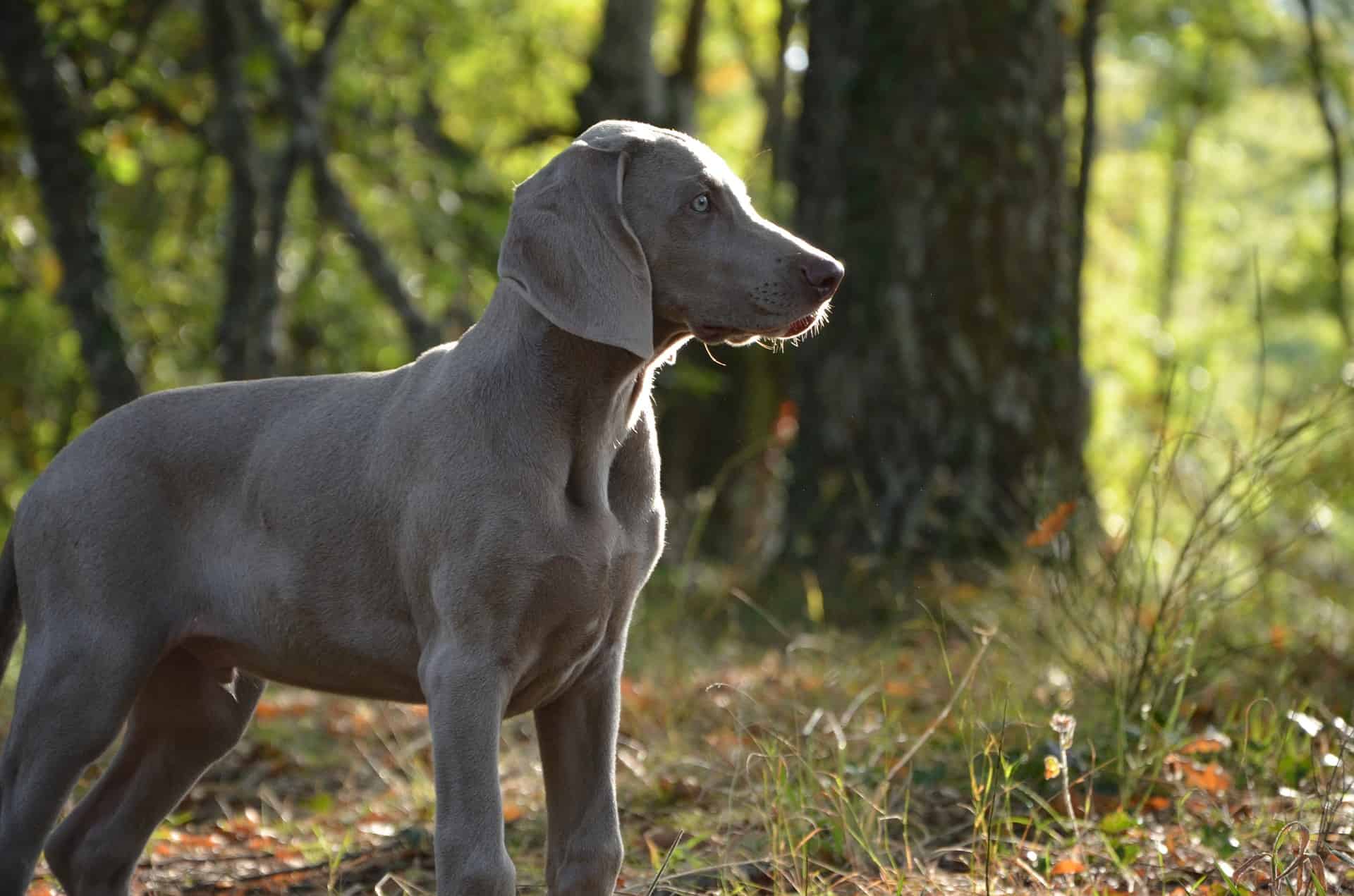
The Vizsla is a Hungarian pointing and retrieving breed with the same devoted, people-focused personality and high exercise demand, though it carries a smooth coat rather than wire. The Weimaraner rounds out the group as another all-purpose German hunting dog in the pointer-retriever category, similarly athletic and similarly bonded to its owner, though notably more intense and driven than the Griffon's more measured working style.
Trait ratings
- Energy level
- 4/5
- Exercise requirements
- 4/5
- Playfulness
- 3/5
- Affection level
- 3/5
- Friendliness toward dogs
- 3/5
- Friendliness toward other pets
- 3/5
- Friendliness toward strangers
- 3/5
- Ease of training
- 3/5
- Watchdog ability
- 5/5
- Protection ability
- 3/5
- Grooming requirements
- 3/5
- Cold tolerance
- 3/5
- Heat tolerance
- 1/5