Purpose & Origin
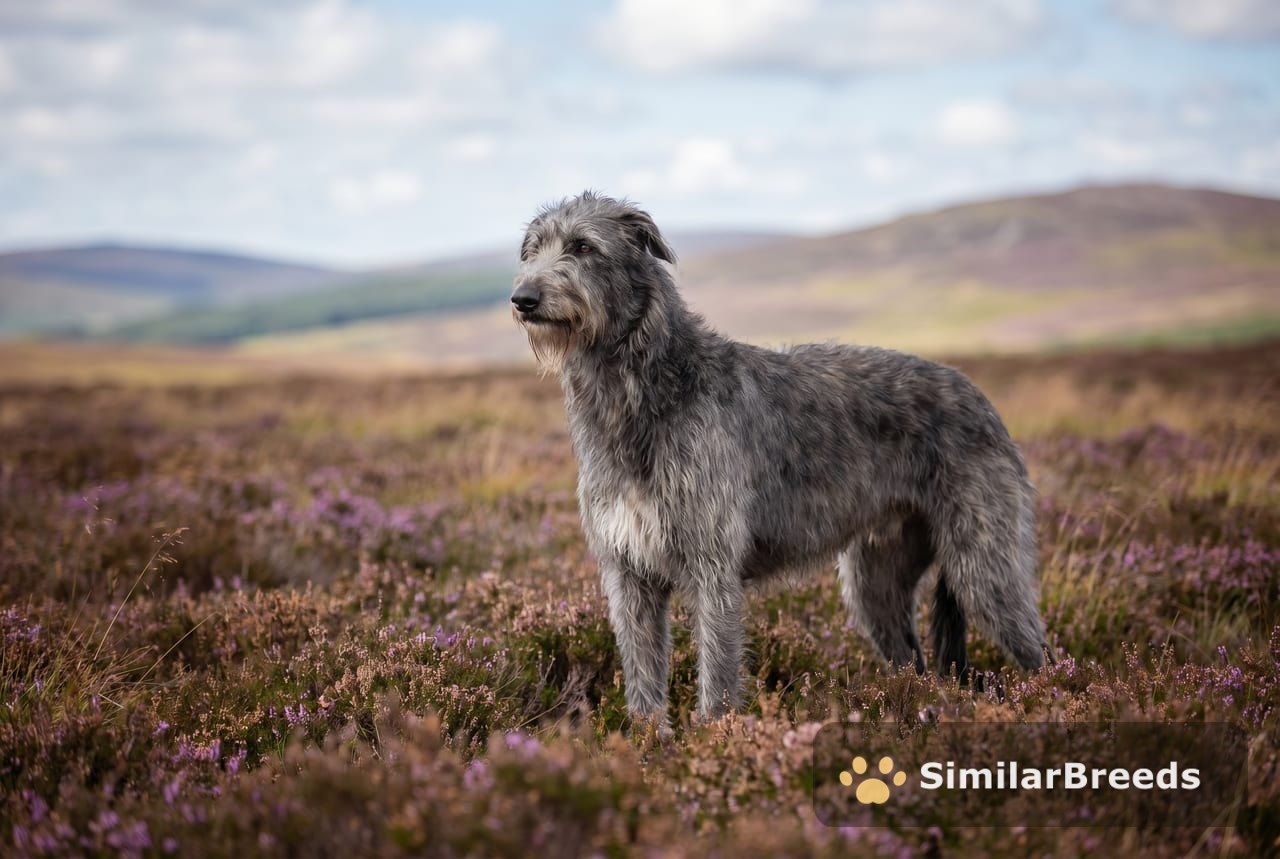
The Scottish Deerhound is one of the oldest and most aristocratic of British breeds, bred specifically to course red deer across the open terrain of the Scottish Highlands. Its roots trace back to ancestral Greyhound stock, and by the sixteenth century it was firmly established as the hunting companion of Highland chieftains and nobility. During the Age of Chivalry, ownership was restricted to those of Earl rank or above, which says something about how the breed was valued.
That exclusivity nearly destroyed it: when the clan system collapsed after Culloden in the mid-1700s, the breed declined sharply. Breech-loading rifles in the following century made coursing deer less fashionable, and numbers fell further. A determined revival effort from the mid-1800s onward stabilised the breed, and the first Deerhound club was formed in England in the 1860s. World War One again reduced the population severely, since most dogs were kept on large estates that did not survive the war intact. Today the Deerhound remains genuinely rare, but the quality has stayed consistently high.
Temperament & Behaviour
At home, the Scottish Deerhound is one of the most relaxed of the large breeds: mellow, low-key, and well-mannered without requiring constant entertainment. It is sensitive and independent, with the polite reserve toward strangers that is common in sighthounds rather than any aggression. It gets on well with children and other dogs, though it may give chase to unfamiliar small animals, a reflex that is essentially hardwired. The watchdog score is the lowest possible, and protection ability is nearly as low. This is not a guarding breed in any meaningful sense.
Activity & Training
A daily run or a long walk is necessary, and the Deerhound needs access to a safe, enclosed area where it can stretch out properly at speed. That said, its energy level is moderate rather than relentless: it is not a dog that will bounce off the walls indoors, but it does need enough room to lie down comfortably on a soft surface. Ease of training is low, reflecting the independence that coursing dogs have always needed. It is willing to please but not especially biddable, and heavy-handed methods will backfire on such a sensitive dog.
Grooming
The crisp, wiry coat requires combing once or twice a week to prevent matting and to keep the texture correct. Some light scissoring to tidy straggling hair is optional, and minimal stripping around the face and ears keeps the head looking clean. This is not a heavy-maintenance coat, but it does need consistent attention. Soft bedding is important to prevent callouses on the elbows and hocks given the dog's size and weight.
Health
The Deerhound's major concerns include gastric torsion, cardiomyopathy, and osteosarcoma, the combination of which is sobering in a breed that already lives only seven to nine years. Cystinuria and skin allergies are noted as minor concerns, with hypothyroidism and a clotting factor deficiency seen occasionally. Cardiac testing and factor VII screening are recommended. The breed is also sensitive to barbiturate anesthesia, which any vet treating a Deerhound needs to know in advance.
Why these breeds are similar
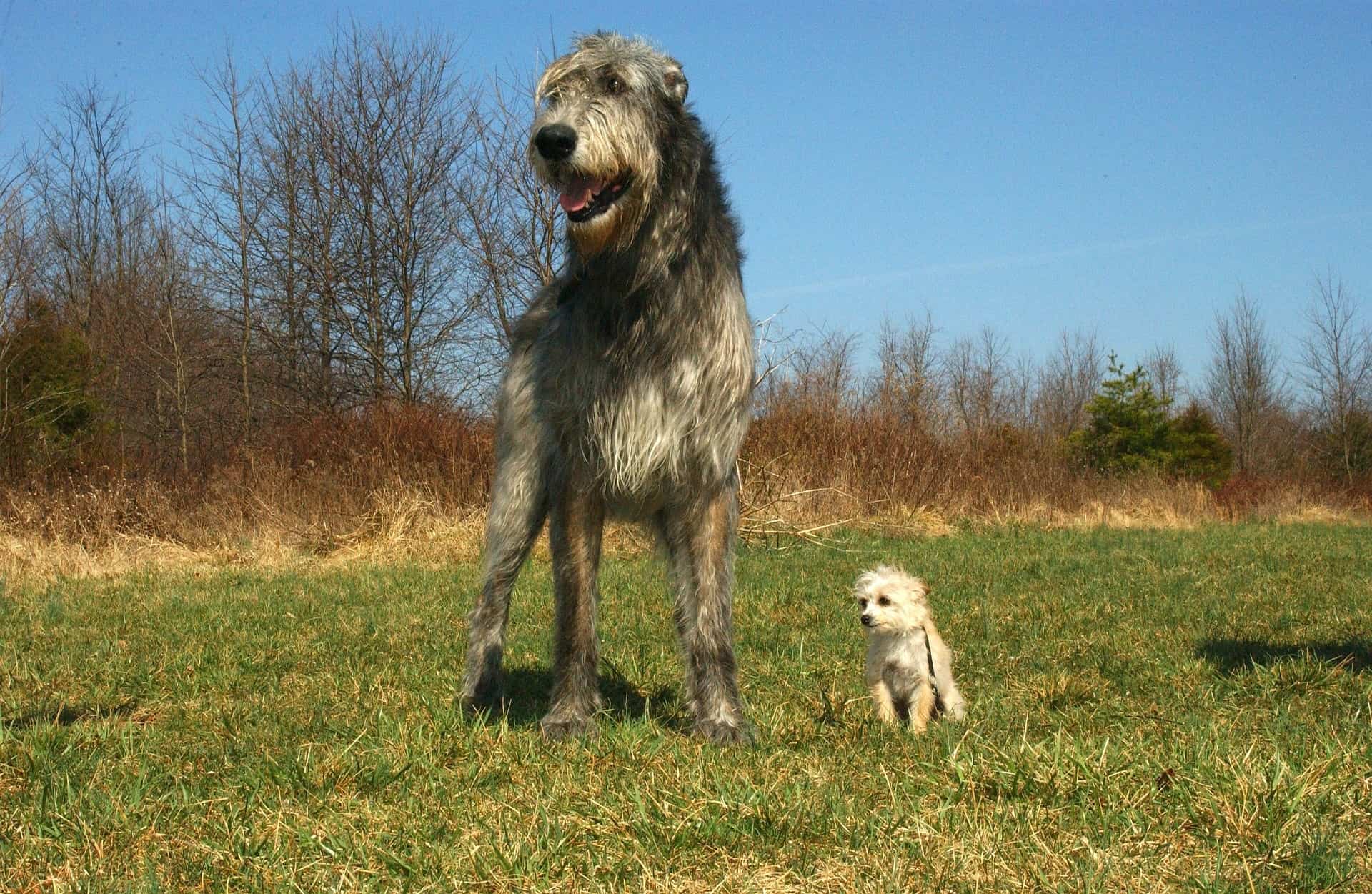
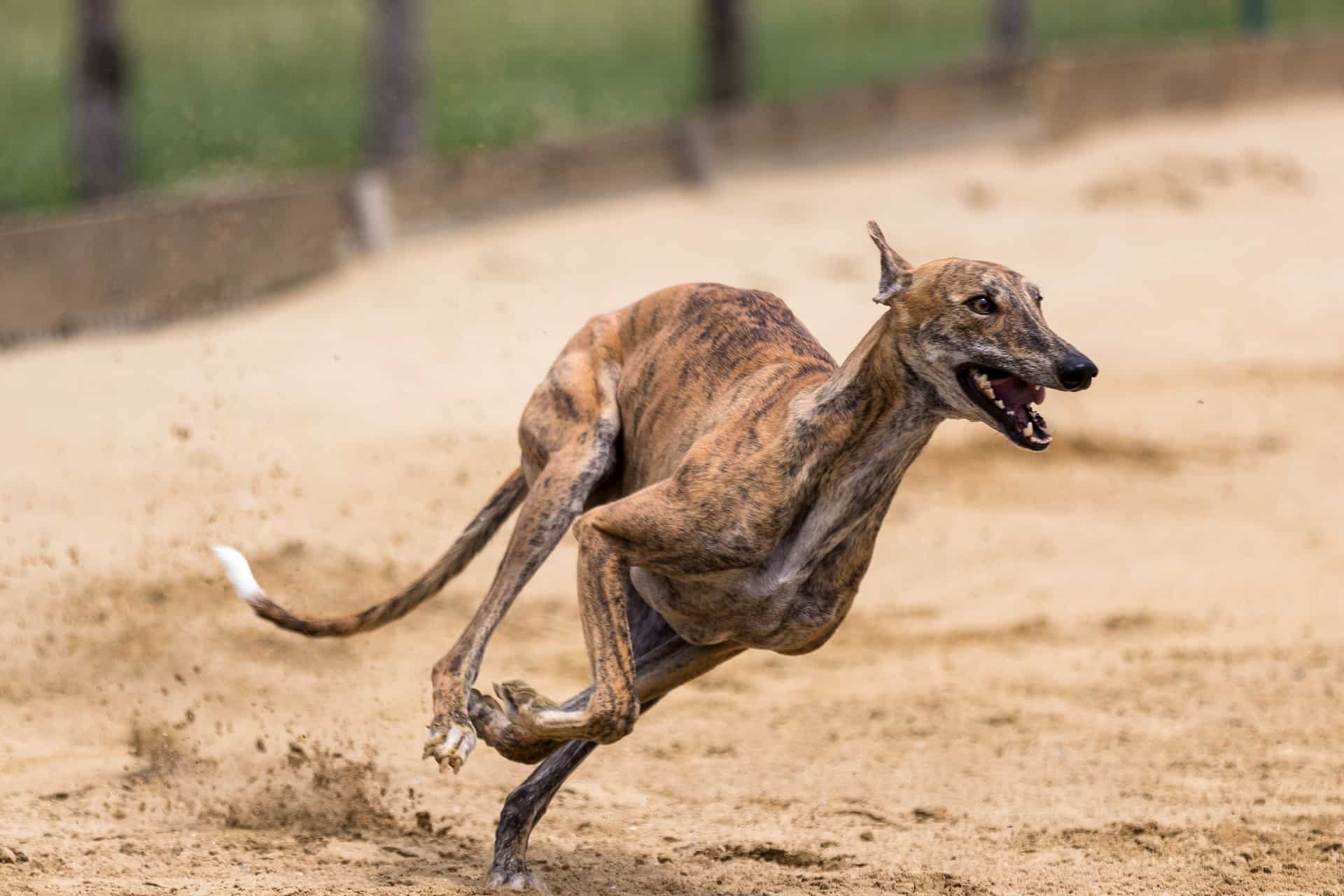
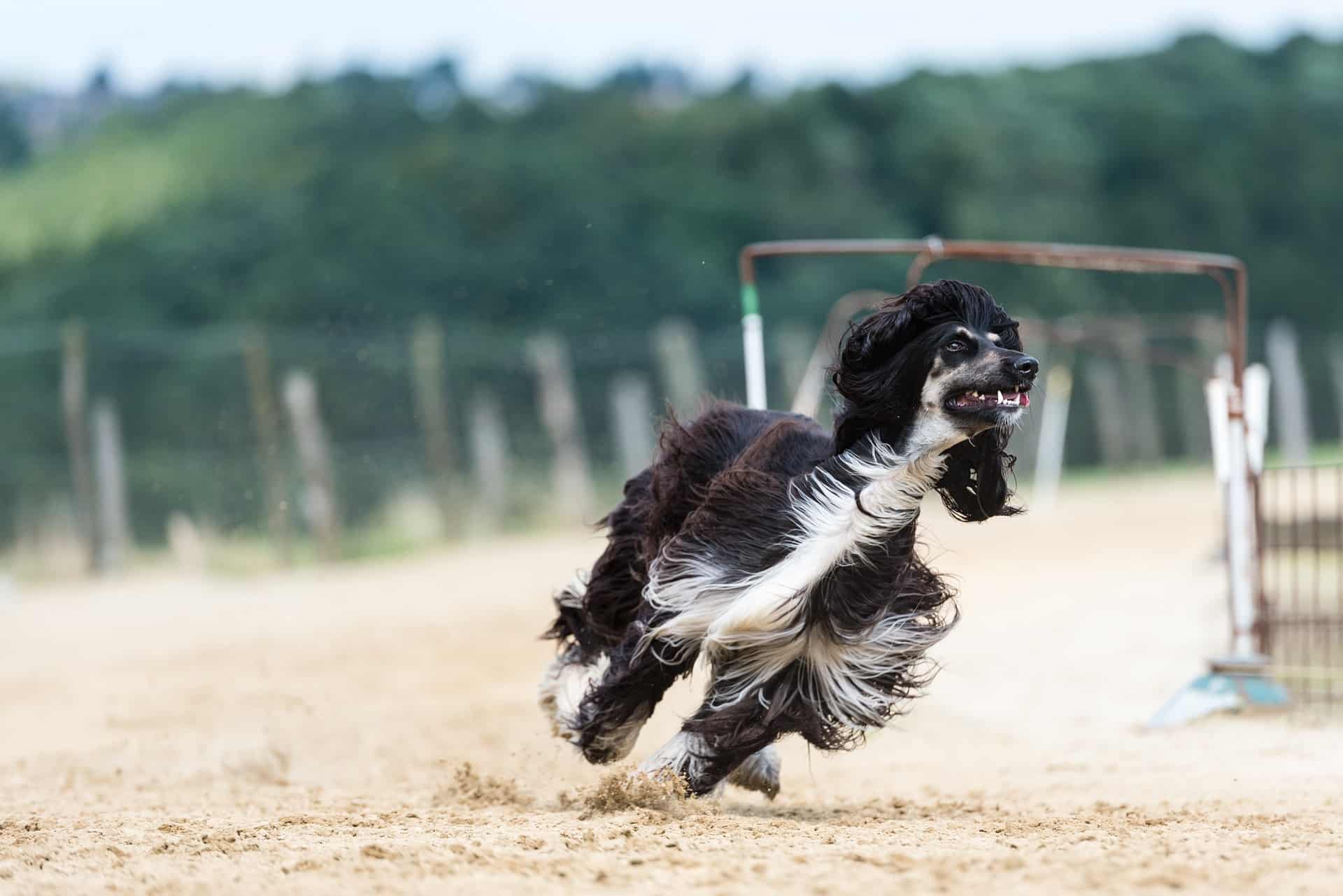
The Irish Wolfhound is the closest relative, a rough-coated giant sighthound from the neighbouring island with a comparable history of coursing large game for nobility. The two breeds share build, coat texture, temperament, and many of the same health vulnerabilities. The Greyhound is the ancestral connection: the Deerhound is essentially a larger, rough-coated Greyhound adapted for the Scottish Highlands, and the two share the same coursing mechanics, lean frame, and independent sighthound character. The Afghan Hound rounds out the group as another ancient rough-coated sighthound built for pursuing large prey across open, difficult terrain, sharing the Deerhound's aristocratic bearing, sensitivity, and low trainability alongside its striking silhouette.
Trait ratings
- Energy level
- 2/5
- Exercise requirements
- 3/5
- Playfulness
- 2/5
- Affection level
- 3/5
- Friendliness toward dogs
- 4/5
- Friendliness toward other pets
- 3/5
- Friendliness toward strangers
- 3/5
- Ease of training
- 2/5
- Watchdog ability
- 1/5
- Protection ability
- 2/5
- Grooming requirements
- 3/5
- Cold tolerance
- 3/5
- Heat tolerance
- 2/5