Purpose & Origin
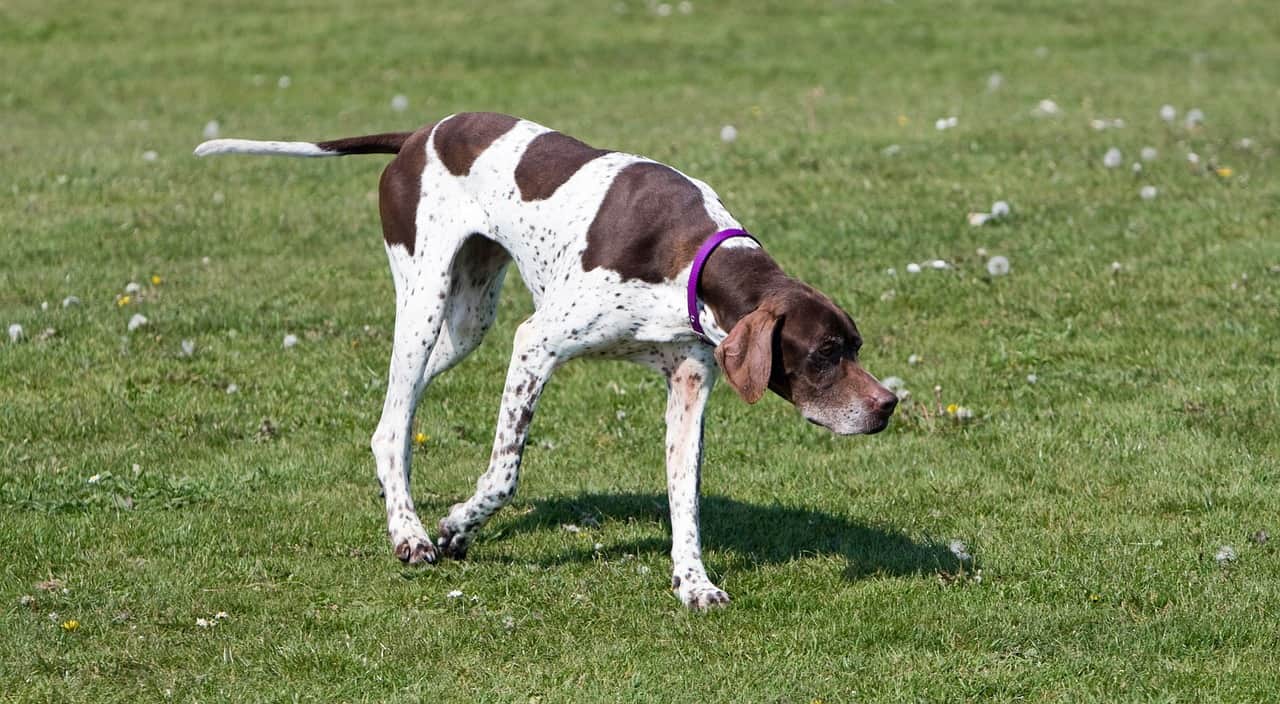
The Pointer began its working life in seventeenth-century England not as a bird dog but as a hare locator, standing still over a hare so that coursing Greyhounds could be slipped to pursue it. Wing-shooting changed everything. As firearms became common in the eighteenth century, hunters needed a dog that could range ahead, find birds, and freeze on point long enough for a shot with a slow flintlock. The breed's early foundations almost certainly drew on Greyhound speed, Foxhound nose, Bloodhound scenting ability, and an older type of setting spaniel.
After the War of Spanish Succession in 1713, British officers returning home brought heavy-boned Spanish Pointers with them, and later crosses with Italian Pointer stock produced the breed recognisable today. The Pointer flourished on the great private hunting estates of England, where a brace of dogs working in tandem let the hunter triangulate exactly where a covey was sitting. When formal dog shows arrived in the late nineteenth century, the Pointer was already a prestige breed; the Westminster Kennel Club was founded largely around Pointer interests.
Temperament & Behaviour
This is a genuine wide-ranging hunting dog, and its temperament reflects that fully. The Pointer is alert, energetic, and always scanning the environment for scent, which means it can be easily distracted from obedience cues in everyday life but becomes laser-focused and practically immovable once it locks onto a bird. At home it is affectionate and gentle, good with older children and usually tolerant of other dogs, though small children may find its boisterous energy overwhelming. It is not naturally cold toward strangers but is not a dog that craves attention from everyone it meets. Field-bred lines tend to run even hotter than show lines.
Activity & Training
A Pointer kept under-exercised is a Pointer headed for trouble. It needs at least an hour of genuine exertion daily, not a short lead walk. Access to open ground where it can run and search is ideal, and regular hunting work suits it best of all. Pent-up energy turns quickly to destructive behaviour. Training requires patience: ease-of-training sits at mid-range because the Pointer's instinct to range and hunt competes with attention to its handler. It responds well to consistent, reward-based work and has the intelligence to learn, but first-time owners who expect easy off-switch obedience will be frustrated. A securely fenced yard is essential.
Grooming
Grooming the Pointer is about as low-effort as it gets for a dog this size. The short, dense coat needs only occasional brushing to remove dead hair, and it sheds relatively lightly. Routine ear checks, nail trims, and dental care cover the rest. Tail-tip injuries are a known hazard in heavy cover, so it is worth checking after field work.
Health
The Pointer is a generally sound breed with a life span of twelve to fifteen years. Minor concerns include hip dysplasia, hypothyroidism, and entropion. Cataracts and deafness appear occasionally. Recommended health screens cover hips, eyes, and thyroid. The tail tip is prone to injury in the field, which can be persistent and slow to heal.
Why these breeds are similar
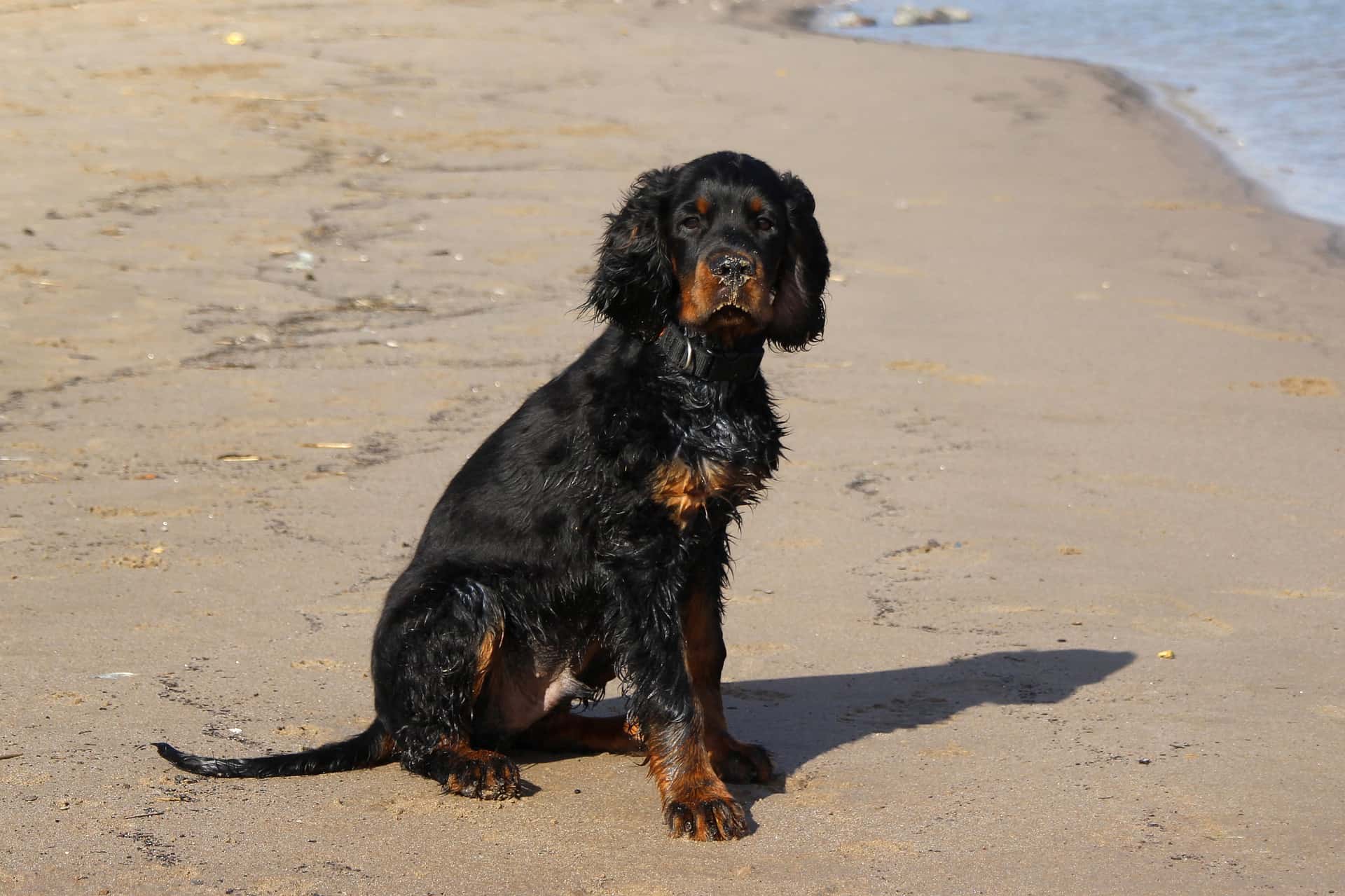
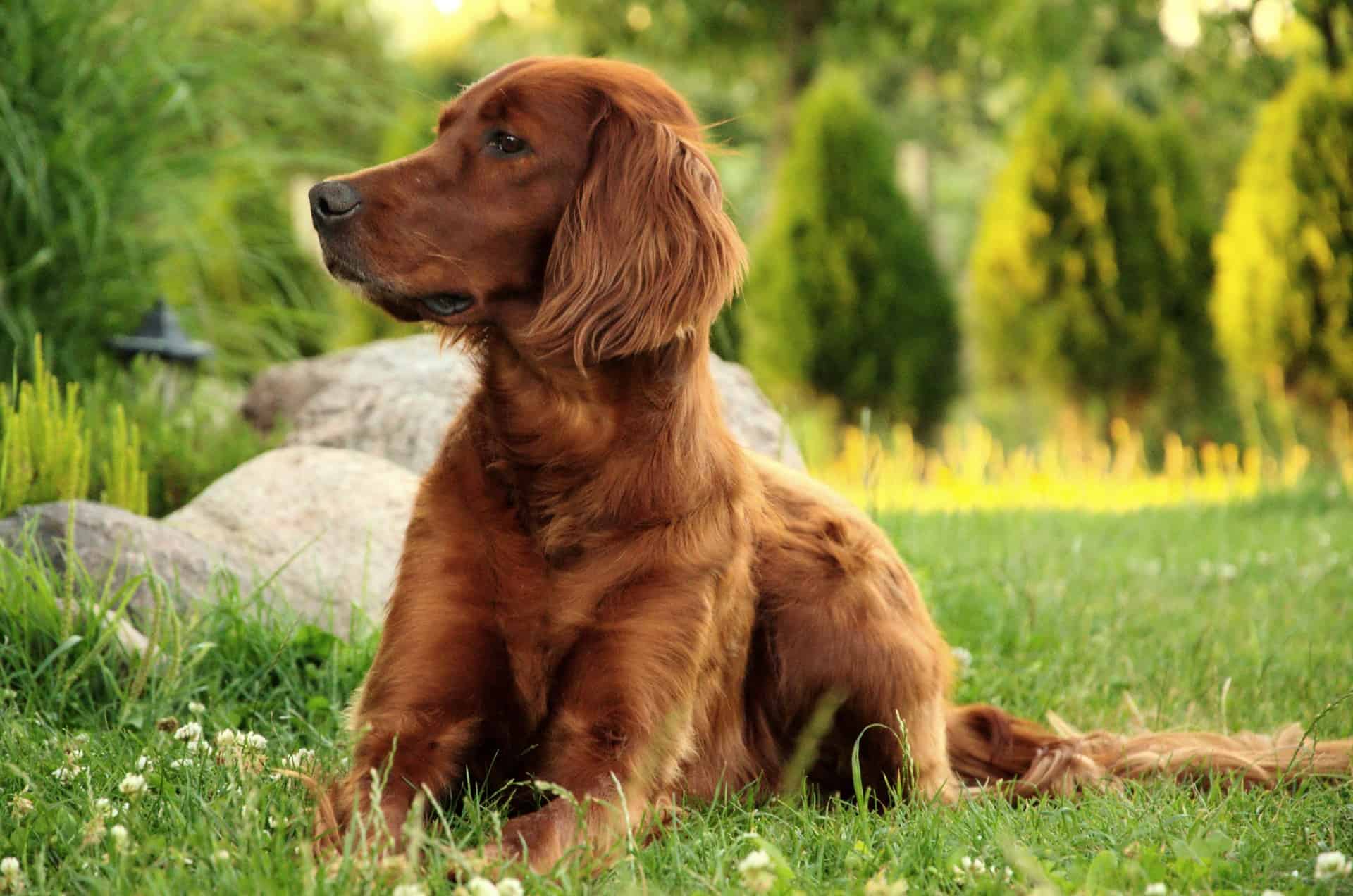
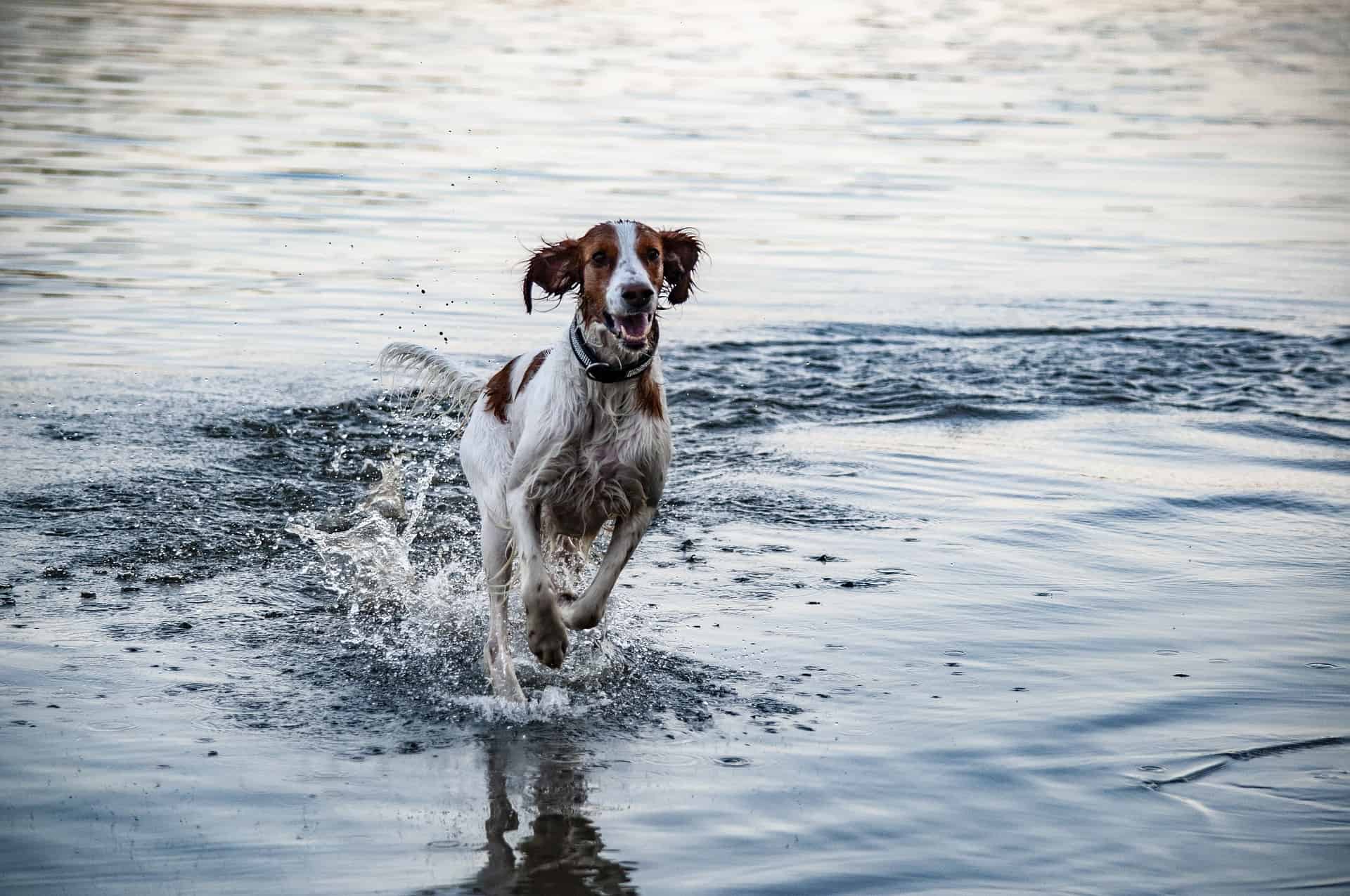
The Gordon Setter, Irish Setter, and Irish Red and White Setter share the Pointer's core job: range ahead of the hunter, locate upland birds, and hold steady so the shooter can close the distance. All four are large-framed, high-energy sporting dogs that were purpose-built for a day in the field and need serious exercise to stay sane at home. The setters traditionally "set" (crouched) rather than pointing upright, but the functional difference is minor; all three are used in the same gun-dog role today.
Where they diverge from the Pointer is coat: all three setters carry long, silky fur that needs regular maintenance, while the Pointer's short coat demands almost none. The Irish Setter is the most exuberant and the hardest to settle; the Gordon is the most serious and perhaps the most independent; the Irish Red and White sits between the two in energy and trainability. Any owner drawn to the Pointer's drive and athleticism but wanting a dog with more coat presence will find the setters a natural alternative.
Trait ratings
- Energy level
- 4/5
- Exercise requirements
- 4/5
- Playfulness
- 4/5
- Affection level
- 4/5
- Friendliness toward dogs
- 4/5
- Friendliness toward other pets
- 4/5
- Friendliness toward strangers
- 3/5
- Ease of training
- 3/5
- Watchdog ability
- 4/5
- Protection ability
- 3/5
- Grooming requirements
- 1/5
- Cold tolerance
- 3/5
- Heat tolerance
- 3/5