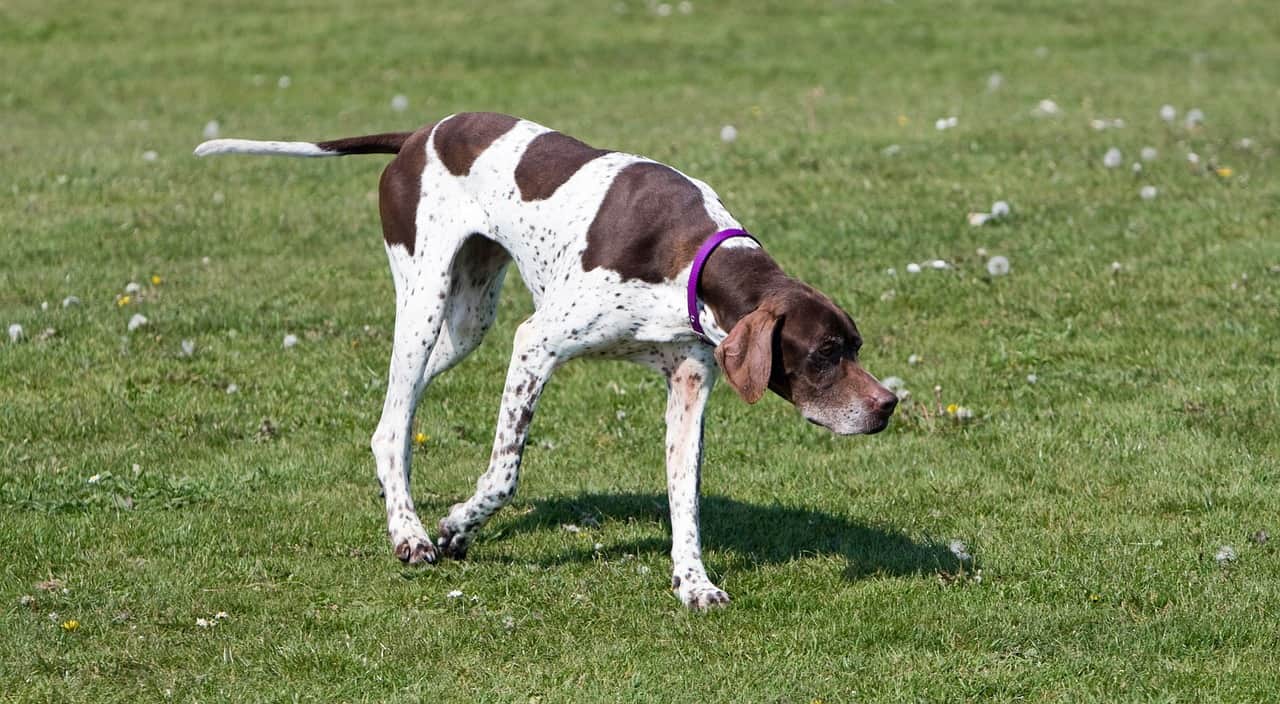
Irish Red And White Setter
From Ireland

Purpose & Origin
The Irish Red and White Setter is actually the older of the two Irish setter types. Its roots go back to spaniel ancestors in the 1700s, most of them carrying white coats with red markings. As these dogs grew larger and faster than spaniels, they became dedicated bird setters and retrievers, covering broad ground ahead of hunters. Litters routinely threw both red-and-white and solid-red pups, treated as one breed until the dog show era arrived in the early 1800s.
Fashion tipped toward the solid red, and the red-and-white was quietly sidelined. By the early 1900s it had nearly vanished, and World War I nearly finished it off entirely. The Reverend Noble Huston took up the cause of revival, followed by Mrs. Maureen Cuddy, whose female Judith Cunningham of Knockella appears in the pedigree of virtually every living Red and White.
The Irish Red and White Setter Society formed in London in 1944, and the breed crept back from the edge. A small number reached the United States in the 1960s, with serious breeding efforts following in the 1980s. The Canadian Kennel Club recognised the breed in 1999 and the AKC in 2009, cementing its return from near-extinction.
Temperament & Behaviour
This is a cheerful, outgoing dog with genuine warmth toward people and other animals alike. It greets strangers readily, coexists well with other dogs and household pets, and has the kind of playful, sociable nature that makes it hard to ignore. Compared with the Irish Setter it runs slightly calmer, with a natural tendency to settle indoors once its exercise needs are met.
It barks when there is a real reason and not much otherwise, which makes it a reliable watchdog without being a nuisance. The hunting instinct sits close to the surface: it is a natural bird dog that needs less field training than many sporting breeds to do its job competently.
Activity & Training
An hour of exercise per day is the baseline, and the breed is happiest when that hour involves actual work. Field hunting, obedience, agility, and any structured activity with the family all suit it well. Mental engagement matters as much as physical output; these dogs take to training challenges readily and do not stagnate easily.
Training is generally straightforward given the breed's willingness to engage, though it can drift toward distraction or mild stubbornness, so short, varied sessions work better than long repetitive ones. Missing a single day of exercise will not destabilise it, but consistent activity is non-negotiable for a well-mannered companion. This is a sociable dog that should not be isolated in a kennel.
Grooming
The coat is moderate in length with feathering on the chest, ears, belly, and legs. Brushing every two to three days keeps tangles from forming in the feathered sections and maintains the natural appearance. The breed should not be clipped; a light tidy of stray hairs is all that is needed beyond regular brushing. Grooming requirements are meaningful but not extreme, landing toward the higher end of what sporting breeds typically demand.
Health
The Irish Red and White Setter is generally a sound breed with a lifespan of eleven to thirteen years. The main health concerns are hip dysplasia and Canine Leukocyte Adhesion Deficiency (CLAD), a hereditary immune disorder. Von Willebrand's disease and cataracts appear occasionally. Recommended health tests include hip evaluation, CLAD screening, and eye examination. Responsible breeders test breeding stock for these conditions.
Why these breeds are similar
The Irish Setter is the closest relative: same Irish origin, same bird-setting and retrieving function, and a shared ancestry from the same litters. The two breeds diverged only through coat-colour preference in the show era, so their build, energy, and temperament remain nearly identical. The English Setter is a direct counterpart from Britain, another feathered gundog built to quarter wide ground and set birds, with a similarly affectionate and energetic character.
The Gordon Setter completes the classic setter trio, sharing the same hunting role and family classification, though it runs heavier and more serious in temperament. The English Springer Spaniel overlaps in function as a versatile bird dog used for both flushing and retrieving, and it carries a comparable level of energy, trainability, and family affability. The Pointer connects through the broader gundog tradition, sharing the upland-bird hunting purpose and the need for substantial daily exercise, though it is built leaner and runs a more independent, less demonstrative personality.
Trait ratings
- Energy level
- 4/5
- Exercise requirements
- 5/5
- Playfulness
- 4/5
- Affection level
- 5/5
- Friendliness toward dogs
- 4/5
- Friendliness toward other pets
- 4/5
- Friendliness toward strangers
- 4/5
- Ease of training
- 4/5
- Watchdog ability
- 5/5
- Protection ability
- 1/5
- Grooming requirements
- 4/5
- Cold tolerance
- 3/5
- Heat tolerance
- 3/5