Norwegian Elkhound (Grey)
From Norway
Purpose & Origin
The Norwegian Elkhound is among the oldest known dog breeds, with skeletal remains from Norway dated to 6,000 to 7,000 years ago. Its bones have been found alongside Viking burials, and the breed appears largely unchanged over that span. In Norway it is the Norsk Elghund Grå. The name "elkhound" misleads slightly: this is a hound in the Scandinavian sense, meaning it hunted elk (moose), reindeer, bear, wolf, lynx, and ground-dwelling birds such as capercaillie.
Hunters used it two ways. Released loose in dense woodland, it tracked quarry, bayed it, and held it in place until the hunter arrived. On a leash in open terrain, it tracked only. Both roles demanded stamina, a reliable voice, and the nerve to face large predators. It became the national dog of Norway and appeared at Norwegian dog shows from the 1870s.
Temperament & Behaviour
The Elkhound is affectionate and even-tempered, with an open attitude toward strangers that is unusual in a working spitz. Lively and playful, but centuries of solo hunting built independence into its character. Loyalty to its family is strong; tolerance of unfamiliar dogs and other pets is moderate at best.
The breed is vocal. Baying was its hunting instrument and the instinct remains. In residential settings this needs managing from puppyhood. Prey drive is robust, making reliable recall a genuine training goal rather than a given.
Activity & Training
Energy is high but exercise requirements are moderate by working-breed standards. Consistent daily activity, around 45 minutes of walking or active play plus some mental engagement, keeps the dog settled. Without it, the breed becomes restless and invents its own entertainment, usually loudly.
Training is achievable but requires patience. The Elkhound is intelligent and capable, but independence means compliance is earned rather than assumed. Positive, reward-based methods work well; harsh corrections harden resistance. Bark management, leash manners, and recall are the areas where early consistency pays the clearest dividend.
Grooming
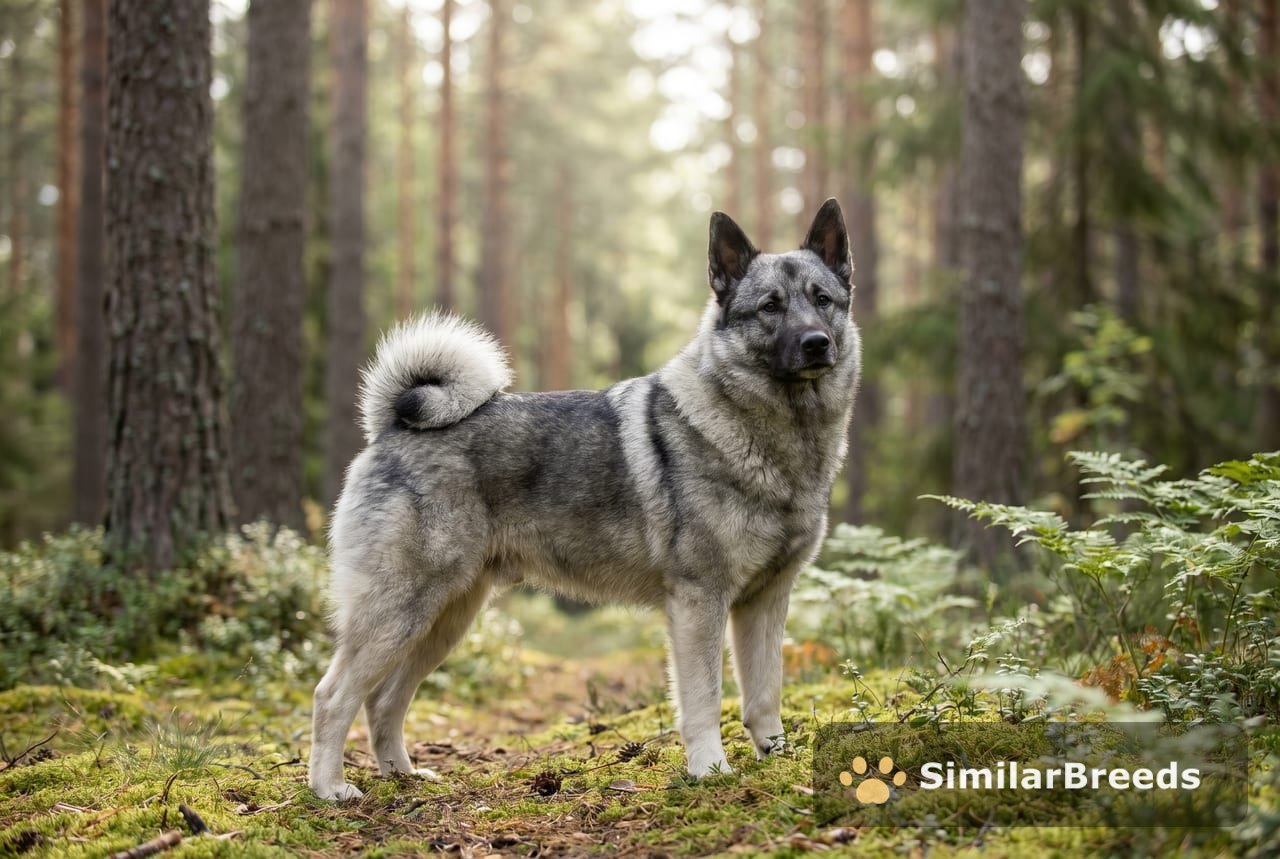
The coat is a dense woolly undercoat beneath a straight, hard outer coat. Grey with black-tipped guard hairs, it has a distinctly wolf-like appearance. Weekly brushing keeps it in order outside shedding. Twice yearly the Elkhound drops its entire undercoat over several weeks, requiring daily brushing. The coat is naturally dirt-resistant and rarely needs bathing. No trimming is required.
Health
Lifespan is typically 12 to 15 years. The breed has a known predisposition to progressive retinal atrophy and Fanconi syndrome, a kidney tubule disorder. Hip dysplasia occurs at moderate frequency. The breed gains weight easily, which matters because excess weight accelerates joint wear. Cold tolerance is exceptional; heat tolerance is poor, and exercise in warm weather should be limited.
Why these breeds are similar
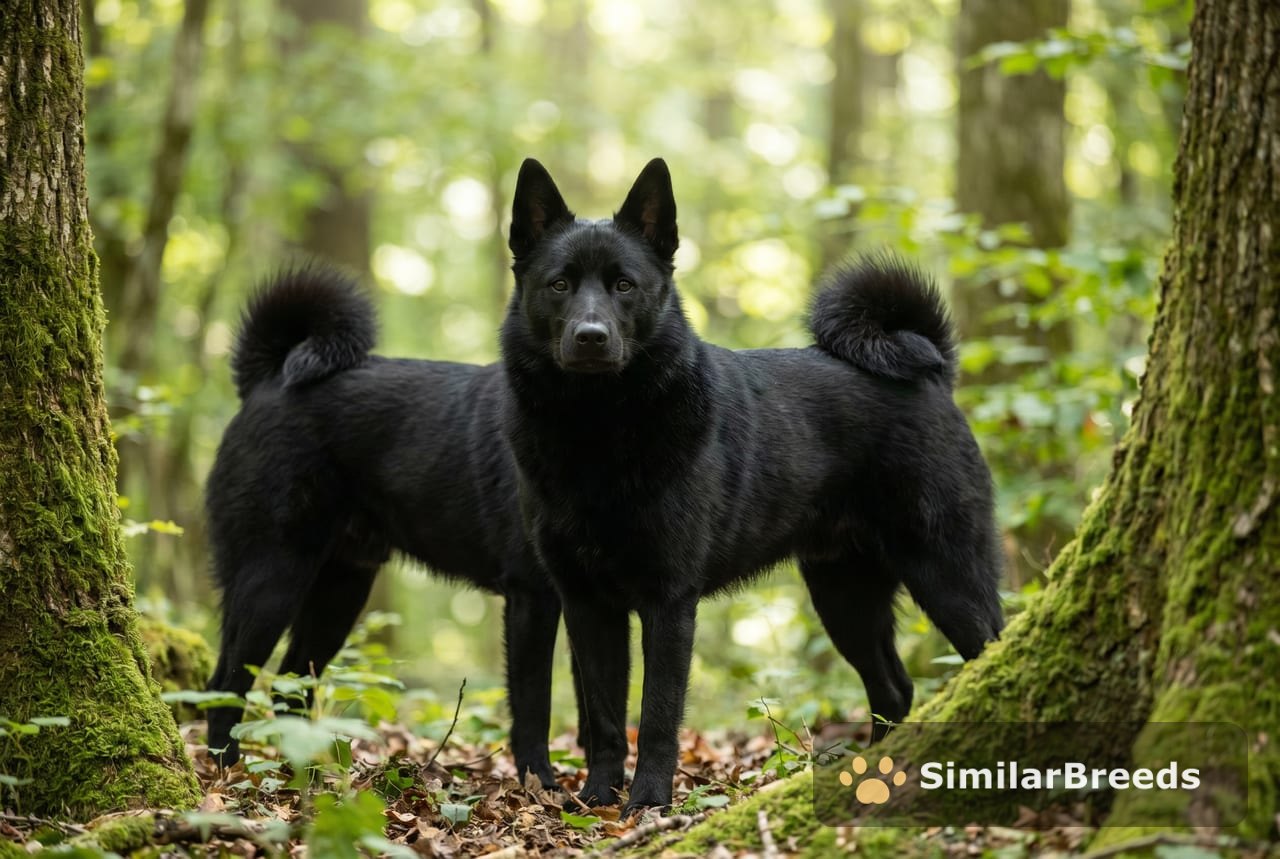
**Norwegian Elkhound (Black)** is the closest relative, a smaller and rarer colour variant from the same Norwegian hunting tradition. It shares the spitz build, the baying style, and the independent temperament, differing in size, coat colour, and slightly sharper intensity.
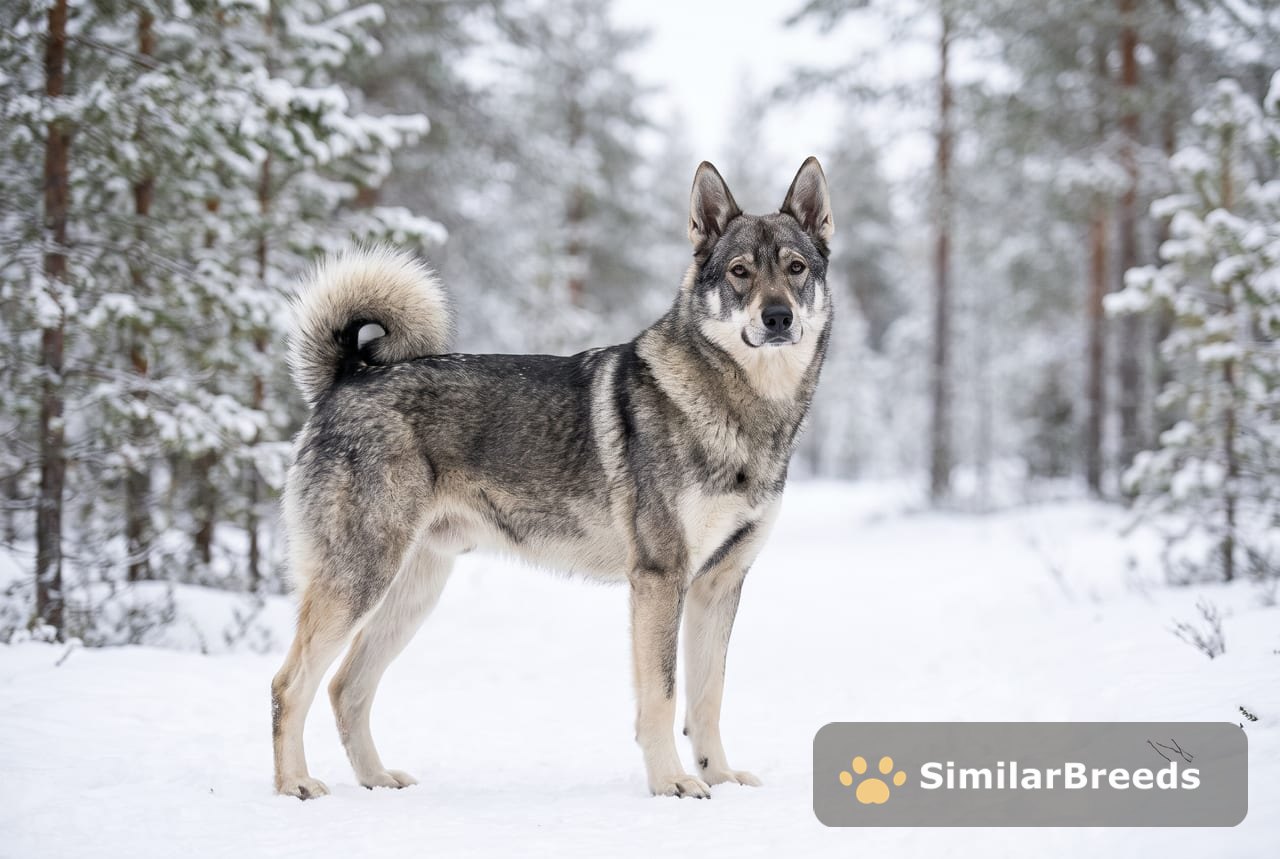
**Jämthund (Swedish Elkhound)** is the Swedish counterpart, larger and bred for the same moose-hunting role across the border. The two were classified together until recently and share the same functional design and Scandinavian forest habitat.
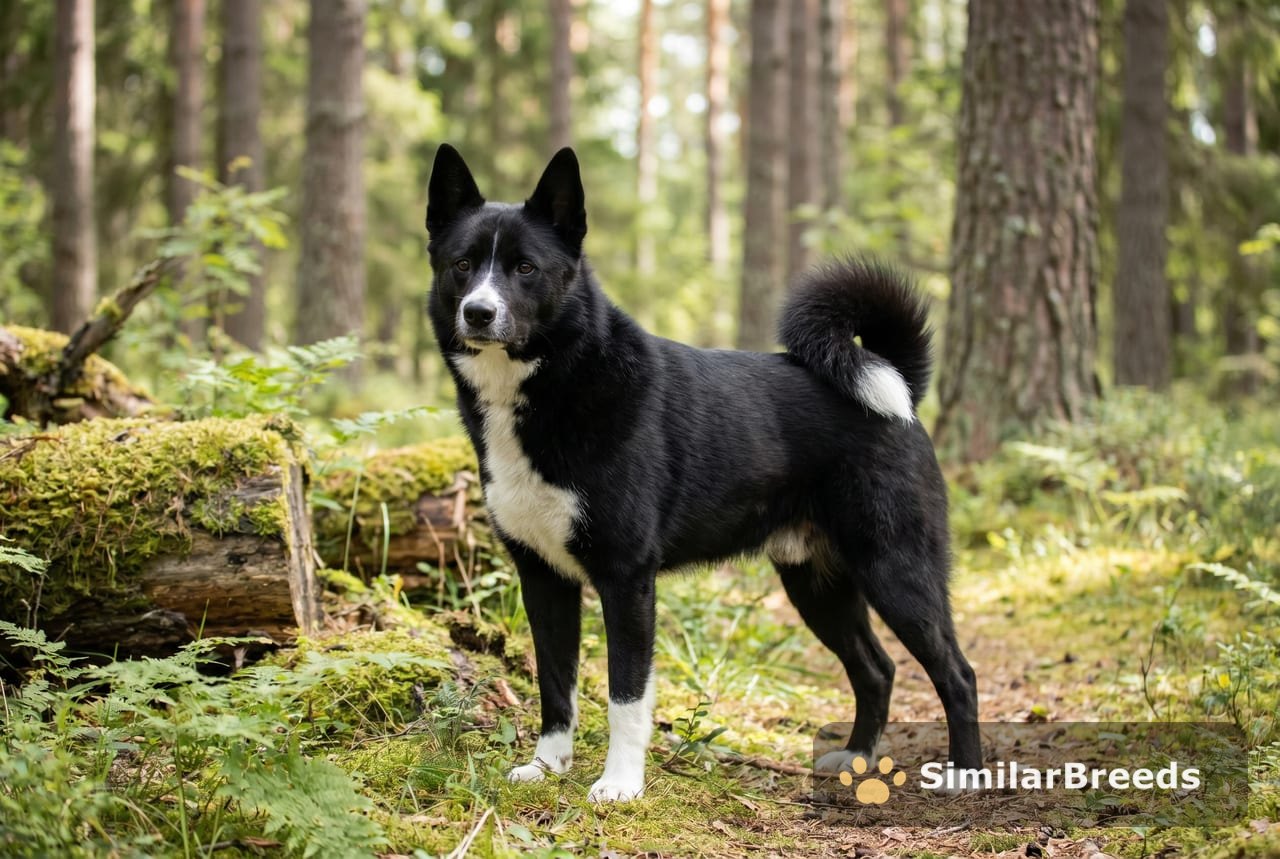
**Karelian Bear Dog** is a Finnish breed purpose-built to hunt and bay large predators including bear and moose. Its black-and-white coat differs visually, but the independent boldness and vocal baying behaviour run directly parallel to the Elkhound's.
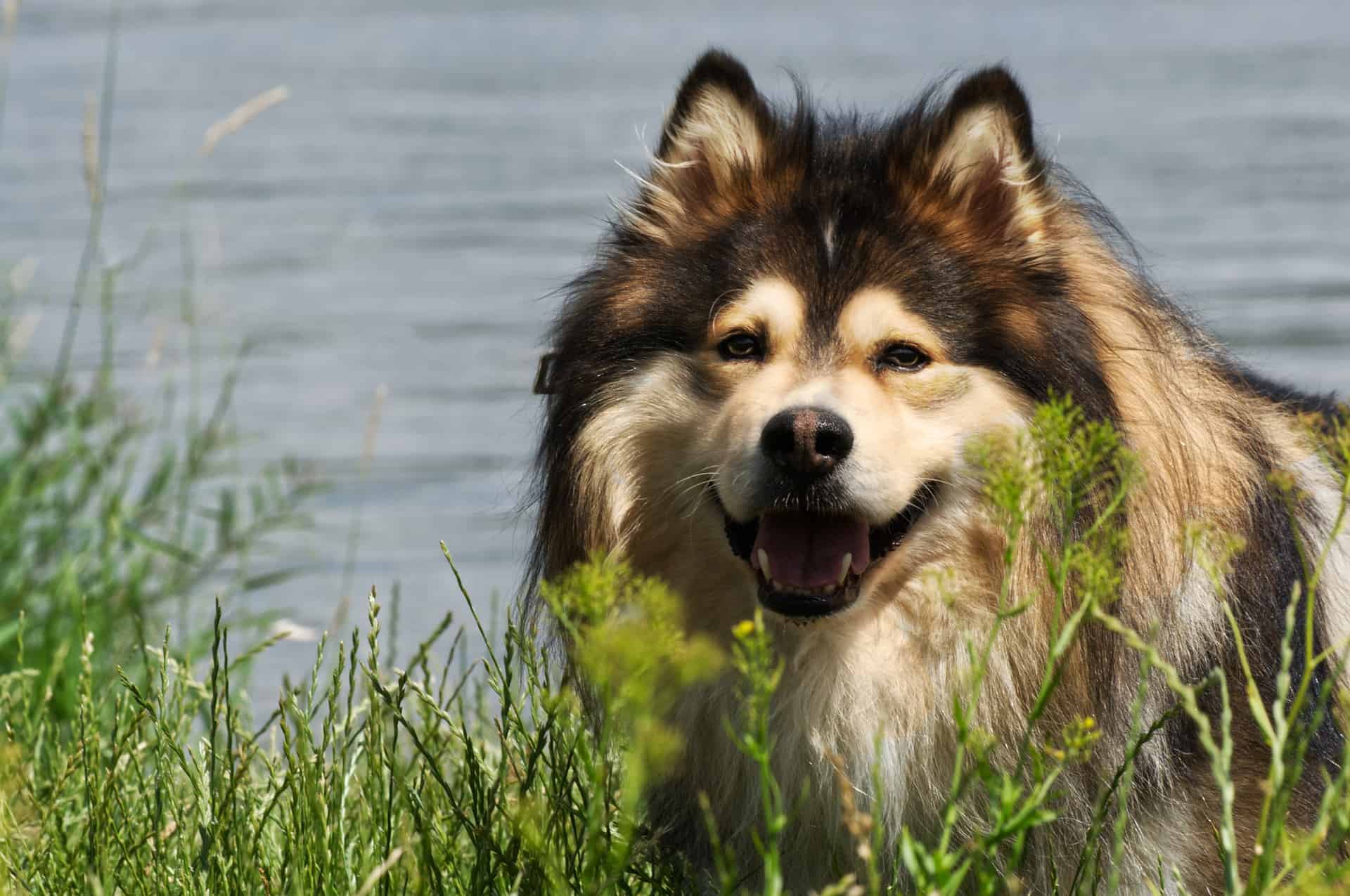
**Finnish Lapphund** is a softer-natured herding spitz from the same Nordic family. It shares the double coat, cold tolerance, and spitz silhouette, though it was bred for reindeer herding, making it more biddable and less prey-driven than the Elkhound.
Trait ratings
- Energy level
- 4/5
- Exercise requirements
- 3/5
- Playfulness
- 4/5
- Affection level
- 3/5
- Friendliness toward dogs
- 2/5
- Friendliness toward other pets
- 2/5
- Friendliness toward strangers
- 4/5
- Ease of training
- 3/5
- Watchdog ability
- 3/5
- Protection ability
- 2/5
- Grooming requirements
- 2/5
- Cold tolerance
- 5/5
- Heat tolerance
- 2/5