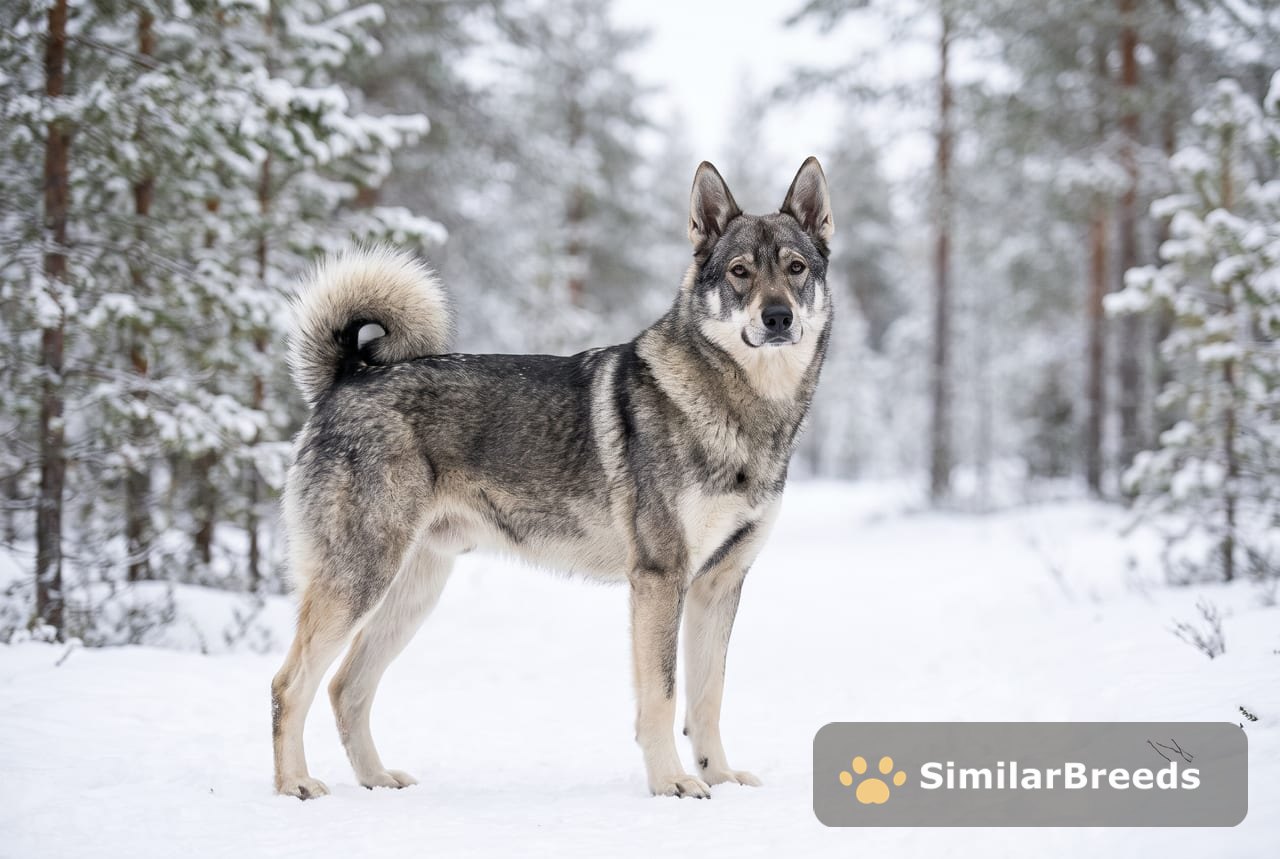
Purpose & Origin
The Jämthund, also called the Swedish Elkhound, is a large spitz from the Jämtland district of central Sweden. It was bred to hunt elk (moose), bear, wolf, and lynx in the dense boreal forests and deep snowfields of Scandinavia, and later also used against smaller quarry such as marten and grouse.
Its method is pursuit: the dog tracks independently, corners the quarry, and holds it at bay, barking to guide the hunters in for the kill. That role demanded stamina, boldness, and the ability to work at distance from the handler, qualities the breed retains today.
Beyond hunting it served as a sled dog, property guard, and a Swedish army dog. The Svenska Kennelklubben granted it official recognition in 1946, and it is now Sweden's national dog.
Temperament & Behaviour
The Jämthund is calm, composed, and steady at home, with a confident rather than excitable nature. It bonds closely with its family and is never aggressive toward people, but it carries real dominance instincts toward other dogs and a strong prey drive that makes it unreliable off-lead around wildlife. Its hunting independence means it forms opinions and does not simply defer to a handler. Within the household it is patient and stable, but its size and assertiveness call for confident handling from the start.
Activity & Training
This breed needs substantial daily exercise. Half an hour of vigorous activity is a floor, not a ceiling, particularly for dogs that are not hunting. A Jämthund under-exercised becomes restless and difficult. Because it was bred to work at a distance from its handler, it thinks independently, and training requires consistency and early socialisation. The prey drive is real: a flushed deer or hare will pull the dog's focus completely, so reliable recall takes deliberate, sustained effort. It is not a breed for first-time owners. Nose work or tracking helps channel the instincts constructively.
Grooming
The double coat is thick and dense, built to insulate against Scandinavian winters. It sheds steadily year-round and heavily during seasonal coat blows. Brushing two to three times per week is the minimum to prevent the undercoat from matting; daily brushing is better during heavy shedding periods. Bathing should be infrequent: frequent washing strips the coat's natural oils and leads to dry, irritated skin. No trimming is needed.
Health
The Jämthund is a robust breed with a lifespan of 12 to 15 years, long for a dog of its size. The known risks are hip and elbow dysplasia, progressive retinal atrophy, and skin allergies. The breed is not suited to hot climates and may develop skin problems in warm environments. Prospective owners should request hip and elbow scores from breeders.
Why these breeds are similar
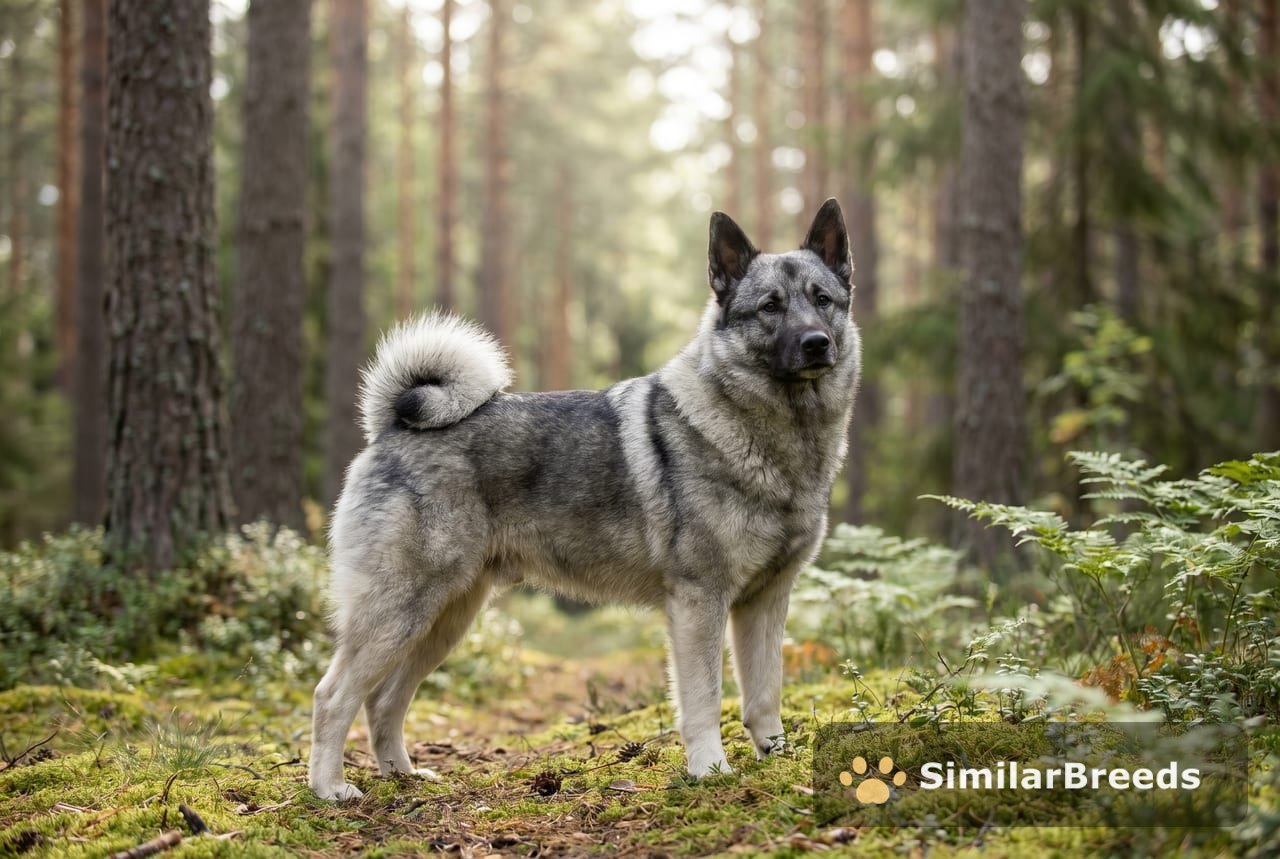
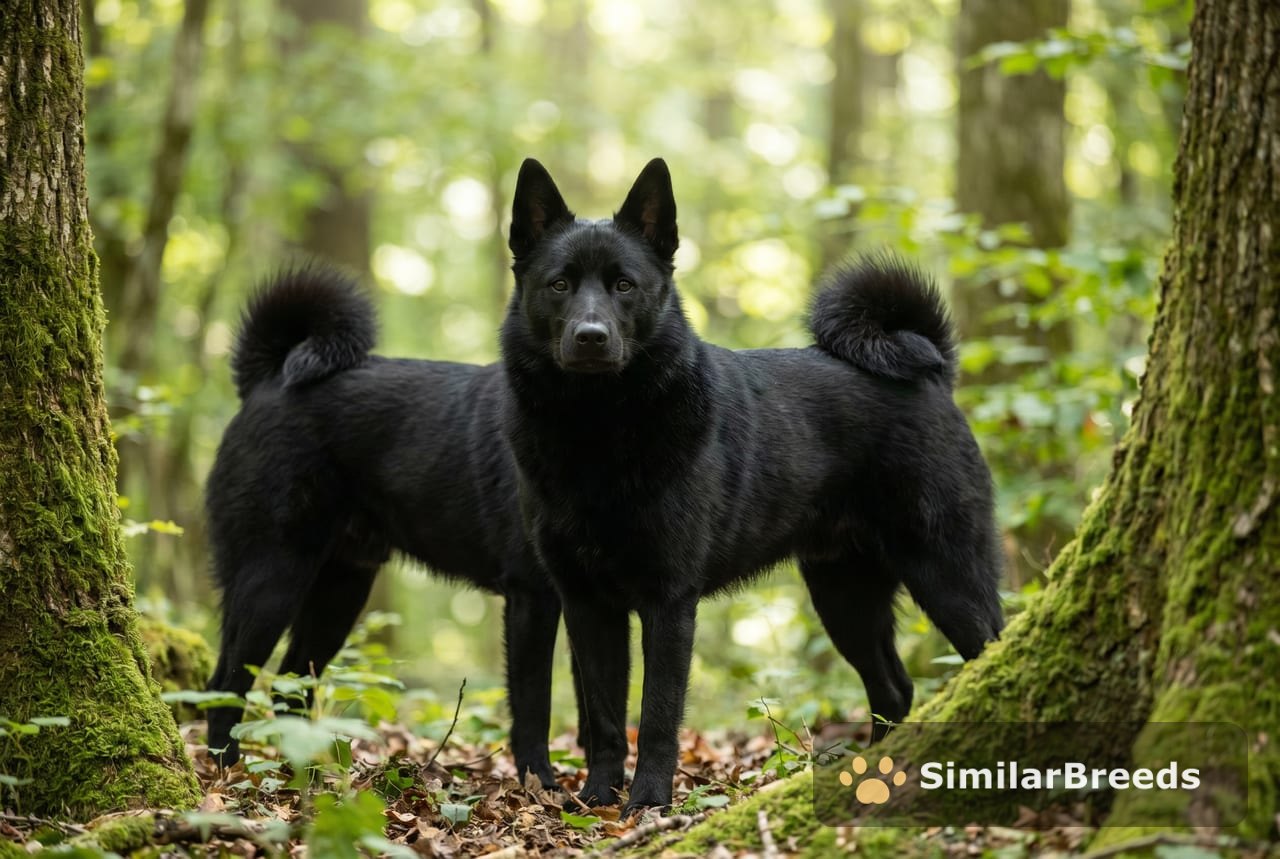
The **Norwegian Elkhound (Grey)** is the closest parallel: same spitz structure, same wolf-grey coat, same Scandinavian hunting heritage, and the same bay-and-hold elk-hunting method. The Jämthund is simply larger and more powerful. The **Norwegian Elkhound (Black)** shares the same origin and hunting role but is rarer, slightly smaller, and carries a black coat rather than grey; temperamentally and structurally it sits between the Grey and the Jämthund.
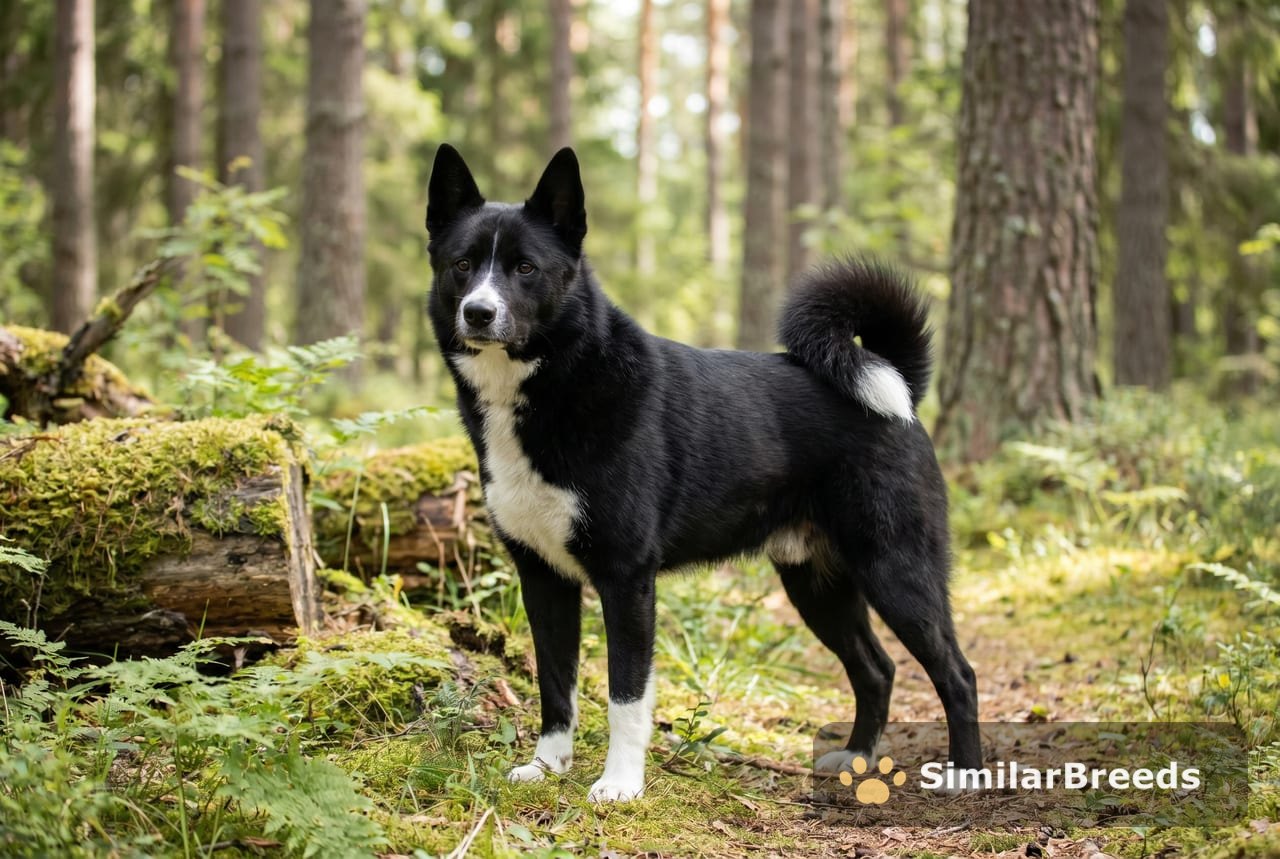
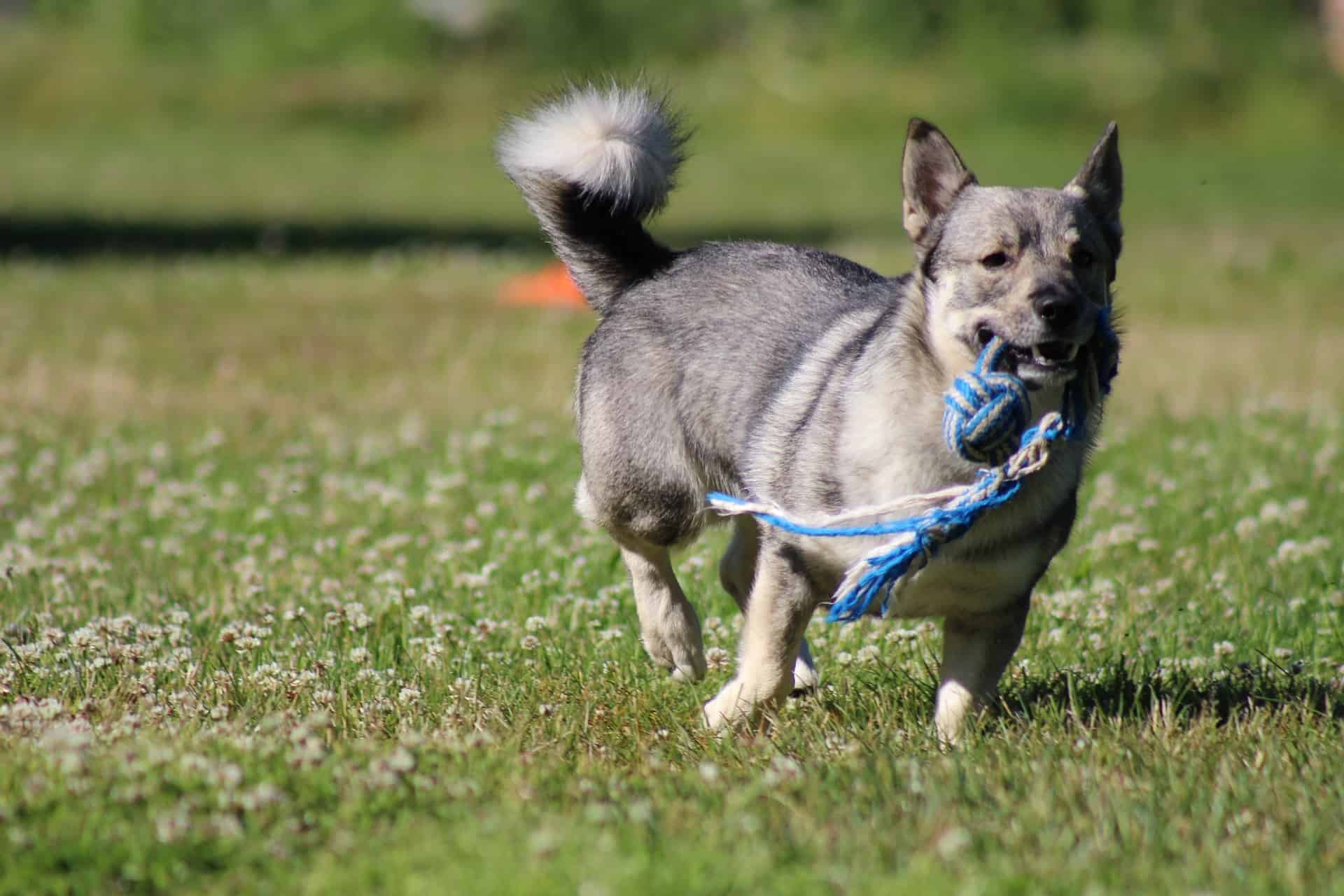
The **Karelian Bear Dog** is a Finnish spitz developed to hunt large and dangerous game, including bear, using the same independent bay-and-hold approach. It is similarly bold, dominant with other dogs, and demanding to own. The **Swedish Vallhund** is a Swedish spitz working breed, smaller and herding-focused rather than hunting-focused, but it shares the same dense double coat, spitz confirmation, and the alert, independent Scandinavian working-dog temperament.