Kerry Blue Terrier
From Ireland
Purpose & Origin
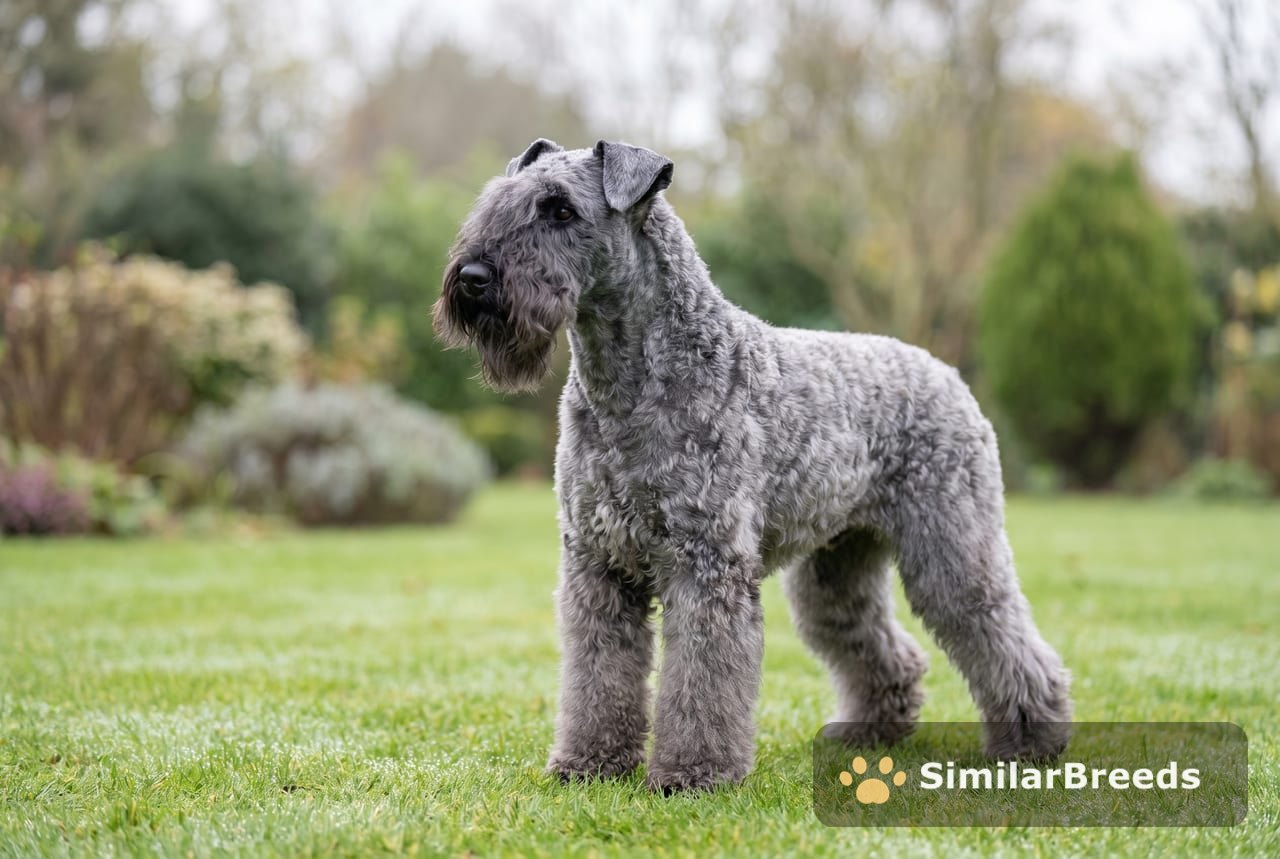
The Kerry Blue Terrier comes from the south and west of Ireland, where it worked for centuries as a true all-rounder on the farm. It hunted vermin and small game, retrieved from both land and water, and herded sheep and cattle. Despite being one of the most capable and visually striking terriers, it stayed largely unknown outside Ireland until the 1920s, when it arrived on British and American show circuits. The AKC recognized it in 1924. The breed has one well-known peculiarity: puppies are born black, and the characteristic blue-grey coat only develops between nine months and two years of age.
Temperament & Behaviour
The Kerry Blue is not a one-note terrier. It can guard, hunt, herd, or simply be an energetic family companion, often in the same afternoon. Indoors it tends to settle well, but outdoors it wants to run, chase, dig, and investigate. It is devoted and playful with its family, yet protective and watchful around strangers, greeting verified friends with real enthusiasm. Its watchdog instinct is strong, and so is its aggression toward other dogs and small animals. This is a dog that should not be trusted off-leash in unsecured areas around other dogs.
Activity & Training
Its exercise needs are moderate rather than extreme, but they must be met consistently. A long leash walk, a vigorous play session, or time in a securely fenced area covers the daily requirement. The Kerry Blue is clever and learns quickly, but it is also independent and can be stubborn, which means training requires patience and consistency. It is not the easiest terrier to handle and does best with an owner who understands terrier temperament rather than expecting biddable, eager-to-please behaviour. Some individuals are prone to barking.
Grooming
The coat is the Kerry Blue's most demanding feature, with a grooming requirement that is about as high as it gets. The soft, wavy blue-grey coat needs combing two or more times a week, and the whole outline requires scissoring and shaping roughly every month. Dogs that spend time outdoors in undergrowth will need more frequent attention to remove debris. Ears need to be trained into correct shape while the dog is still developing. Owners who show the breed typically have this work done professionally; pet owners can learn the basics, but it is not a low-maintenance coat by any measure.
Health
The Kerry Blue is a reasonably long-lived breed at 12 to 15 years. The most serious hereditary concern is cerebellar abiotrophy, a progressive neurological condition. Minor concerns include cataracts, entropion, hip dysplasia, and ear infections. Clotting disorders (von Willebrand disease and factor XI deficiency) and degenerative myelopathy appear occasionally. Breeding stock should be tested for eyes, hips, and relevant clotting factors.
Why these breeds are similar
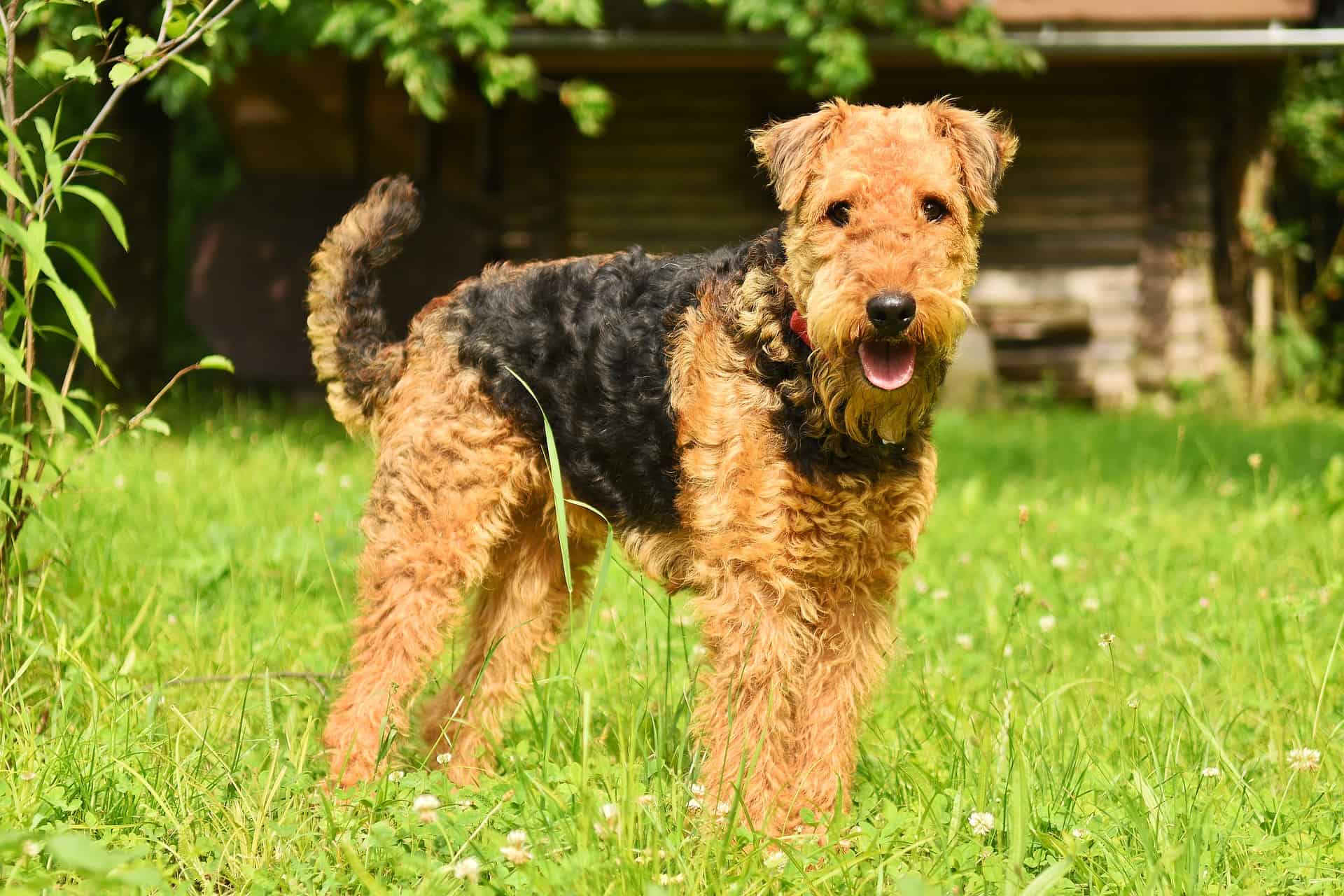
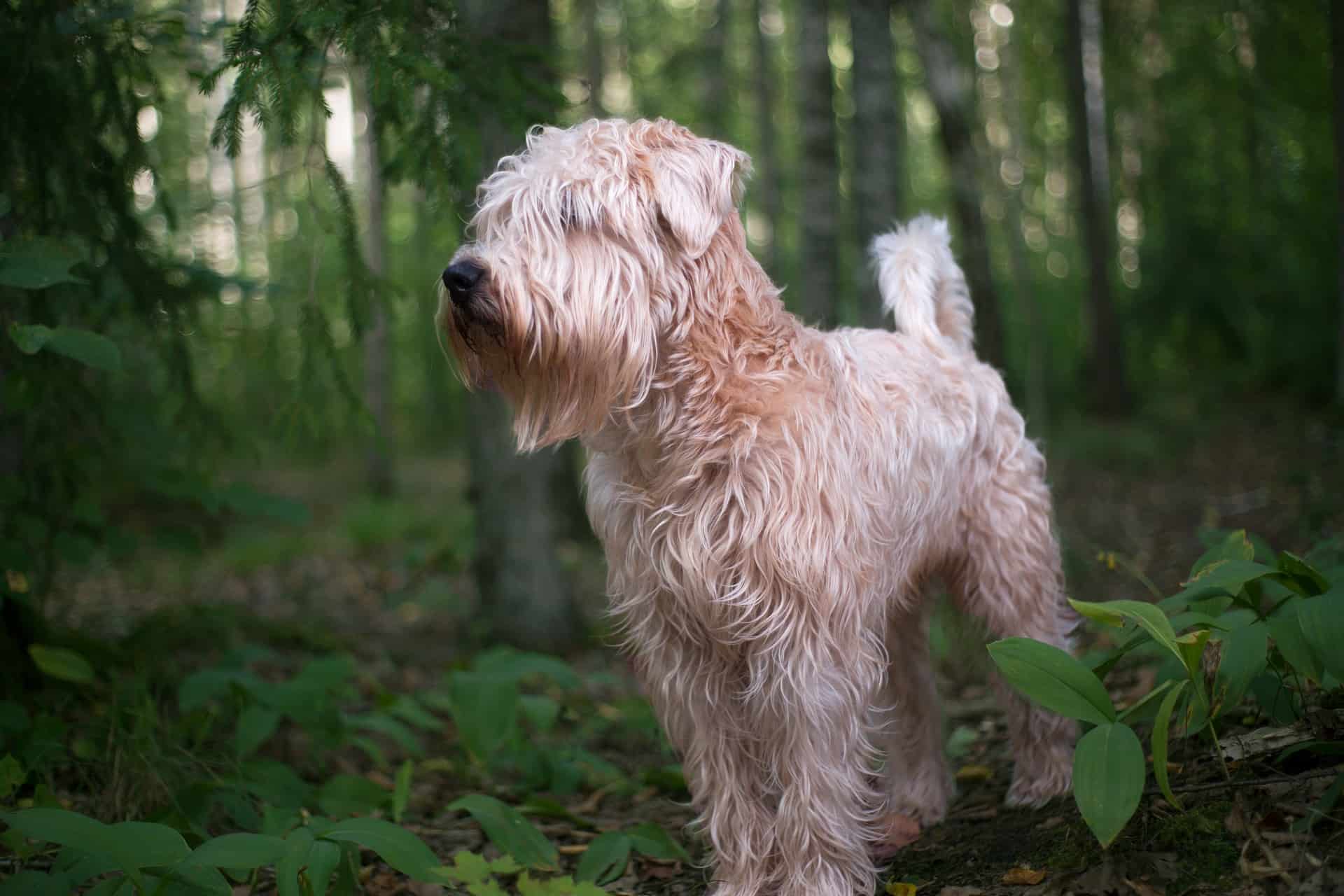
The **Airedale Terrier** shares the Kerry Blue's Irish and British working-terrier background, its willingness to guard, and its bold, sometimes dog-aggressive temperament. The Airedale is considerably larger but has the same wiry-coat upkeep and the same stubbornness in training. The **Soft Coated Wheaten Terrier** is the closest relative by geography and original job: another Irish farm terrier bred to hunt, herd, and guard, with a similarly soft, wavy coat that demands real grooming commitment.
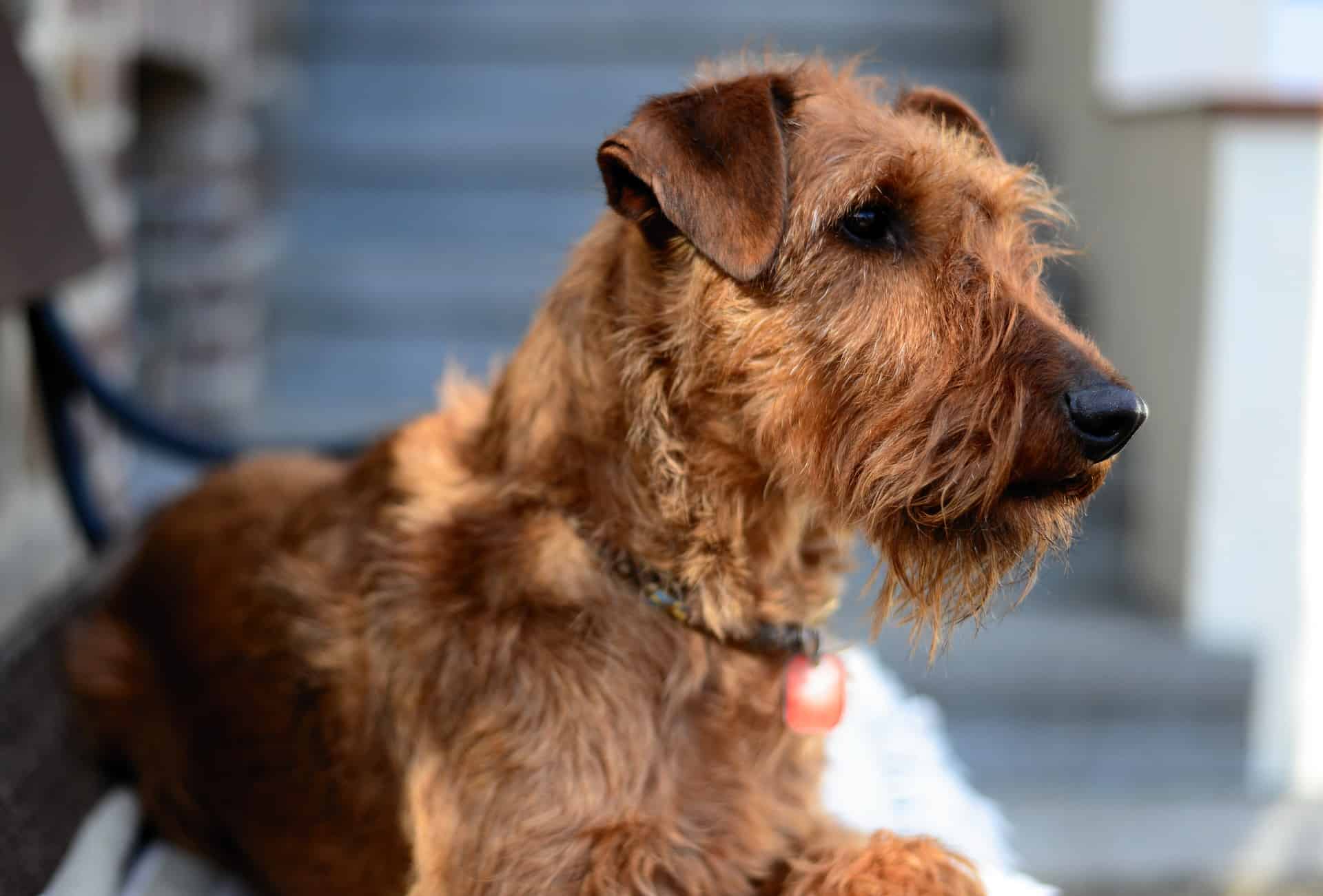
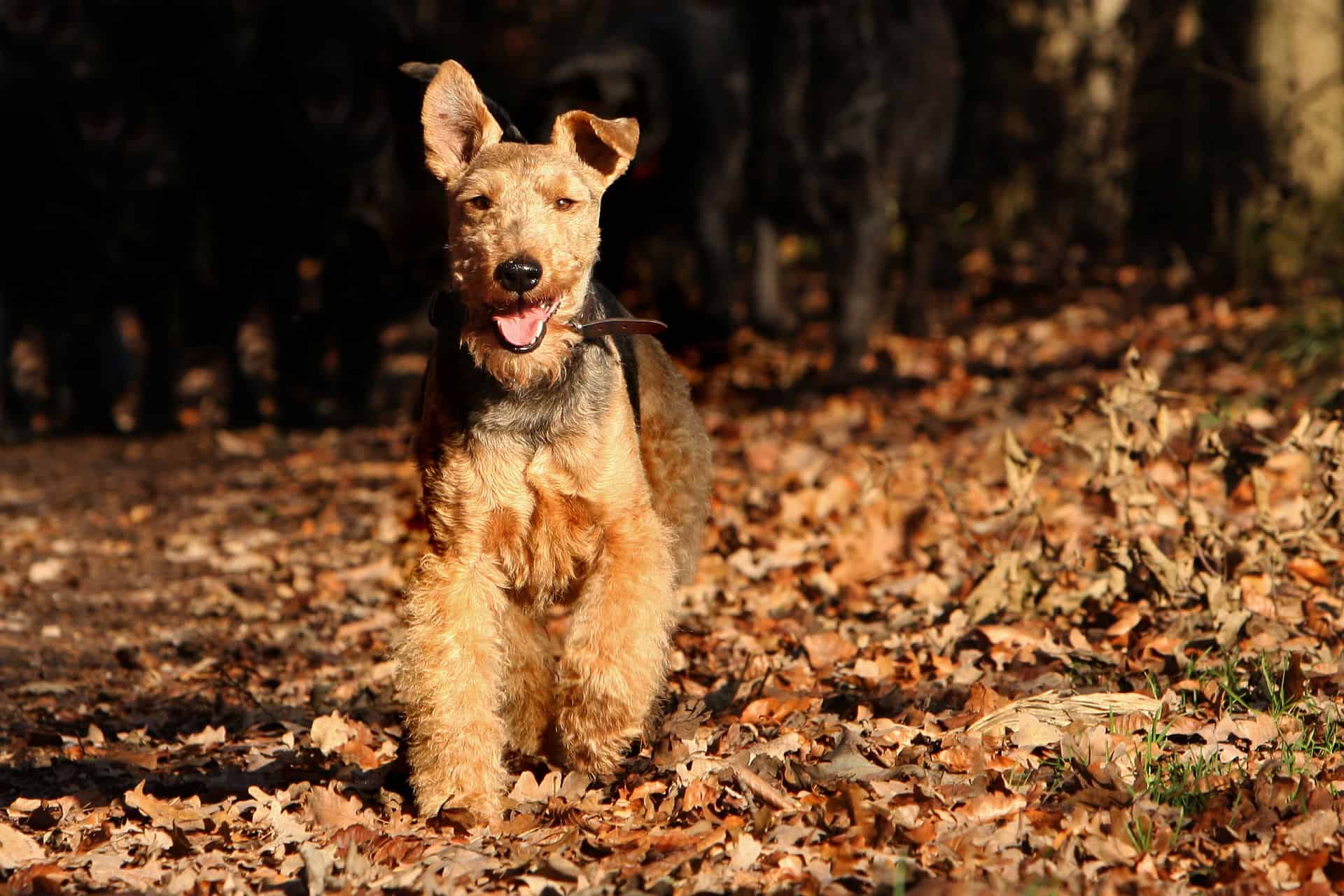
The **Irish Terrier** is a direct Irish cousin, slightly smaller, with the same bold character, strong prey drive, and tendency toward dog aggression. The **Welsh Terrier** rounds out the group as another medium-sized wire-coated terrier with a versatile working past and the same combination of intelligence and independence that makes all four of these breeds rewarding but demanding companions.
Trait ratings
- Energy level
- 3/5
- Exercise requirements
- 3/5
- Playfulness
- 4/5
- Affection level
- 3/5
- Friendliness toward dogs
- 1/5
- Friendliness toward other pets
- 1/5
- Friendliness toward strangers
- 3/5
- Ease of training
- 3/5
- Watchdog ability
- 5/5
- Protection ability
- 4/5
- Grooming requirements
- 5/5
- Cold tolerance
- 3/5
- Heat tolerance
- 3/5