Briard
From France
Purpose & Origin
The Briard is the oldest of France's four sheepdog breeds, with dogs recognisable as Briards appearing in art from as far back as the eighth century. Written records become definitive by the fourteenth century, when they were called the Chien Berger de Brie, either after the province of Brie or, according to legend, after the dog of Aubry de Montdidier that supposedly avenged its master's murder. The name Briard did not come into use until 1809.
In its early form this was a livestock guardian expected to confront wolves and deter human thieves as much as to herd. After the French Revolution carved up the land into smaller holdings, the breed shifted emphasis toward close herding. Both Lafayette and Thomas Jefferson reportedly brought early specimens to America, though those lines left no lasting mark.
The modern American Briard descends from dogs brought back by soldiers after the First World War, having served as the official dog of the French army in both world wars. The breed remains the most popular sheepdog in France to this day, while staying relatively uncommon in the United States.
Temperament & Behaviour
The Briard is intensely devoted to its family and highly protective of it, but that loyalty comes packaged with a strong independent streak. This is not a dog that looks to its owner for constant guidance; it thinks for itself, acts on its own judgment, and can be stubborn when it disagrees.
Strangers get a cool, reserved reception, and the breed's watchdog and protection scores are as high as they go. Around other dogs it can be outright aggressive, and the herding instinct surfaces even indoors: the Briard will try to round up children or nip at heels during play. Young Briards need thorough, consistent socialization to prevent that reserve from hardening into suspicion.
Activity & Training
Four-point exercise requirements mean the Briard needs a genuine daily outlet, not a lap around the block. A long walk or jog satisfies the baseline, but the breed is happiest with a job: herding, agility, or search and rescue work. Its low ease-of-training score reflects independence rather than lack of intelligence; the Briard is clever but chooses when to cooperate. Firm, consistent handling from an experienced owner works far better than repetitive drills. First-time dog owners will find this breed genuinely challenging.
Grooming
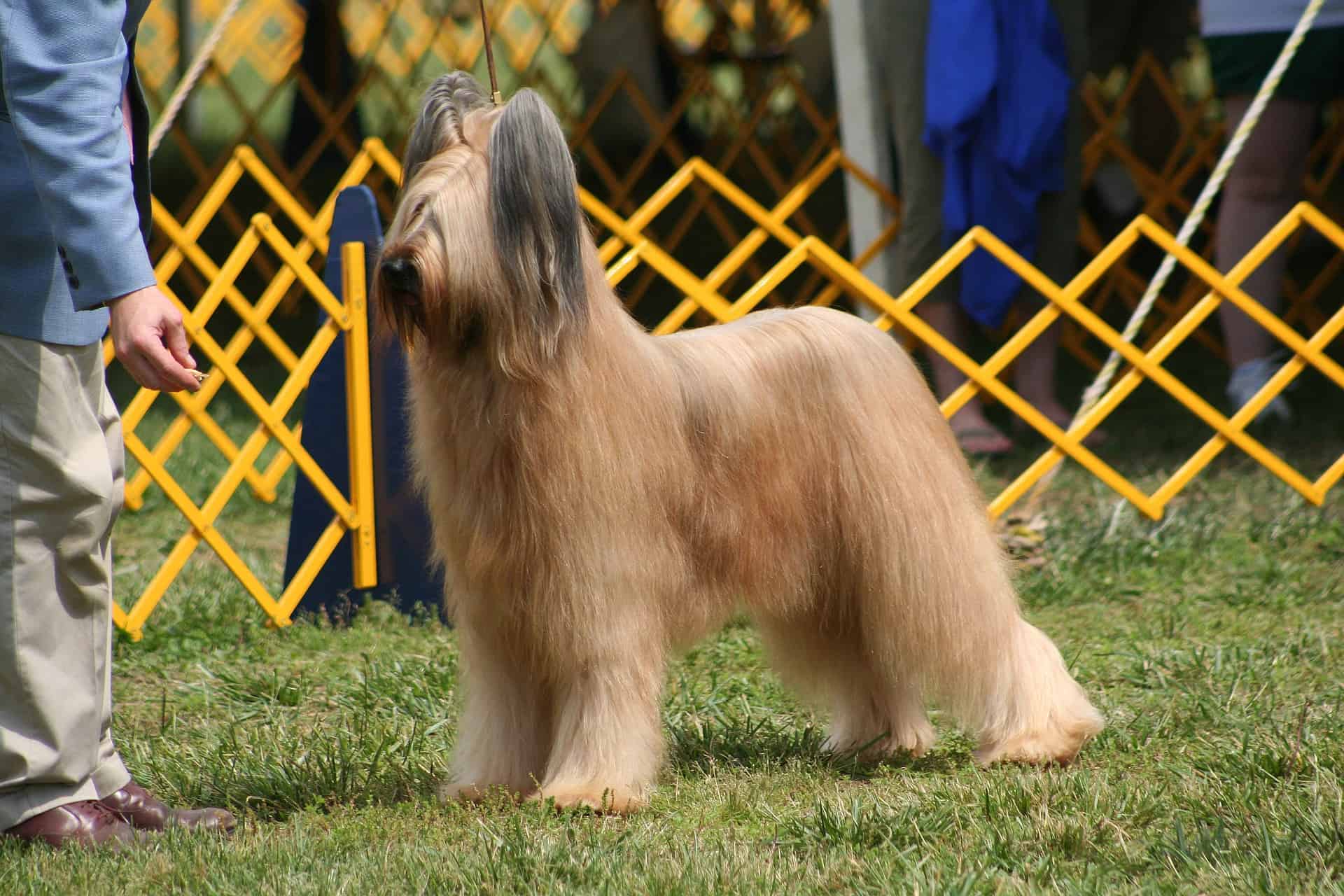
The Briard's long, coarse, slightly wavy coat is one of its defining features and demands real commitment. Skipping maintenance allows mats to form quickly, so brushing or combing every other day is not optional. The coat does not shed in the dramatic way a short-coated breed does, but the length means tangles accumulate fast around the ears and legs.
Health
The Briard's main health concerns are gastric torsion (bloat) and canine hip dysplasia, both of which warrant screening. Night blindness is a known minor issue in the breed, with a DNA test available. Progressive retinal atrophy and heart problems appear occasionally. Life expectancy is 10 to 12 years. Responsible breeders test hips, eyes, cardiac function, and DNA for night blindness before breeding.
Why these breeds are similar
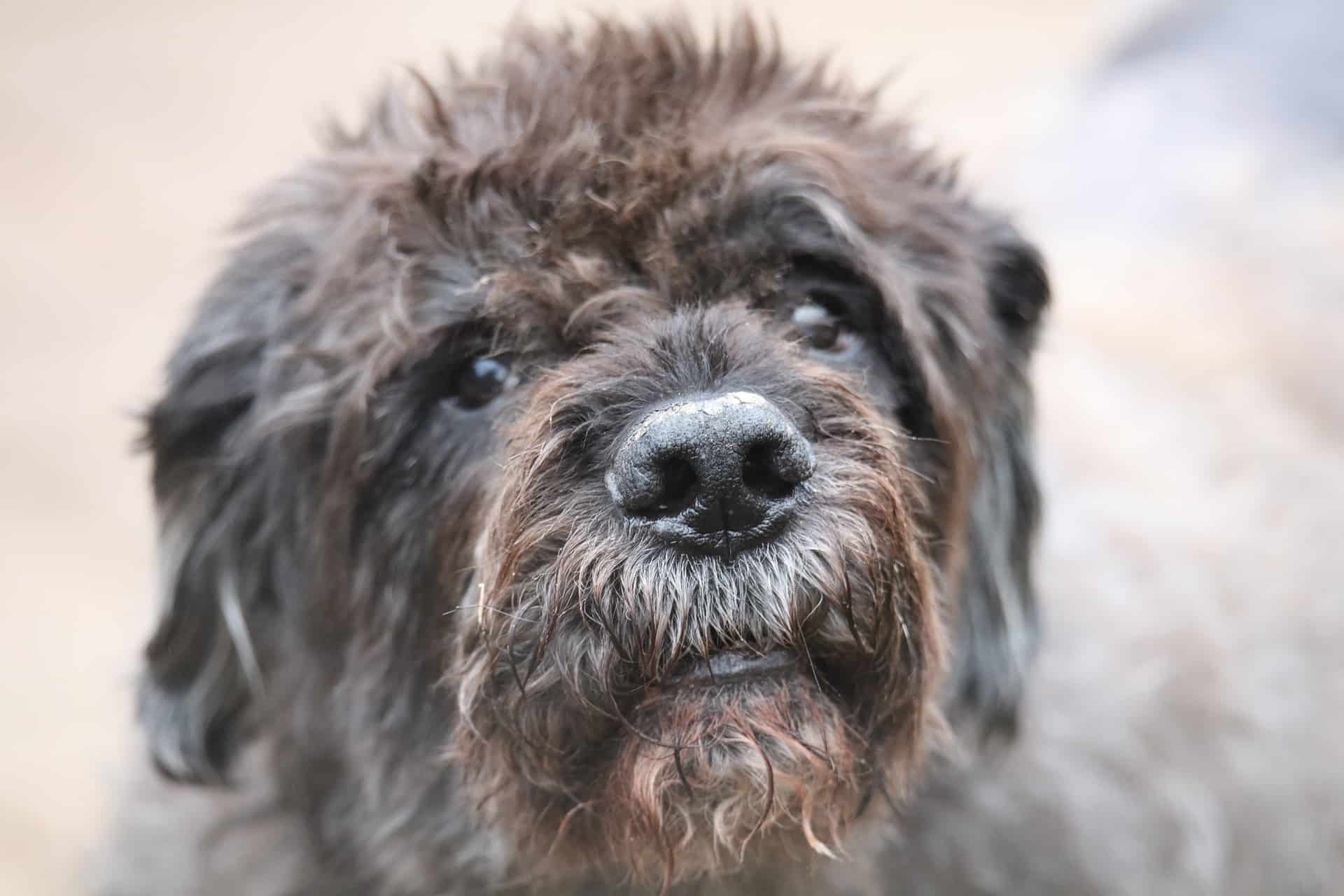
The Bouvier des Flandres is the most direct parallel: a large, shaggy, double-coated herding and guarding breed from continental Europe with the same independent temperament, the same wariness of strangers, and a comparable history of military and police work. The two breeds are almost interchangeable in terms of the commitment they demand from an owner.
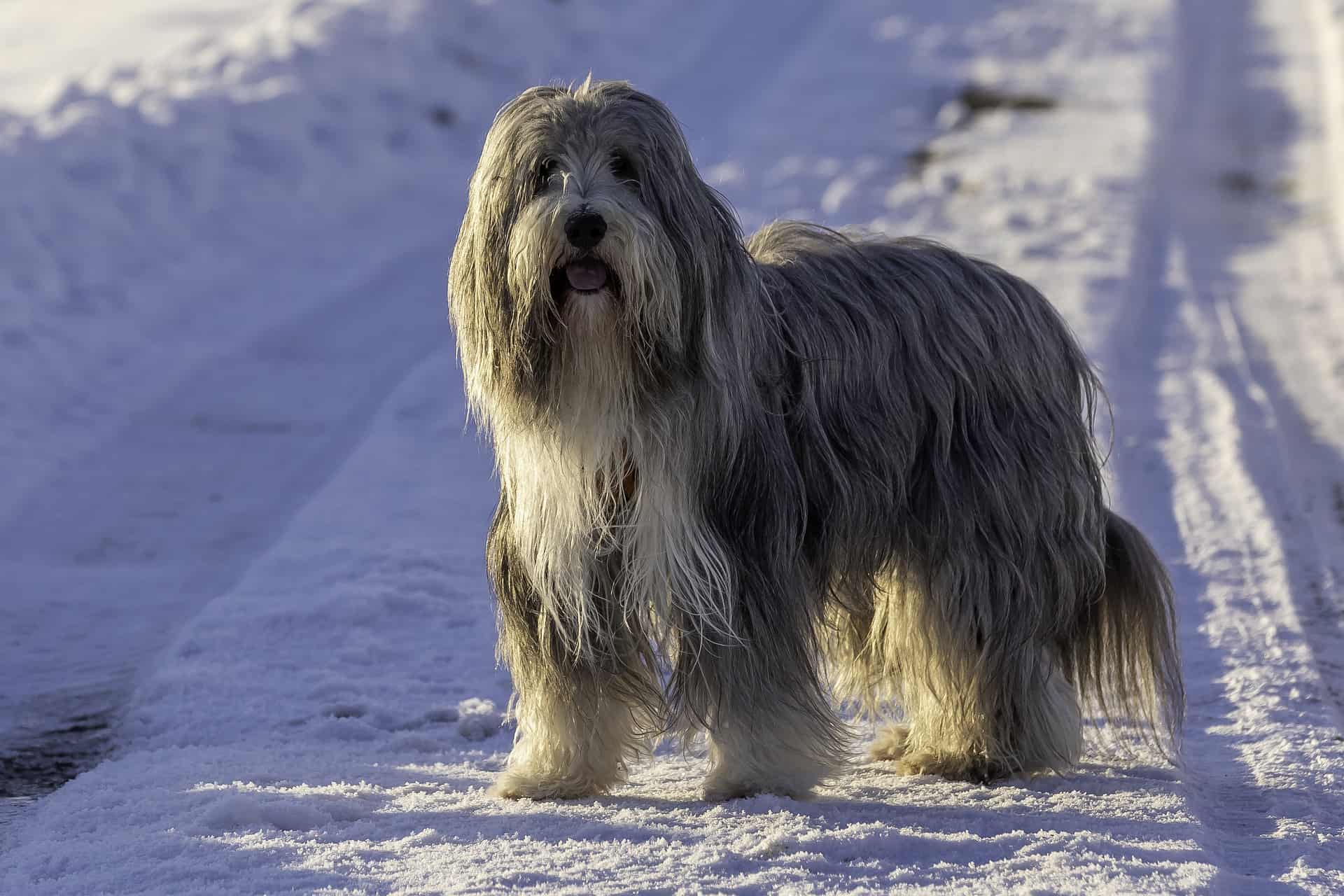
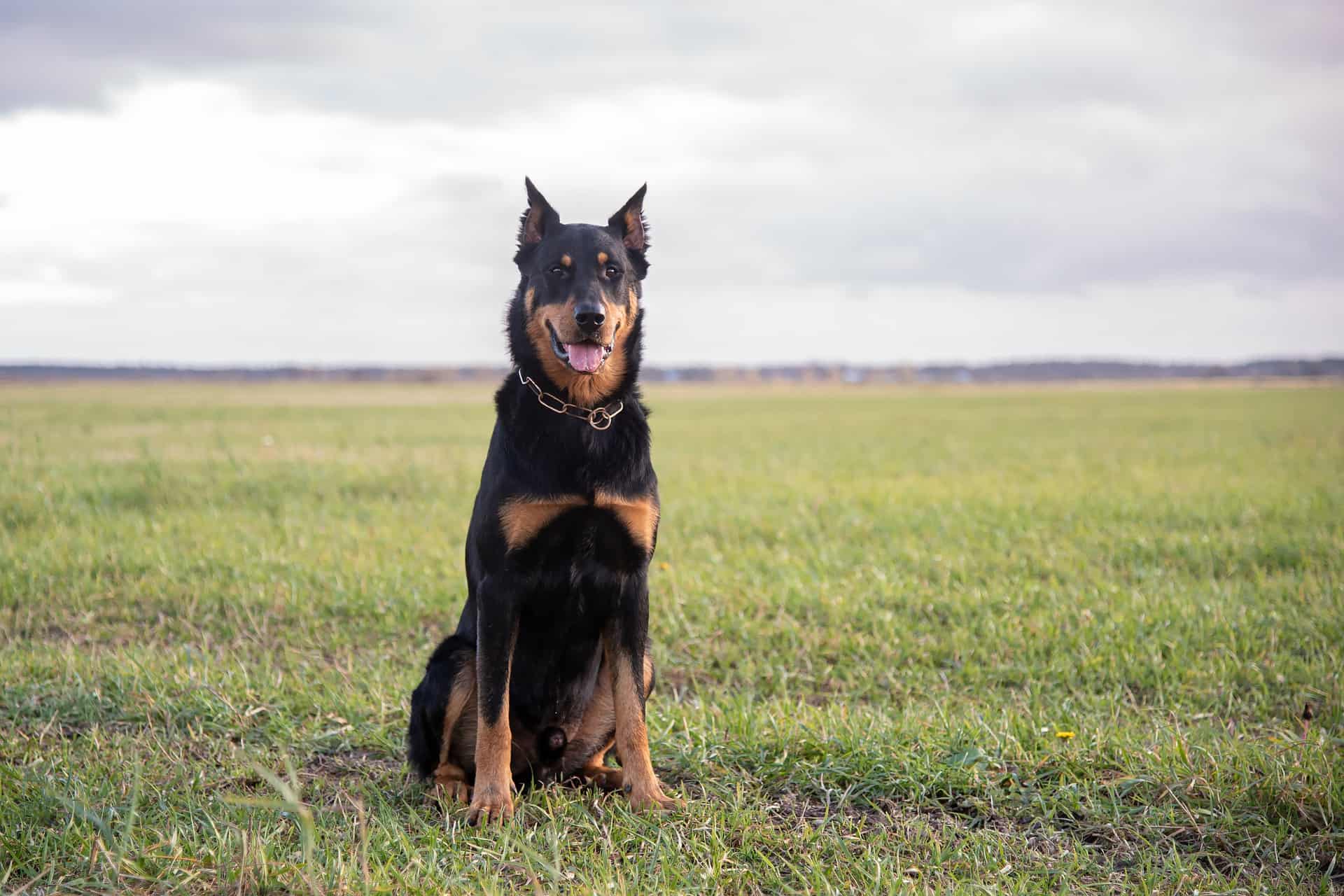
The Beauceron is the Briard's nearest French cousin, one of the same four national sheepdogs, sharing the guarding heritage and the tendency toward dominance. Where the Briard is heavily coated, the Beauceron is short-coated, but the underlying character and working drive are closely aligned. The Bearded Collie connects through the shaggy herding-dog silhouette and the energetic, somewhat independent working style, though it is considerably softer in temperament and more forgiving for less experienced owners.
Trait ratings
- Energy level
- 3/5
- Exercise requirements
- 4/5
- Playfulness
- 3/5
- Affection level
- 3/5
- Friendliness toward dogs
- 1/5
- Friendliness toward other pets
- 3/5
- Friendliness toward strangers
- 1/5
- Ease of training
- 1/5
- Watchdog ability
- 5/5
- Protection ability
- 5/5
- Grooming requirements
- 4/5
- Cold tolerance
- 3/5
- Heat tolerance
- 2/5