Purpose & Origin
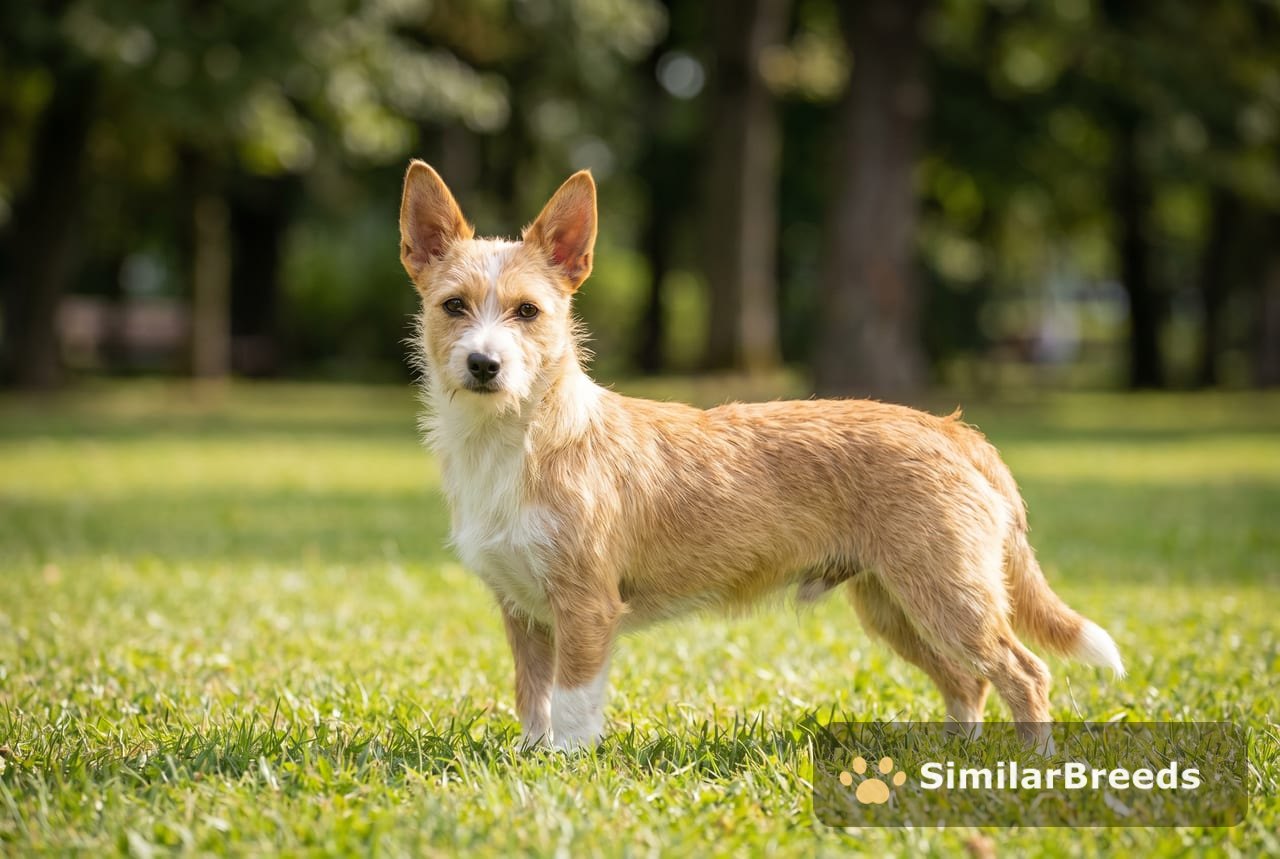
The Portuguese Podengo Pequeno is the smallest of three Podengo sizes, a pocket-sized hunting dog with roots stretching back more than two thousand years. Phoenician and Roman traders brought the ancestors of these dogs to the Iberian Peninsula, and over the centuries the smallest individuals carved out a specific niche: flushing rabbits from rocky crevices and dense scrub for peasant hunters who often had nothing but a stick.
The breed comes in two coat types, smooth and wire, with the wire coat developed in Portugal's hot, thorny south and the smooth coat better suited to the wetter north. The word "podengo" has described pack hunting dogs in Portuguese since at least the sixteenth century, and the breed is still a working hunter today. It is one of ten national dogs of Portugal and the symbol of the Portuguese Kennel Club. The Pequeno arrived in the United States in the 1990s and earned full AKC Hound Group recognition in 2013.
Temperament & Behaviour
This is an active, curious dog that never quite switches off. Pequenos are friendly by nature, getting along readily with strangers, other dogs, and most household pets, but affection runs on their terms rather than yours. They are not lap dogs. The primitive hunting heritage shows in their independence: they think for themselves, follow their nose with commitment, and will not stop to check in when something interesting crosses their path. They are reliable watchdogs with a sharp, alert bark, but they have no inclination toward guarding or protection. Expect a dog that is lively and entertaining company rather than a soft, biddable companion.
Activity & Training
A daily walk or jog keeps the Pequeno manageable indoors, but they also need off-leash time to run and explore at least weekly. Given that outlet they settle reasonably well inside; without it, they fidget. Agility and lure coursing suit them well and give the breed's considerable energy a structured outlet.
Training requires patience. The ease-of-training score is low, which reflects genuine independence rather than dimness. They want to please but are easily distracted by scent and movement, so sessions need to be short, varied, and reward-based. A securely fenced yard is non-negotiable: a Podengo that catches a scent will go over, under, or through a boundary it does not respect.
Grooming
Grooming demands are low for both coat types. The wire coat needs weekly brushing and should be left with a rustic, natural look rather than trimmed into a polished finish. Long hairs around the eyes, especially in the inner corners, should be gently plucked rather than cut, and some breeders recommend plucking hair inside the ear canal as well. The smooth coat is similarly straightforward. Neither type is a heavy shedder or a high-maintenance coat project.
Health
The Pequeno is a robust, ancient breed with no documented major health concerns. Minor issues occasionally seen include Legg-Calve-Perthes disease and patellar luxation, both common across small breeds generally. Life expectancy runs from twelve to fifteen years. No routine genetic tests are currently flagged as necessary.
Why these breeds are similar
No similar breeds are listed in the source data for the Portuguese Podengo Pequeno.
Trait ratings
- Energy level
- 4/5
- Exercise requirements
- 3/5
- Playfulness
- 4/5
- Affection level
- 3/5
- Friendliness toward dogs
- 5/5
- Friendliness toward other pets
- 4/5
- Friendliness toward strangers
- 4/5
- Ease of training
- 2/5
- Watchdog ability
- 5/5
- Protection ability
- 2/5
- Grooming requirements
- 2/5
- Cold tolerance
- 3/5
- Heat tolerance
- 4/5
Breeds similar to Portuguese Podengo Pequeno
No similar breeds are mapped for Portuguese Podengo Pequeno yet - try browsing its FCI group or country of origin below.