Mudi
From Hungary
Purpose & Origin
The Mudi is one of Hungary's three native herding breeds, developed to control sheep on the Hungarian plains. Unlike the better-known Puli and Pumi, it was not formally recognised as a distinct breed until the 1930s, when Dezso Fenyesi, director of a museum in Balassagyarmat, began documenting and selectively breeding the type from working farm dogs. Beyond sheep, the breed has always been put to secondary tasks: driving cattle, controlling vermin, acting as a watchdog, and occasionally hunting wild boar. It remains rare outside Hungary and is classified in FCI Group 1 with the other Hungarian herding dogs.
Temperament & Behaviour
The Mudi is alert, vocal, and intensely tuned to its surroundings. It is an alarm barker by nature and announces any change in its environment. Many Mudik bond closely with their owners and are warm with the family, but the breed can be reserved with strangers. The herding instinct is deeply ingrained and redirects onto whatever is nearby if working stock is unavailable. It is energetic, self-confident, and opinionated, which makes it engaging but not a pushover.
Activity & Training
This is a high-energy working breed that needs substantial daily exercise, not a garden walk. Running, agility, and herding trials are appropriate outlets; the Mudi excels in competitive obedience because it is sharp and responsive. Training is generally straightforward thanks to high intelligence, but the breed has a streak of independence and will test inconsistent handlers. Firm, consistent, reward-based training from an early age produces a reliable dog. Owners who cannot match its energy level will end up with a frustrated, noisy animal.
Grooming
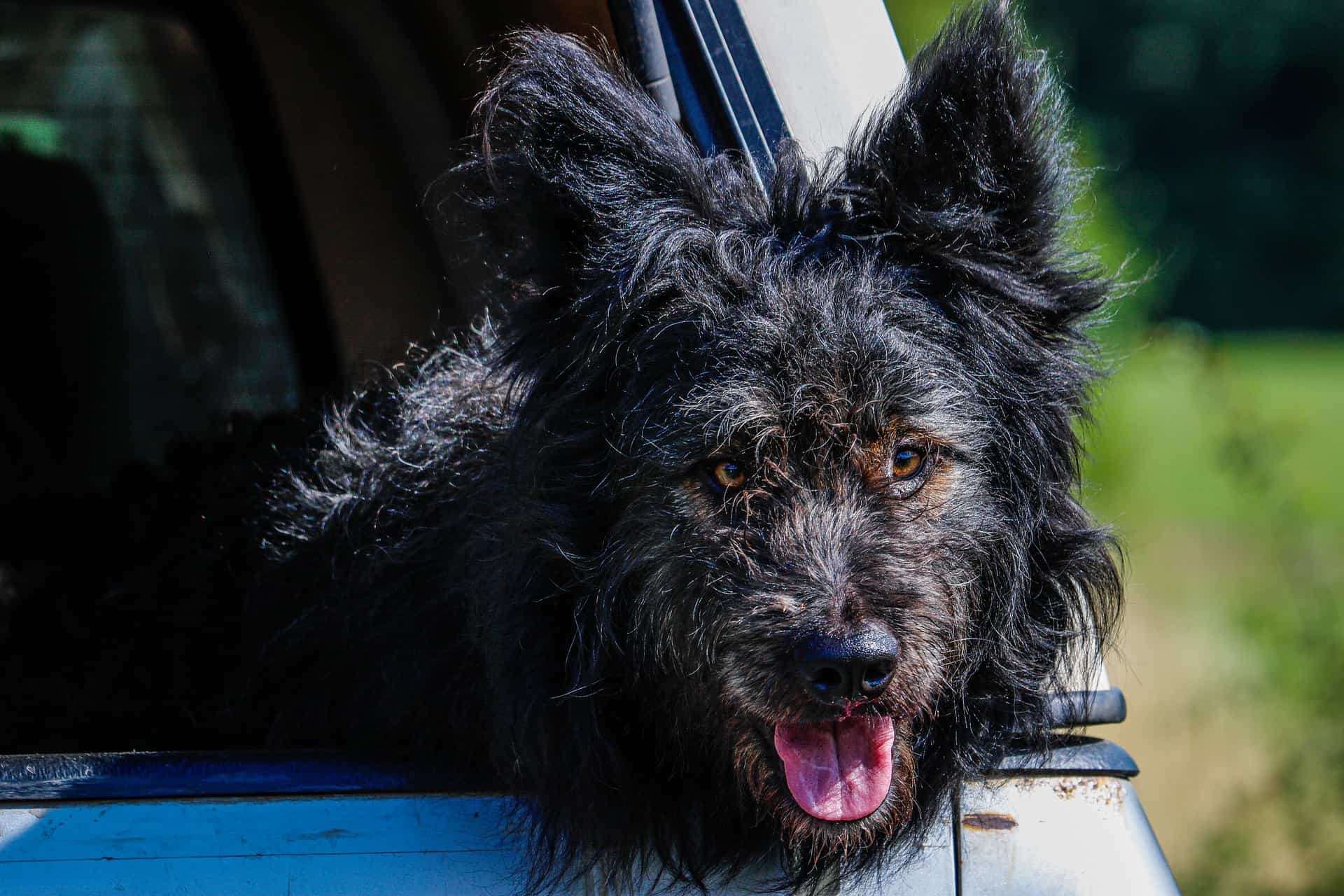
The coat is medium-length, wavy to curly, and dense. It does not require professional clipping, which keeps upkeep costs low. Brushing two to three times a week handles routine maintenance, with more attention needed behind the ears, backs of the legs, and around the collar area where tangles form first. Seasonal shedding is moderate to heavy.
Health
The Mudi is hardy, bred for stamina and function rather than show-ring aesthetics. Lifespan is 12 to 14 years. The main concerns are hip and elbow dysplasia; no serious breed-specific hereditary conditions are widely documented beyond joint health. Responsible breeders test breeding stock for hip and elbow scores. The small global population limits available health data.
Why these breeds are similar
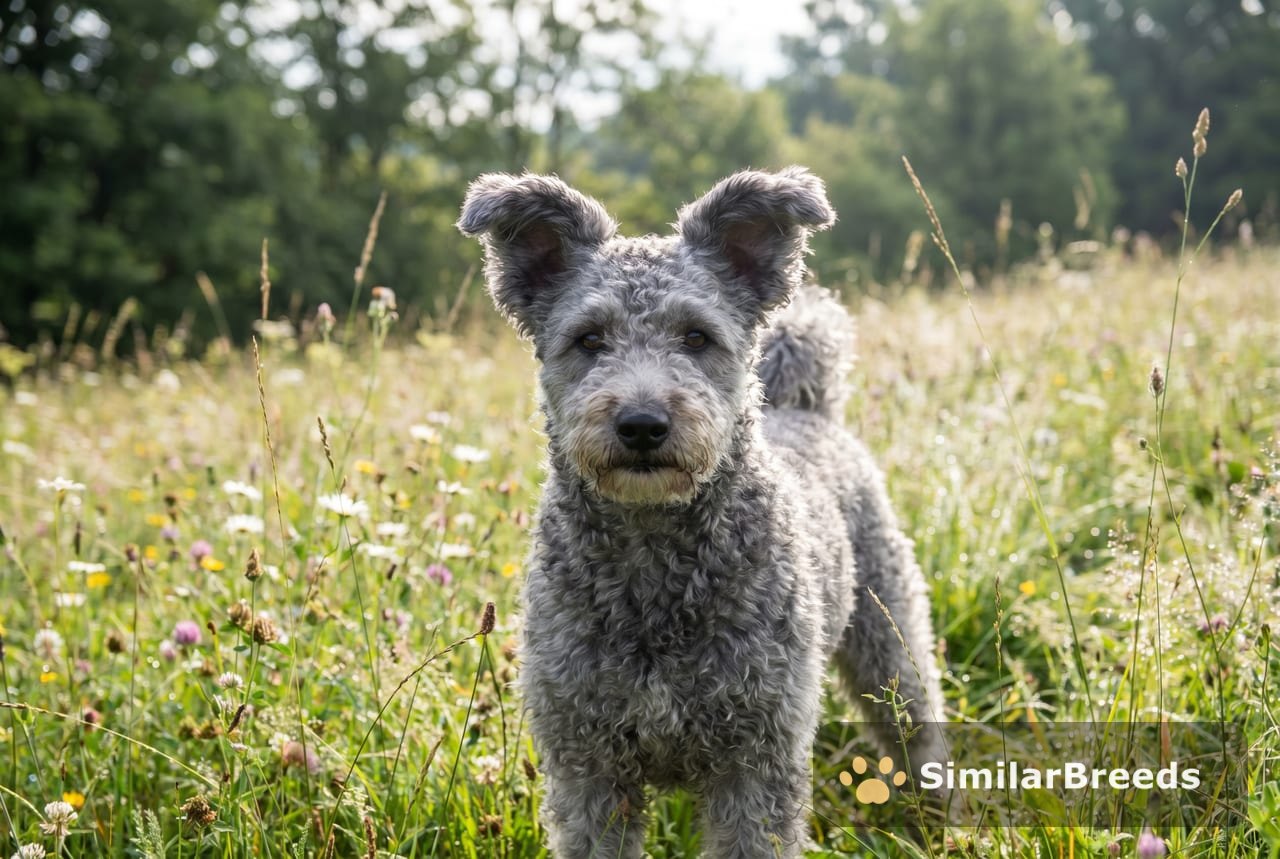
**Pumi:** The most direct comparison. The Pumi is also a Hungarian herding breed from the same farming tradition, sharing the Mudi's high energy, intelligence, and working drive. Both are medium-sized, vocal, and suited to active owners who want a trainable but independent dog. The Pumi's distinguishing features are its semi-erect tip-curled ears and tighter, corded-tending coat; the Mudi's coat is wavier and its build slightly more substantial.
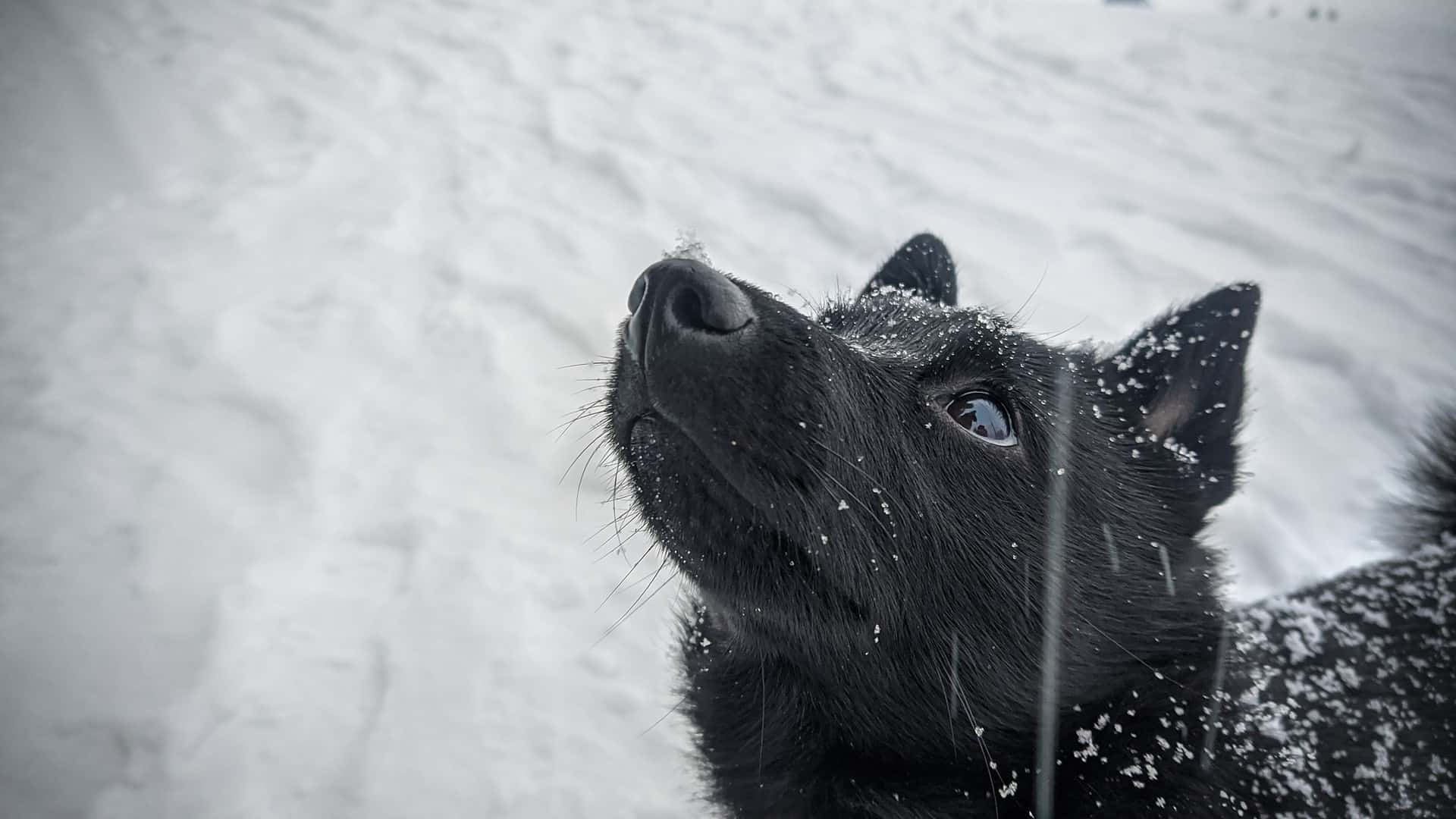
**Schipperke:** The similarity is type rather than origin. This small Belgian barge and farm dog has the same alert, busy, curious character and a strong instinct to chase vermin. Both breeds are energetic, vocal, and form tight bonds with one family while staying wary of strangers. The Schipperke is considerably smaller and lacks herding background, but the "always on" intensity of personality is closely matched.
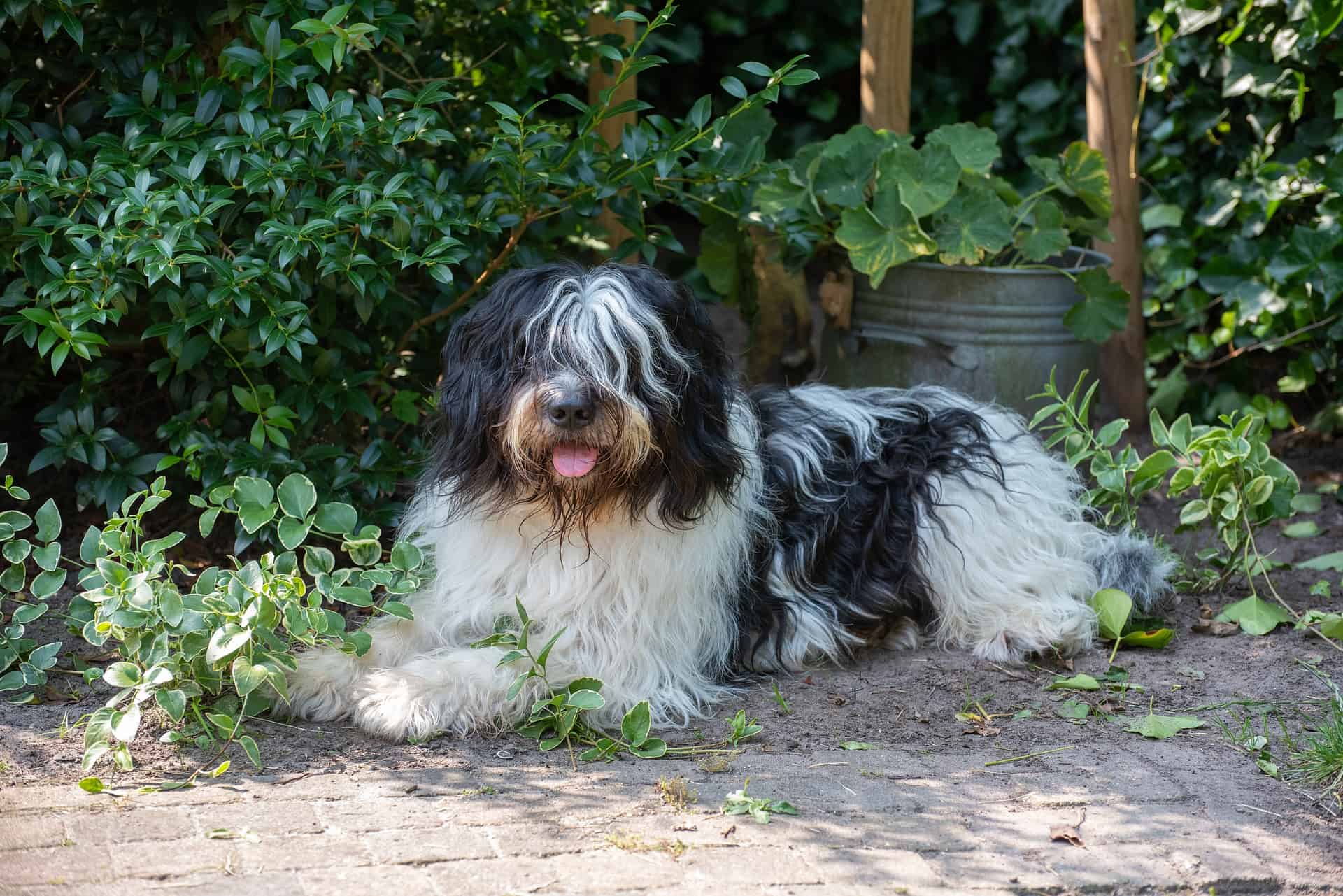
**Schapendoes:** The Dutch Schapendoes was bred for exactly the same sheep-driving work the Mudi performed in Hungary. Both are agile, trainable, and good-natured with their families. The Schapendoes tends to be softer and more openly friendly; its long, profuse coat is a much bigger grooming commitment than the Mudi's wavy medium coat.