Clumber Spaniel
From Great Britain
Purpose & Origin
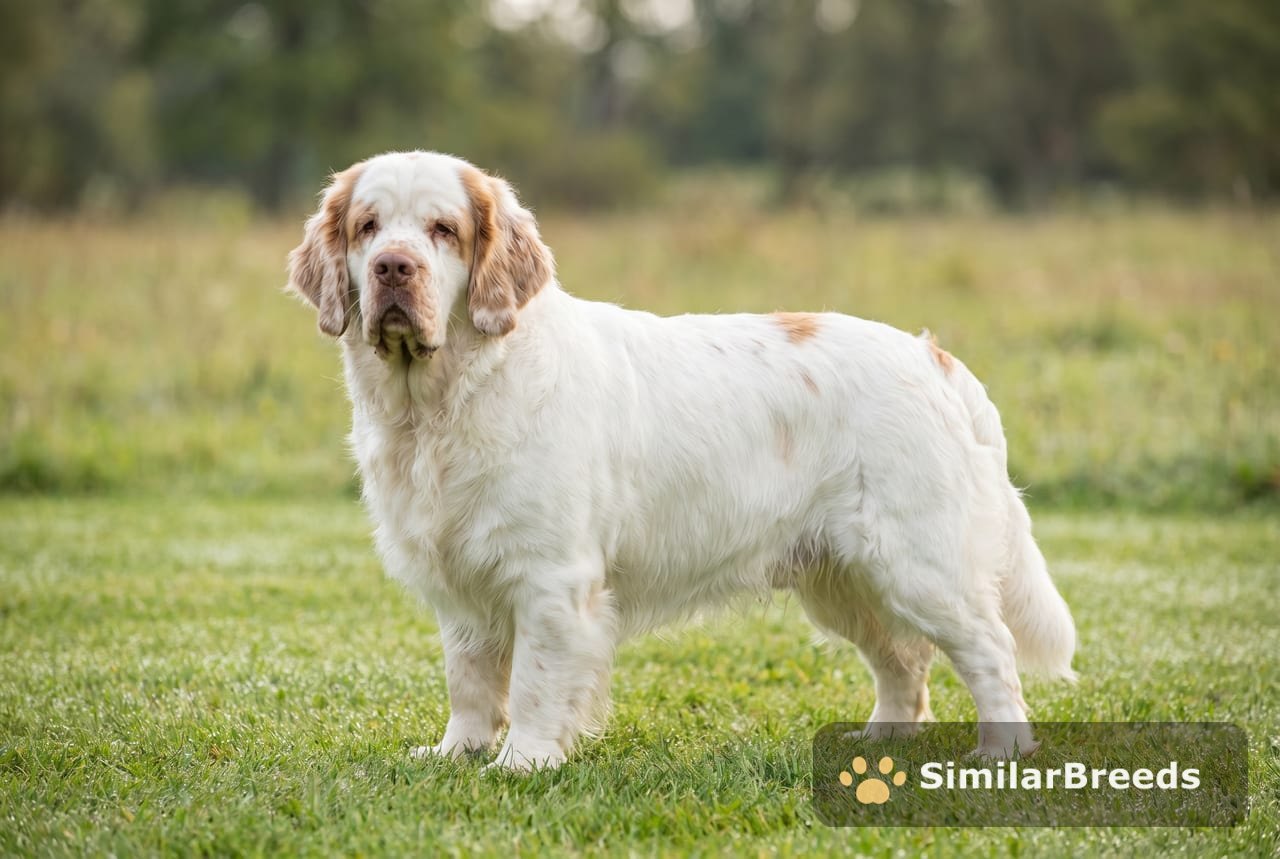
The Clumber Spaniel is the heaviest of the spaniels, a slow, methodical hunter built for dense cover rather than open country. Its origins trace to late eighteenth-century England, with the breed likely shaped by crosses between the old heavy-headed Alpine Spaniel and the low-slung Basset Hound, which explains both its powerful frame and its extraordinary nose. The name comes from Clumber Park, the Duke of Newcastle's Nottinghamshire estate, where it is believed the Duc de Noailles relocated his spaniel kennels around the time of the French Revolution.
English nobility took to the breed quickly, prizing it as a keen-nosed flusher and retriever that suited their deliberate, formal style of shooting. Its exclusivity was partly engineered: the aristocracy kept Clumbers among themselves and discouraged broader popularity. The breed reached America in the late 1800s and has remained a rarity ever since, better known in the field than on the street.
Temperament & Behaviour
The Clumber is one of the most low-key sporting breeds in existence. At home it is quiet, gentle, and deeply attached to its people, with a tendency to bond especially closely with one person. It carries its hunter's instincts without the restlessness that marks many other gundogs, making it an unusual fit for a sporting dog: genuinely manageable indoors. It is affectionate and good with other pets, tolerably sociable with strangers, and not inclined toward aggression. It does drool and can snore, two facts worth knowing before committing.
Activity & Training
Do not mistake the Clumber's calm for laziness, but do not expect a tireless athlete either. Its exercise needs are genuinely modest, satisfiable with a long daily walk or a leisurely outing in the field. It is one of the few sporting breeds that can adapt to city life without frustration, provided it gets that daily outing. Training requires patience rather than force; the Clumber has a workmanlike willingness but also the spaniel's occasional selective hearing. Consistency matters more than intensity.
Grooming
The coat is dense and white with lemon or orange markings, and it needs brushing two to three times a week to stay manageable. In muddy or wet conditions, bathing frequency goes up, because a white coat shows every bit of outdoor evidence. Ears need regular attention given the breed's susceptibility to ear infections. The Clumber is not a heavy shedder by spaniel standards, but it is not a clean dog either.
Health
The Clumber carries significant health concerns that any prospective owner should take seriously. Hip dysplasia and intervertebral disk disease are the major issues, reflecting the breed's heavy, long-bodied build. Minor concerns include eyelid problems (ectropion and entropion), ear infections, and elbow dysplasia. PDP1, a metabolic condition specific to the breed, warrants testing. Lifespan runs 10 to 12 years. Responsible breeders test for hips, elbows, eyes, and PDP1.
Why these breeds are similar
The source lists no similar breeds for the Clumber Spaniel.
Trait ratings
- Energy level
- 2/5
- Exercise requirements
- 2/5
- Playfulness
- 3/5
- Affection level
- 4/5
- Friendliness toward dogs
- 3/5
- Friendliness toward other pets
- 4/5
- Friendliness toward strangers
- 3/5
- Ease of training
- 3/5
- Watchdog ability
- 2/5
- Protection ability
- 1/5
- Grooming requirements
- 3/5
- Cold tolerance
- 3/5
- Heat tolerance
- 2/5
Breeds similar to Clumber Spaniel
No similar breeds are mapped for Clumber Spaniel yet - try browsing its FCI group or country of origin below.